Born to Korean immigrant parents freed from indentured servitude in early twentieth century Mexico, Jerónimo Lim Kim joins the Cuban Revolution with his law school classmate Fidel Castro and becomes an accomplished government official in the Castro regime, until he rediscovers his ethnic roots and dedicates his later life to reconstructing his Korean Cuban identity. After Jerónimo's death, younger Korean Cubans recognize his legacy, but it is not until they are presented with the opportunity to visit South Korea that questions about their mixed identity resurface.
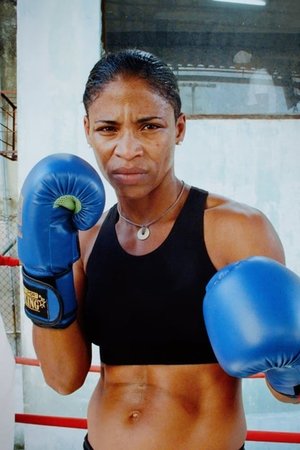
"Fightland went to Havana to check out the only mixed martial arts gym in Cuba. The Cuban government hasn't legalized MMA for fear of losing its best boxers, so the fighters on coach Evelio Padron Ferrier's team wrestle on concrete floors, use the ocean for endurance training, and practice techniques pulled from memory and bootlegged DVDs."
In the spring of 2016, global music sensation Major Lazer performed a free concert in Havana, Cuba—an unprecedented show that drew an audience of almost half a million. This concert documentary evolves into an exploration of youth culture in a country on the precipice of change.
A documentary on the legacy of ballet in Cuba that aired on PBS in Rochester, NY. Filmed on location in Havana, Cuba July – August, 2016. Featuring Laura Alonso, the history of the National Ballet of Cuba, and interviews with staff and dancers attending CUBALLET at or studying at The Center Prodanza of Cuba.
"The Voice of Innocence" is a documentary that shows how, starting in 1959, the Cuban Revolution put into practice a comprehensive and universal policy of safeguarding the rights of the child, even under the multiple difficulties resulting from the economic, commercial and financial blockade imposed by the United States more than six decades ago. Cuba is one of the main signatories of the Convention on the Rights of the Child, signed on 20 November 1989, when the country had already made extraordinary progress in protecting the rights of the child, in comparison to developed countries, such as the United States, which as of today hasn't yet ratified the Convention.
The Antonio Maceo Brigade consists of fifty-five children of Cuban families that escaped the revolution and settled down in Miami. To the annoyance of their parents, the children developed pro-Castro ideas. This documentary follows the Brigade on its first visit to Cuba. When they meet family members and embrace old neighbours, childhood memories surface.
A love letter that unites Brazil and Cuba. In the film Travessias, the director goes on a long journey seeking to understand the feelings and transformations of a person who is close to her. On this path of doubts and concerns, she meets Justin, a trans man who will help her on this journey. With a poetic and self-referential look, the director invites us to rethink our own prejudices and limits in relation to the others.
Short documentary on the solidarity of the Cuban people with Vietnam during the war against the United States.
Oliver Stone's second documentary on/interview with Fidel Castro specifically addresses his country's recent crackdown on Cuban dissidents; namely, the execution of three men who hijacked a ferry to the United States.
Documentary about Fidel Castro, covering 40 years of Cuban Revolution. Rare Fidel Castro footage: he appears swimming with a bodyguard, visiting his childhood home and school, playing with his friend Nelson Mandela, meeting kid Elián Gonzalez, and celebrating his birthday with the Buena Vista Social Club group.
This black-and-white film is a loving portrait of Santiago de Cuba and its people. It provides a view of Cuba as a picturesque country, the product of an earthy mix of black and criollo cultures. The film uses historical images which portray the end of the eighteenth century when Haitian slave owners fled with their slaves to Cuba after the Haitian Revolution.
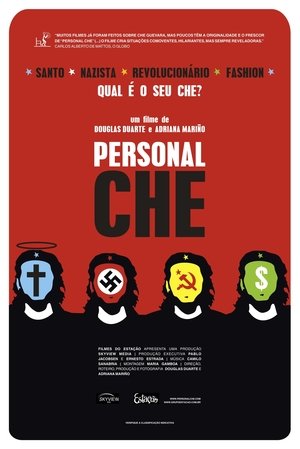
A documentary that explores the myth behind the truth. Different people around the globe reinterpret the legend of Che Guevara at will: from the rebel living in Hong Kong fighting Chinese domination, to the German neonazi preaching revolution and the Castro-hating Cuban. Their testimonies prove that the Argentinian revolutionary's historical impact reverberates still. But like with all legends, each sees what he will, in often contradictory perspectives.
The story of Cuban refugees who risked their lives in homemade rafts to reach the United States, and what life is like for those who succeed.
Extremely rare Cuban documentary reveals rockers that find liberty by injecting themselves with the HIV virus, at a time when this was almost synonymous with a death sentence.
Will Cubans be able to safeguard their heritage of pristine Nature and preserved ecological treasures under this new era, as they are facing the combined pressure of money and tourism? What policies can be implemented to maintain the island’s spectacular wilderness?
The story of a group of Cubans who arrived in Miami during the Mariel Boatlift and were housed in an improvised camp in the heart of the city. Everyone lived together —men and women, homosexuals and heterosexuals, separated only by cloth curtains that hung from ropes suspended between the beds, like floating walls.
Ana Deborah Mola and Belkis Lescaille were among the first young teachers who started pilot programs around the island of Cuba in 1960, laying foundation for the massive National Literacy Campaign that would take place the following year.
Documentary on the German luxury liner St. Louis that sailed from Hamburg to Cuba in 1939 carrying 937 German Jews. For 30 excruciating days the ship wandered the seas and was refused haven by every country in the Americas.
In this fascinating Oscar-nominated documentary, American guitarist Ry Cooder brings together a group of legendary Cuban folk musicians (some in their 90s) to record a Grammy-winning CD in their native city of Havana. The result is a spectacular compilation of concert footage from the group's gigs in Amsterdam and New York City's famed Carnegie Hall, with director Wim Wenders capturing not only the music -- but also the musicians' life stories.
Alexis, a talented and proud student of the National Ballet School of Cuba, spends his life practicing chassé and entrechats with his girlfriend and dance partner Yelenia. However, when his family moves to Florida to be reunited with his sister, he must adjust his expectations and dreams to a radically new environment. Alexis, facing rejection and homesick for his native Cuba, feels lost and alone. He must find his way in the world of American ballet while remaining faithful to his roots.