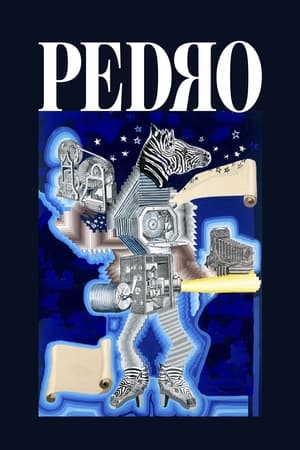
The Dolls of Lisbon is NYC's Antagonist Art Movement's latest exploit inspired by the Zapatista Dolls of Mexico, a souvenir that traveled the world symbolizing a rebellion against the legacy of Andy Warhol's commodification of art.
The concrete costs for culture and creativity is here illustrated in punchy images.
This documentary deals with the great injustice and pain caused by anti-personnel mines and demands the urgent need for all the countries involved to sign the demining protocols. The short begins with a 24-hour isolation carried out by the author in a hole/crater in the middle of the desert to empathy with the Saharawi people, from there progressively through their commitment and coexisting for getting close to the reality of the victims of antipersonnel mines and their everyday live. Denunciations and wishes of this people who have suffered a hard exile are verbalized. In parallel, the author is interviewing, listening, sharing and designing an ingenuity that he is building to exploit the mines. The melphas (costume of the Sahrawi woman) make up the sail that moves the wheels that trace with phosphate powder the path with the word FREE and end up exploiting the mine, to show the inhuman damage it cause. A call for peoples to sign demining protocols urgently.
From the songs of his mother’s heart to the whispers of a faithful God, David’s story begins in quiet devotion. When the giant Goliath rises to terrorize a nation, a young shepherd armed with only a sling, a few stones, and unshakable faith steps forward. Pursued by power and driven by purpose, his journey tests the limits of loyalty, love, and courage—culminating in a battle not just for a crown, but for the soul of a kingdom.
It is a fetish, a mantra, a secret religion to modern man: work. In times of the financial crisis and massive job reductions, this documentary movie questions work as our 'hallow' sense in life in a way that both humors and pains us.
Poème Électronique is an 8-minute piece of electronic music by composer Edgard Varèse, written for the Philips Pavilion at the 1958 Brussels World’s Fair. The Philips corporation commissioned Le Corbusier to design the pavilion, which was intended as a showcase of their engineering progress. The pavilion was shaped like a stomach, with a narrow entrance and exit on either side of a large central space. As the audience entered and exited the pavilion, the electronic composition Concret PH by Iannis Xenakis (who also acted as Le Corbusier's architectural assistant for the pavilion's design) was heard. Poème électronique was synchronized to a film of black and white photographs selected by Le Corbusier which touched on vague themes of human existence.
Queen Christina of Sweden abdicates and travels to Rome to embrace the Catholic church.
Through interviews and guerilla footage of graffiti writers in action on five continents, the documentary tells the story of graffiti from its origins in prehistoric cave paintings thru its notorious explosion in New York City during the 70’s and 80’s, then follows the flames as they paint the globe.
Tranquillement, pas vite
Narrated by Uncle Jack Charles and seen through the eyes of Indigenous prisoners at Victoria’s Fulham Correctional Centre, this documentary explores how art and culture can empower Australia's First Nations people to transcend their unjust cycles of imprisonment.
Bill Nye and Ken Ham debate whether creation is a viable model of origins in today's modern scientific era.
In Pompeii in the year 79, Lycias and Helen fall in love. Helen's guardian, the high priest of Isis, wants to separate them. To do so, he tries to make Lycias drink a love potion, but a young slave threatens to reveal everything. The high priest, unable to silence her, kills her and arranges to have Lycias accused...
From award-winning director Phil Grabsky comes this fresh new look at arguably the world’s favourite artist – through his own words. Using letters and other private writings I, Claude Monet reveals new insight into the man who not only painted the picture that gave birth to impressionism but who was perhaps the most influential and successful painter of the 19th and early 20th centuries. Despite this, and perhaps because of it, Monet’s life is a gripping tale about a man who, behind his sun-dazzled canvases, suffered from feelings of depression, loneliness, even suicide. Then, as his art developed and his love of gardening led to the glories of his garden at Giverney, his humour, insight and love of life is revealed. Shot on location in Paris, London, Normandy and Venice I, Claude Monet is a cinematic immersion into some of the most loved and iconic scenes in Western Art.
An exploration of the intersection between religion and homosexuality in the U.S. and how the religious right has used its interpretation of the Bible to stigmatize the gay community.
In his delirium from his return from war, Francesco Bernardone goes back in his memories to the days when he lived for parties and carnal pleasures. He slowly recovers, but after the illness he is no longer the Francesco that everybody knew. Instead of spending hours in taverns, he meditates on the beauty of God's creatures, soon renouncing his riches and his family with plans to rebuild an abandoned church and his life.
In 17th-century Tuscany, a church play is performed for the benefit of young aristocrat Cosimo. In the play, a grotesque old woman gives birth to a beautiful baby boy. The child's older sister is quick to exploit the situation, selling blessings from the baby, and even claiming she's the true mother by virgin birth. However, when she attempts to seduce the bishop's son, the Church exacts a terrible revenge.
Katolícka moderna
After Pompey's defeat at the Battle of Farsalia, Julius Caesar becomes the beacon of the Roman Republic and the master of its destiny; but many patricians want to avoid the birth of a tyranny and plot to assassinate him…
This documentary tells the story of Rome's contemporary art scene, so far from the stereotypes that have represented it until now.
At work on his Elegies and Windows series, Motherwell examines his place in the Abstract Expressionist movement, which he calls the first original American movement in the "mainstream," and its practitioners "the last romantics." He distinguishes between his large paintings and his intimate papier collée. Motherwell recollects the state of American art in the 1940s and the impact of European emigré painters on the younger generation of emerging artists. He discusses the significance of collage, or papier collée, as an artist's medium and explains how he first became involved with this process. Motherwell offers his interpretations of earlier directions in art and his response to the object oriented painting that emerged in America in the 1960s. A unique document of one of the founding members of the New York School. He died in 1991.