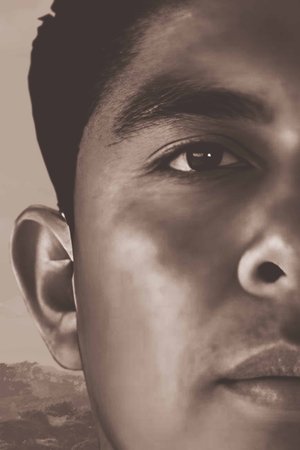
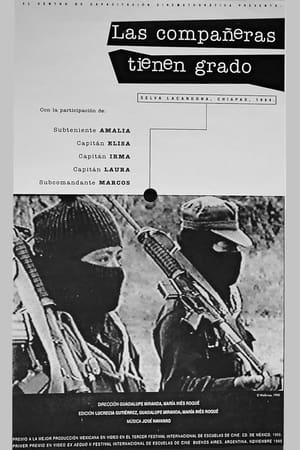
April 1994 in the Lacandona Jungle, Chiapas, México. The Zapatista women talk about the living conditions of Mexican indigenous populations and the life of peasant women. They explain the reasons for their struggle and their uprising.
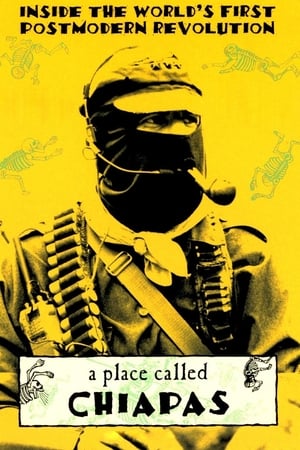
In 1994, the Zapatista National Liberation Army, made up of impoverished Mayan Indians from the state of Chiapas, took over five towns and 500 ranches in southern Mexico. The government deployed its troops and at least 145 people died in the ensuing battle. Filmmaker Nettie Wild travelled to the country's jungle canyons to film the elusive and fragile life of this uprising.
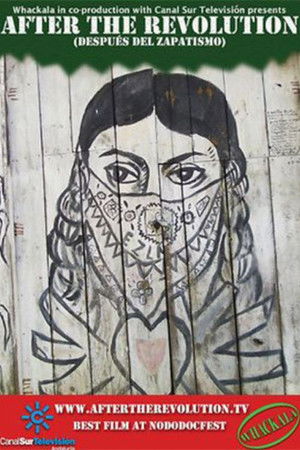
The impact of the Zapatista uprising in Chiapas, Mexico, on the lives of the Mayan women who joined as rebels to seek justice within their own culture.
On January 1, 1994, thousands of indigenous people occupied seven towns in the southern Mexican state of Chiapas under the slogan "Ya Basta!" (Enough!) occupied seven towns in the southern Mexican state of Chiapas. For two weeks, the Zapatistas - who named themselves after the revolutionary Emiliano Zapata - fought armed against the government, which had only contempt or violence for them.
30 ans après...
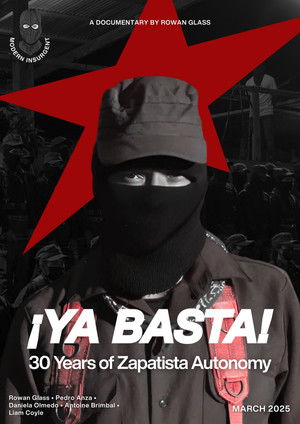
In the mountains of Chiapas, a rebel experiment in autonomy continues to thrive – thirty years after its declaration of war against the Mexican state. ¡Ya Basta! 30 Years of Zapatista Autonomy, a Modern Insurgent documentary, explores the legacy and future of the EZLN, reflecting on how a masked, rural rebellion reshaped Mexico’s political landscape and inspired activists across the globe. What does revolution look like when it refuses to seize state power? And what can the world learn from a community that continues to build its own system from the ground up?
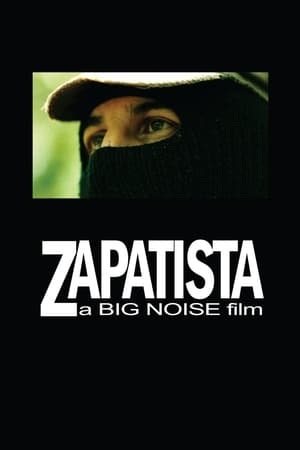
"Zapatista" is the definitive look at the uprising in Chiapas. It is the story of a Mayan peasant rebellion armed with sticks and their word against a first world military. It is the story of a global movement that has fought 175,000 federal troops to a stand still and transformed Mexican and international political culture forever.
Independent documentary created by group of enthusiast from Russia. It covers the topic of Zapatista uprising in Chiapas, Mexico and struggle of Mexican indigenous peoples for justice, liberty and democracy.
Akateko. La aparición de san Miguel Arcángel
An unworldly and closed-minded American travels to a small village in exotic Chiapas, Mexico; at the behest of his estranged mother when his half-sister disappears during a local epidemic of kidnappings attributed to the legendary J-ok'el, the weeping woman, who drowned her own babies, centuries ago and whose spirit has returned to claim more children as her own.
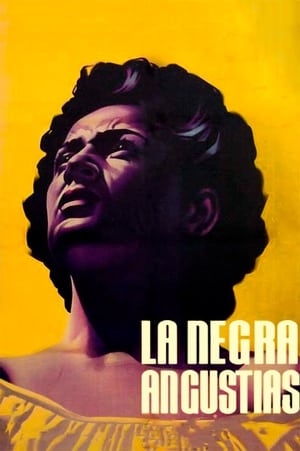
When her father dies, a young Afro-Mexican woman joins the Revolution, the way he was planning to do, and becomes the leader of a Zapatista battalion.
A young woman receives a diary as an inheritance from her father, in which he tells her that she must take a trip to Chiapas, a requirement for access to all his possessions.
An exploration into a possible link between various vaccinations and illness, injury, and death.
When we embrace flaws and mistakes, we create even more beauty. That’s what woodturner Bill Karow believes, and what drives him in his craft: to reshape people’s opinions about things they perceive as worthless, and to find joy in that pursuit.
Step into the explosive mind of KITT, a Melbourne-based artist with a unique outlook on life. Defying physics and viewable from space, his sprawling artworks will make you ask yourself, how big can you go?
Interviews with key military woman guerrilla leaders, and young girls and old women who took part baring arms or making artisanal bombs, against the regime of General Somoza.
An anthropological film of the people of Angola.
Histories of Hunger in Brazil is a documentary that sets a timeline of hunger in the country. From Colonial Brazil, where the seeds of social inequalities were planted, to the recent public policies that culminated with Brazil finally exiting UN official World Map of Hunger, we portray how the confrontation of this evil on the part of the society and of the government took place.
Five vignettes across America revealing the resilience of the immigrant fabric of our country amidst the Trump administration's current and proposed policies.
This animated short tackles the twin issues of urban planning and climate change. Set in the imaginary city of Colvert, the film highlights the fact that the way a community is shaped and organized is an important factor in determining its energy consumption, and thus the quantity of greenhouse gases it releases into the atmosphere.