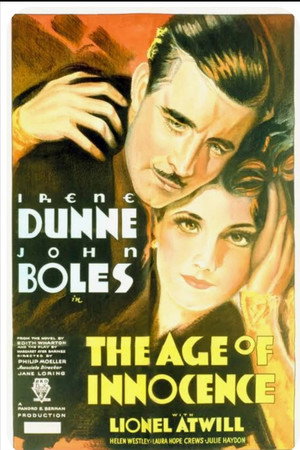
Newland Archer is engaged to May Mingott of a prominent New York family. Shortly after the engagement is announced, Newland finds himself attracted to May's older married cousin Countess Ellen Olenska.
Leaving her small town home and coming to New York to study voice, Marian Lane soon falls in love with Allen Crauben.
Tom Devon, alias Reginald Briand, is the mastermind behind an organization of gentlemen thieves, including Jimmy Stevens and Rudolph Gambier. Jimmy falls in love with Tom's innocent daughter, Gloria, after he rescues her from an embarrassing scene in a restaurant. Tom disapproves of the romance and decides to dissolve the partnership. When an embittered Rudolph kills Tom he frames Jimmy, but Gloria is determined to clear him. Posing as a thief, she seeks the truth.
Cigar counter girl Tessie tips off her mechanic boyfriend that a wealthy women is going to buy a car, and he leaves Tessie for Mrs. Welles.
Tenth release in Lubin's "Patsy Bolivar" 1-reel comedy series.
One of the two earliest horror films ever made. This film is presumed lost.
One of the two earliest horror films ever made. This film is presumed lost. In this black comedy scene, the bottom falls out of a coffin, the corpse tumble out, and is jolted back to life. Short sequences like this, as well as street scenes and dancing geisha girls were the main subjects of early Nippon cinema, pioneered by Shiro Asano and Shibata Tsunekichi from 1897 onwards. In creating dramatic, scenes, film-makers naturally chose the most striking or bizarre. Another undocumented film, recalled by cameraman Shiro Asano.
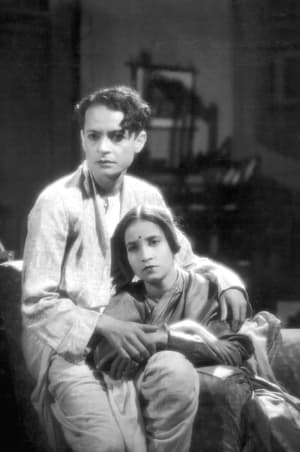
Devdas, the son of a zamindar, and Parvati, his neighbour's daughter, are childhood sweethearts. However, class and caste differences prevent their marriage. Devdas is sent off to Calcutta, while Paro is married off to an aged rich widower. In Calcutta, as remorse drives him to alcohol, Devdas meets Chandramukhi, a prostitute. All Indian prints of this Bengali version were destroyed in a fire that ravaged New Theatre’s studios. Today, only one copy of the film survives which belongs to the Bangladesh Film Archives. Of that copy almost forty percent is destroyed.
Directed by Max Urban.
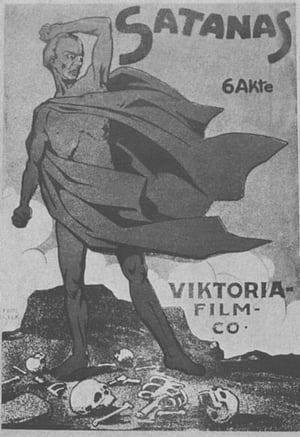
A three-part historical film: the first episode takes place in ancient Egypt, the second is based on the Hugo novel La Fin de Satan, and the third takes place during the 1917 Russian revolution. Lost film, minor fragments survive
Episode seven of the Lubin Studios Patsy Bolivar series.
Fatty leaves his country home to go to the city. Bess, who lives in the city with her mother and her detective father, takes a novel and goes to the park to read, and strikes up a flirtation with Fatty. The father goes to his office, while the mother purchases a watch as a birthday present for him, but she is seen by a crook, who follows her. When she stops in the park to rest he gets the watch. On his way out of the park the crook passes Fatty and sells him the stolen watch. The crook then tries to flirt with Bess, but is thrown out by Fatty, who has fallen in love at first sight and is invited to Bess's home, after he has made her a present of the watch. When Bess and Fatty enter the house the mother is out in the hall telephoning her husband about the loss, and he starts home immediately. Bess leaves Fatty while she shows her mother the watch he gave her. The mother recognizes the watch and starts for Fatty, being joined later by her husband.
12th release in Lubin's "Patsy Bolivar" 1-reel comedy series.
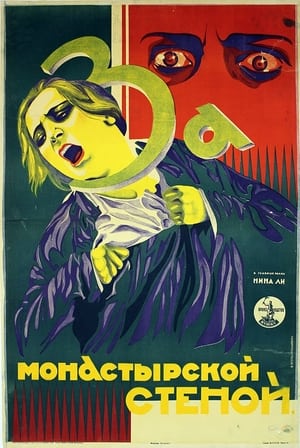
The old nunnery owns the best lands. Nuns rent out the land to local rich men, and exploiting peasants they have a wealthy life. The peasants live in misery. Especially, the family of the peasant named Levin. He is forced to give away his last horse, his son Andrii is imprisoned, his daughter Nastia becomes a maid of a rich landlord. Trying to prevent the master’s harassment, Nastia escapes and gets to the nunnery. She can see the other life of the nuns who manufacture false relics, drink alcohol and kill children. Nastia ends up in the basement for resisting one of the “spiritual pastors.” Meanwhile, her brother Andrii escapes from prison. He stirs up a rebellion and saves his sister. The film is lost.
A hydroplane pilot is in love with a wealthy old scientist's granddaughter. However, a fortune hunter also desires to marry the granddaughter for her money, even though she is in love with the pilot. Based on a successful play that starred John Barrymore.
A fly, taken with humanity, decides that it would be best if all flies were wiped out.
American newspaper reporter Jim Crocker's madcap escapades in London earn him notoriety and the nickname "Piccadilly Jim." When he overhears his American cousin by marriage, Ann Chester, giving her candid opinion of him, he decides to return to America to try to reform. He meets Ann on the boat, using another name. Unable to find work in New York, he goes to his step aunt Mrs. Peter Pett's home to be near Ann. Jim then helps Ann kidnap pampered cousin Ogden Pett whose overindulgence has created disruption in the household.
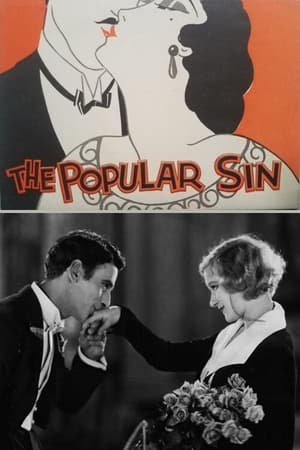
Philandering husband George Montfort purchases railroad tickets for a weekend tryst in the mountains with his latest paramour. When his wife Yvonne finds the tickets, George hastily explains that they were bought as an anniversary present for her. Yvonne doesn't believe George, but she decides to use her ticket anyway, while George remains behind in Paris on "business."
Framed for stealing some pearls while staying at the country home of her aunt and uncle, Mr. and Mrs. Dennison, Delsie O'Dell is banished from their house. Delsie along with her bulldog, Violet, follows Oscar, the actual thief, to an old haunted house, which is the hideout for a gang of thieves. A series of humorous escapades follows as she first hides from the thieves, then pretends to be a ghost, terrorizing them. Eventually she retrieves the pearls, clears her name, and is safe once again in the arms of Bill, Dennison's secretary.
In Dijon, Inspector Hanaud investigates Betty Harlowe after her uncle, Boris Waberski, accuses her of poisoning her wealthy aunt for an inheritance. While an initial autopsy finds nothing, Hanaud discovers the use of Strophanthus Hispidus—a rare, undetectable poison applied via an antique arrow. Amidst a flurry of "poison pen" letters and deception, Hanaud proves the murder occurred despite the lack of conventional medical evidence.