A journey into the hearts, minds and eyes of Georgia O’Keeffe, Emily Carr and Frida Kahlo - three of the 20th century’s most remarkable artists.
This is the legendary meeting between a young filmmaker and one of the masters of surrealism: the spanish painter Óscar Domínguez, born in La Laguna, Tenerife, in 1906, died in Paris in 1957. In the "Visite," the artist -admirer of Picasso, rebellious disciple of Breton- is presented in solitude, far from the tumult of the exhibitions and parisian circles. An austere approach, almost “povera”, with no audio, nor flashy camera movements, but rarely attractive. Why Resnais could not finish his movie? Hope one of our experts help us to solve the mystery.
Contemplate the "anti-art" spirit of Dadaism, its nihilistic yet humorous indictment of civilization and bizarre use of unconventional media. In the sensibility of Surrealism, observe its compelling focus on the subconscious and two substyles - dream imagery, with its juxtaposition of objects and settings, and "automatic drawing," eliciting unplanned images from the unconscious.
Edward et Jo Hopper, un si violent silence
Thomas Hart Benton's paintings were energetic and uncompromising. Today his works are in museums, but Benton hung them in saloons for ordinary people to appreciate.
This feature documentary portrays one of the most important museums in the world, the Kunsthistorisches Museum Wien. It presents a unique look behind the scenes of this fascinating institution and encounters a number of charismatic protagonists and their working fields unfolding the museum’s special world – as an art institution as well a vehicle for state representation.
An intimate portrait of a peasant-turned oil painter transitioning from making copies of iconic Western paintings to creating his own authentic works of art.
From award-winning director Phil Grabsky comes this fresh new look at arguably the world’s favourite artist – through his own words. Using letters and other private writings I, Claude Monet reveals new insight into the man who not only painted the picture that gave birth to impressionism but who was perhaps the most influential and successful painter of the 19th and early 20th centuries. Despite this, and perhaps because of it, Monet’s life is a gripping tale about a man who, behind his sun-dazzled canvases, suffered from feelings of depression, loneliness, even suicide. Then, as his art developed and his love of gardening led to the glories of his garden at Giverney, his humour, insight and love of life is revealed. Shot on location in Paris, London, Normandy and Venice I, Claude Monet is a cinematic immersion into some of the most loved and iconic scenes in Western Art.
Ich lebe in der Gegenwart - Versuch über Hans Richter
At the beginning of the twenty-first century, abstraction - that most quintessentially modernist innovation - maintains a peculiarly contradictory position. Used, on one hand, by post-modernist artists as just one more quotable style amongst many, it is on the other hand still considered an elitist or hermetic language by audiences intimidated by its lack of recognizable subject matter. Yet ultimately, abstraction continues to be a viable creative path for contemporary artists of all generations, many of whom embrace it as the most inclusive and fundamentally resonant of artistic languages. Filmed at the artists' studios, the Dia Center for the Arts, and the Guggenheim Museum during their exhibition, "Abstraction in the Twentieth Century."
An unconventional portrait of painter Frida Kahlo and photographer Tina Modotti. Simple in style but complex in its analysis, it explores the divergent themes and styles of two contemporary and radical women artists working in the upheaval of the aftermath of the Mexican Revolution.
The film tells the story of James Morrison’s early years, painting the tenements of Glasgow, through to his dramatic encounter with a polar bear while painting melting icebergs in North West Greenland. As the artist struggles with imposing blindness, the film follows James, as he prepares for what turned out to be his last ever public exhibition at the Scottish Gallery in Edinburgh in January 2020.
The Mona Lisa Myth
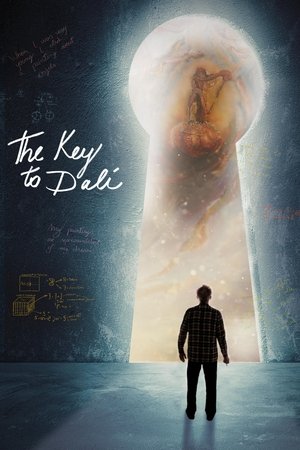
A documentary about surrealist artist Salvador Dali, narrated by Orson Welles.
Celebrating Billy Connolly's 75th birthday and 50 years in the business, three Scottish artists - John Byrne, Jack Vettriano and Rachel MacLean - each create a new portrait of the Big Yin. As he sits with each artist, Billy talks about his remarkable life and career which has taken him from musician and pioneering stand-up to Hollywood star and national treasure.
The Kiss by Gustav Klimt is one of the most recognised and reproduced paintings in the world. It is perhaps the most popular poster on student dorm walls from Beijing to Boston. Painted in Vienna around 1908, the evocative image of an unknown embracing couple has captivated viewers with its mystery, sensuality and dazzling materials ever since it was created. But just what lies behind the appeal of the painting – and just who was the artist that created it? Delving into the details of real gold, decorative designs, symbolism and simmering erotica, a close study of the painting takes us to the remarkable turn of the century Vienna when a new world was battling with the old.
Painter Esteban Cabeza de Baca quietly defies the laws of space and time, blending past, present, and future in richly layered landscapes of the American Southwest. From his studio in Queens, to on-site painting at the US-Mexico border, to The Metropolitan Museum of Art, this short documentary follows a young artist as he strives to give form to both his personal story and the still-present legacy of colonialism.
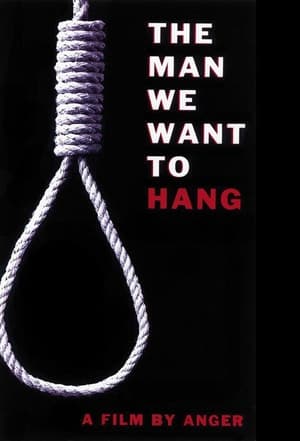
"The Man We Want to Hang" is a 12-minute short, consisting of Anger filming borrowed paintings done by legendary and controversial occultist Aleister Crowley.
English artist, writer, curator and teacher Sir Lawrence Gowing narrates a personal exploration of some of the great Florentine painter Masaccio's key works.
This surreal abstract film falls into three sections, or movements, the first taking place on the ground, the second in the air and the third again on the ground. In the first movement various motifs or themes are introduced, which are again picked up and developed in the third movement. Six spheres, evolved in the first movement, become the sole subject matter–or “dancers”–of the second movement, which consists of a simple type of ballet using the floor-plan choreography or traditional ballet as a basis of interest.