The Second entry in The Valencia Saga. On Christmas eve, while he waits for his mother to come home, a young man discover some secrets involving the place, that makes him feeling uneasy of being alone.
Shell-shocked Barbara must face up to the loss of a dear companion after a tragic accident. Her best friend Klara and husband Torsten devise a plan to thaw Barbara's heart, after she reminisces about the incident, the funeral, and happier times. Will she agree to the suggestions of her nearest and dearest? Can grief turn into hope?
In the last days of their tumultuous relationship Julian and Lara are confronted with a life changing event and now must bear the consequences.
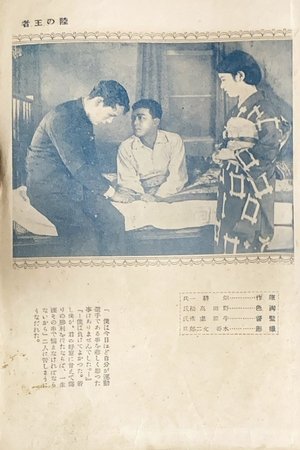
Japanese silent film from 1928, ranked as Kinema Junpo's second-best Japanese movie of the year.
An ex-Army marksman's plan to avenge the murder of his parents brings him into business with a murder-for-hire organization and the C.I.A.
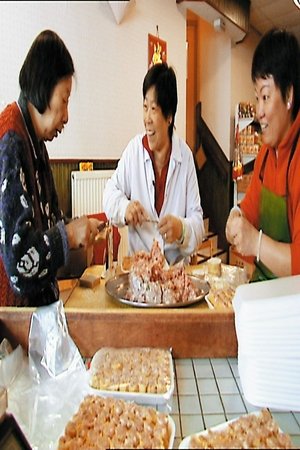
Documentarist Jane Wong films her mother and two Chinese friends as they discuss their lives and experiences as émigrés living in Liverpool.
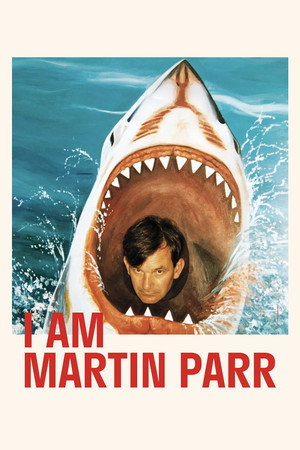
Since the 1970s‚ Martin Parr has fearlessly held out his unique photographic mirror and given us some of the most extraordinary and unique visual clichés of modern times. Sometimes serious‚ often absurd but always playful‚ his insightful and often acrid commentary on consumer society has always been a subject of controversy and discussion.
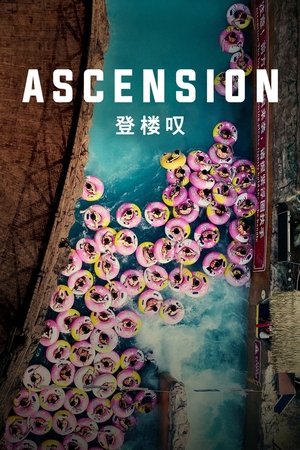
The absorbingly cinematic Ascension explores the pursuit of the “Chinese Dream.” Driven by mesmerizing—and sometimes humorous—imagery, this observational documentary presents a contemporary vision of China that prioritizes productivity and innovation above all.
Based on the novel by Güzide Sabri Aygün, the film tells the relationship of a mentally-ill woman and the doctor whom she loved in her youth.
In "The Bride with the Black Veil" (1975), director Süreyya Duru continues to focus on social issues, exposing problems of the peasants and feodal relations.
A Russian Police Major is enlisted by the LAPD to help solve a series of gruesome murders perpetrated against young women by a sadistic sociopathic killer on the mean streets of Hollywood.
Based on Yılmaz Güney's script and filmed in semi-documentary style, the movie provides a fresh perspective on the history of labor issues in 1970s.
The film traces the destiny of Kapila, an outcast child who had been deemed by his fellow villagers to have supernatural powers of destruction, because of the timing of his solar eclipse birth.
A brothel disguised as a teahouse is staffed with old ladies long past their prime. However, things begin to change and become chaotic when the owner takes in a young girl.
With the help of his assistant Anja, Ottocaro Weiss intends to put the plague on stage: circumstances beyond his control and a lack of fresh talent have forced him to close down his flea circus. For Weiss, the plague means the «extinction of everything that makes life miserable and low and freedom along with it. Unbeknownst to him, he has won the support of a patron who is of the exact opposite opinion: for Johannes Wagner, the plague is an organising principle, and, aided by his agent Moosbrugger, he is able to smuggle a new number onto the programme. Whereas Ottocaro Weiss means to represent the plague theatrically, what appears on stage is the scientific reality of the rat-borne infestation.
The film tells the story of Pir Sultan Abdal, a famous folk poet in Turkey, who criticized some Ottoman governors, Hizir Pasha in particular and as a result was hung by him.