It is said that before entering the sea, a river trembles with fear.
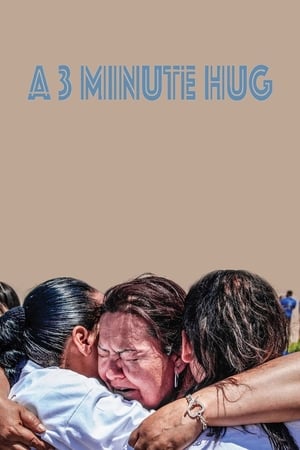
As daylight breaks between the border cities of El Paso, Texas, and Juarez, Mexico, undocumented migrants and their relatives, divided by a wall, prepare to participate in an activist event. For three minutes, they’ll embrace in no man’s land for the briefest and sweetest of reunions.
Raiano
Hans Goetze is not just the mayor of the picturesque coast village Ahrenshoop, he is also a famous painter. His portraits of people and landscapes sell to tourists all over the world. But the most common object of his paintings are cranes, who have a protected living place on the island of Darss. Every fall, tens of thousands of these large and majestic birds gather in the shallow waters of the baltic sea to prepare for their migration to the south. The film covers a full year of living on the island of Darss with the cranes coming and going.
Bird watchers on both sides of the U.S.-Mexico border share their enthusiasm for protecting and preserving some of the world's most beautiful species.
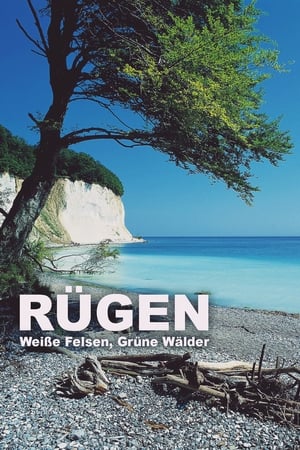
Rügen is the largest island of Germany. Located off the Baltic Sea coast of Western Pomerania, two thirds of its area is protected. The green beech forests of the Jasmund National Park are considered an original virgin forest that is unique in Europe and are part of the UNESCO World Heritage. The white chalk cliffs, which can be seen from afar, are the island's distinctive symbol and were immortalized in the paintings of Caspar David Friedrich more than 200 years ago. On the small island of Vilm, which belongs to Rügen, there is another core area of nature conservation with a 500-year-old, untouched beech forest. Within sight of this refuge, organic farmers are trying to bring more diversity back to the fields. Small-scale agriculture with a great diversity of species has emerged between hedges, tree islands and biotopes. The documentary shows Rügen's natural treasures and introduces different people who have found their home here and are fighting to preserve nature.
La Gemma té un pla
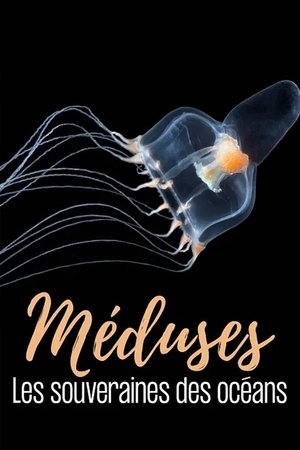
Jellyfish blooms are making headlines around the world. This is due to the damage they cause to tourism, fishing and our health. How can these creatures, which are over 98% water and have no shell, skeleton or brain, expand so rapidly? Although this is a normal stage in the life cycle of these gelatinous animals, we have to admit that blooms have become much more frequent and massive in recent decades. We're even witnessing jellyfish populations appearing in more and more regions where fish have been replaced by them, such as off the coast of Namibia, in the Black Sea, in the Sea of Japan and in certain areas of the Baltic Sea. What causes this? Why has the role of jellyfish in the ocean been underestimated, even though they outlived the dinosaurs? Are jellyfish on their way to dominating the oceans as they once did? What if they were to be the only ones left?
Jonathan Stavleu explores, in a stream-of-consciousness video essay, the relationship people have with water and what happens when access to it is taken away. For this work, he examines anecdotal histories he has heard from Estonians, as well as stories from his own family history in the Netherlands, weaving them together into a journal-like narrative.
With a visual style that alternates between intimate verité moments, meditative reflection and suspenseful sequences, the film tells the story of Chief Ramon Gonzalez, detective Manuel Casas and officer Mayra Garza, as they navigate the complexities of their existence on the US/Mexican border.
Following the death of her brother, filmmaker Robie Flores returns to her hometown Eagle Pass on the Texas/Mexico border, wanting to turn back time. She collides with unruly experiences of adolescence – quinceañeras, Rio Grande river excursions, teen makeovers and beyond – that invite her to soak up the details of the home her brother adored and she ignored. What emerges is a playful dance between a personal and collective coming-of-age portrait of kids on the border and Robie herself as she rediscovers the possibilities of joy in the aftermath of grief.
An absurd game of “finding happiness” is being played by local Latvian coyotes* and illegal immigrants on the Russian and the European Union border. It is a game with no winner – all participants are driven to play by the sense of despair. While one side leaves home and undertakes a perilous journey to the other side of the globe, hoping to spend the rest of their lives in a free country, the other side risks their freedom to earn a chance to stay right where they are, in their homeland. *coyote – someone who smuggles illegal immigrants
Drawing inspiration from his personal encounter with the Italian refugee child Giovanna during World War II, Markus Imhoof tells how refugees and migrants are treated today: on the Mediterranean Sea, in Lebanon, in Italy, in Germany and in Switzerland.
The white chalk cliffs of Rügen are among the most impressive natural monuments on earth, which the painter Casper David Friedrich immortalized for posterity as early as the 19th century. Germany's largest island with its seaside resorts from the Gründerzeit, its smaller side islands and peninsulas that give it its shape, its lagoon-like Bodden waters, the dense beech forests, the yellow rapeseed fields and the meadows, the shady tree avenues and the white sandy beaches is not only a magnet for tourists, but also a unique natural paradise in the middle of the Baltic Sea, a habitat for the rare white-tailed eagle, fallow deer, raccoon dogs and badgers as well as a resting place for huge swarms of migratory birds such as geese and cranes that can be heard trumpeting from afar. In this nature documentary, the unique landscapes and the diversity of the animal world of Rügen are captured with beautiful pictures during the changing of the seasons.
On the border between Morocco and Spain, a group of travelers is eagerly waiting to cross over to Europe.
Federal officer with the Department of Homeland Security discovers a national security breach related to the entry of 23 aliens from terrorist countries into the United States. Customs and Border Protection Commissioner, former head of the DEA Robert Bonner can't afford any more media scrutiny, since his incompetence was already exposed in the NASA 'Challenger' disaster. To avoid the scandal, the full might of the government is unleashed against Julia Davis, her family and witnesses. This retaliation reaches an unprecedented magnitude, including four unexplained deaths, Hollywood and the Mafia, false imprisonments and the use of Blackhawk helicopters and airplanes for warrantless surveillance. Amidst many shocking revelations, this documentary provides a new insight into the deaths of well-known Hollywood figures unwittingly dragged into this scandal. The truth is no longer a secret.
16 young people are doing their two-week lifeguard service on the Baltic Sea island of Fehmarn. They navigate between responsibility, belonging to a group and personal self-discovery, while more and more non-swimmers go swimming.
Lyon-Turin : Le Dernier Tunnel XXL
The old bus "Tired Theodore" came into service in 1954 and operated for long periods along the line Lumparland - Mariehamn. One summer day a number of older people had gathered for a bus ride along the winding country roads in Lumparland, and to relive old memories. At the same time one of the locals, Putte Karlsson, took up a large project: rebuilding the old mill in Lumparby. The mill was owned by his grandfather, skipper and farmer in the village. Sawmills previously existed in many villages in Åland Islands but today they are no longer in use. It is a big challenge and many are skeptical that Putte will put everything to work.
Bomarsund 1854 tells the story of two humanists, whose actions during the Crimean War prevented bloodshed. They are the British hydrographer, Bartholomew James Sulivan, and the Russian commandant, Jacov Andreyevitch Bodisco, two men who fought on opposite sides in the war. It also traces the rise and fall of the multi-cultural community of Bomarsund. The small island of Åland, located in the Baltic Sea between Sweden and Finland, played a significant role in the war that raged during 1854, originally called the Oriental War and partially fought in Northern Europe. The Baltic campaigns became the forgotten theatre of the Crimean War. The attention awarded events elsewhere has overshadowed the significance of this theatre, which lay close to the Russian capital of St Petersburg.