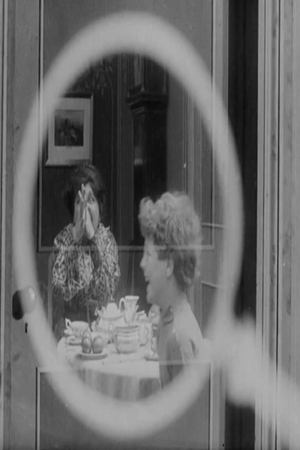
Doctor Henck is having bad day, and borrows a fur from a friend. It gives him new confidence, and his day immediately gets better. Hjalmar Söderberg's rejected 1911 movie script, filmed in 1966 for TV as a silent film with a piano soundtrack, to match the time in which it was written for.
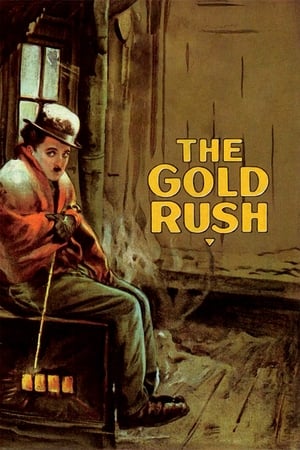
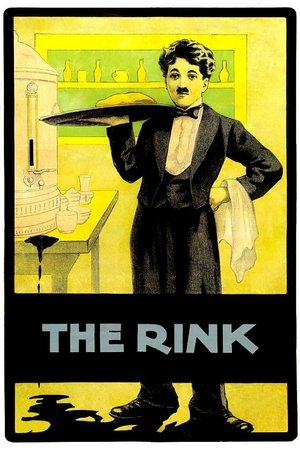
The Little Fellow finds the girl of his dreams and work on a family farm. He helps defend the farm against criminals, and all seems well, until he discovers the girl of his dreams already has someone in her life. Unwilling to be a problem in their lives, he takes to the road, though he is seen skipping and swinging his cane as if happy to be back on the road where he knows he belongs.
Mr. and Mrs. Hilton throw a New Year's Eve party. They agree not to drink the punch themselves, but as guests begin to arrive their resolve weakens, and soon they are both cavorting drunkenly. Next morning Mr. Hilton, feeling very sick, is conscience-stricken over his drunkenness and his behavior with another woman. He fears to face his wife until he discovers that she feels just as guilty herself.
At Thanksgiving, a tramp arrives in a homeless-hostile town.
Aspiring filmmakers Mel Funn, Marty Eggs and Dom Bell go to a financially troubled studio with an idea for a silent movie. In an effort to make the movie more marketable, they attempt to recruit a number of big name stars to appear, while the studio's creditors attempt to thwart them.
A tramp cares for a boy after he's abandoned as a newborn by his mother. Later the mother has a change of heart and aches to be reunited with her son.
Follow a day of the life of Big Buck Bunny when he meets three bullying rodents: Frank, Rinky, and Gamera. The rodents amuse themselves by harassing helpless creatures by throwing fruits, nuts and rocks at them. After the deaths of two of Bunny's favorite butterflies, and an offensive attack on Bunny himself, Bunny sets aside his gentle nature and orchestrates a complex plan for revenge.
A quarrelling couple are forced to quarantine together after the household maid becomes ill of an infectious disease.
This mostly lost film is often confused with director Paul Wegener third and readily available interpretation of the legend; Der Golem, wie er in die Welt kam (1920). In this version of the golem legend, the golem, a clay statue brought to life by Rabbi Loew in 16th century Prague to save the Jews from the ongoing brutal persecution by the city's rulers, is found in the rubble of an old synagogue in the 20th century. Brought to life by an antique dealer, the golem is used as a menial servant. Eventually falling in love with the dealer's wife, it goes on a murderous rampage when its love for her goes unanswered.
God and Satan wager on the soul of a learned and prayerful alchemist as part of their eternal war over Earth.
One of the two earliest horror films ever made. This film is presumed lost. In this black comedy scene, the bottom falls out of a coffin, the corpse tumble out, and is jolted back to life. Short sequences like this, as well as street scenes and dancing geisha girls were the main subjects of early Nippon cinema, pioneered by Shiro Asano and Shibata Tsunekichi from 1897 onwards. In creating dramatic, scenes, film-makers naturally chose the most striking or bizarre. Another undocumented film, recalled by cameraman Shiro Asano.
Re-imagined version of the now lost first Finnish film. Two siblings inherit all the essentials for a good life: moonshine equipment and a pig. As they embark on their journey, business is good until a card shark arrives.
When her grandson is kidnapped during the Tour de France, Madame Souza and her beloved pooch Bruno team up with the Belleville Sisters—an aged song-and-dance team from the days of Fred Astaire—to rescue him.
A knight returns home from the Crusades to find his village devastated by disease and his family gone. He roams the forest searching for them, until he finds a mysterious maiden who is being held prisoner by a black knight. In order to free her, he must confront her captor.
Frankenstein, a young medical student, trying to create the perfect human being, instead creates a misshapen monster. Made ill by what he has done, Frankenstein is comforted by his fiancée; but on his wedding night he is visited by the monster.
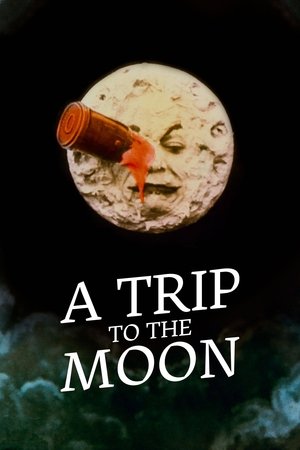
Using every known means of transportation, several savants from the Geographic Society undertake a journey through the Alps to the Sun which finishes under the sea.
The navy captain Avanti Planetaros is inspired by his astronomer-father to travel through outer space to reach other worlds. He becomes an aviator and, along with the young scientist Dr. Krafft, the driving force behind the construction of a space-ship. Despite oppostion from the mocking Professor Dubius, Planetaros gathers a crew of fearless men and takes off. During the long voyage, the crew becomes restless; a mutiny is narrowly avoided. Finally, they reach Mars and discover that the planet is inhabited by people who have reached a higher stage of development, free of diseases, sorrow, violence, sexual urges, and the fear of death. Avanti falls in love with Marya, daughter of the Prince of Wisdom, the head of the Martians. Marya shares his feelings and decides to return with him in order to bring the wisdom of the Martians to the backward Earthlings. (stumfilm.dk)
Hanns Heinz Ewers' grim science-fiction novel Alraune has already been filmed twice when this version was assembled in 1928. In another of his "mad doctor" roles, Paul Wegener plays Professor Brinken, sociopathic scientist who combines the genes of an executed murderer with those of a prostitute. The result is a beautiful young woman named Alraune (Brigitte Helm), who is incapable of feeling any real emotions -- least of all guilt or regret. Upon attaining adulthood, Alraune sets about to seduce and destroy every male who crosses her path. Ultimately, Professor Brinken is hoist on his own petard when he falls hopelessly in love with Alraune himself. Alraune was remade in 1930, with Brigitte Helm repeating her role, and again in 1951, with Hildegarde Knef as the "heroine" and Erich von Stroheim as her misguided mentor.
In 16th-century Prague, a rabbi creates the Golem - a giant creature made of clay. Using sorcery, he brings the creature to life in order to protect the Jews of Prague from persecution.
A young man travels to Mars in a rocket ship, where he leads a popular uprising against the ruling group with the support of Queen Aelita, who has fallen in love with him after watching him through a telescope.