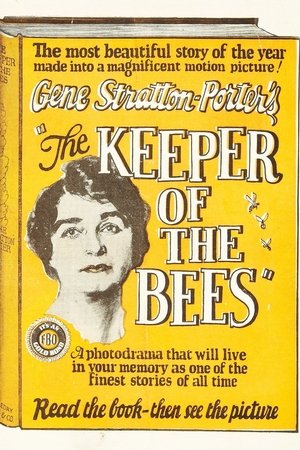
The Hollisters, a bright, spirited, wholesome family, are compelled to move into the country. After many efforts to secure a home, Shirley, eldest of the Hollisters, contrives a way out by renting a magnificent old stone barn at a ridiculously low price, transforming it into a house. The owner of the barn is not an ordinary landlord, as you will see, for he is a young man with fine ideals, and he is not content with establishing Shirley and her family in the quaintly beautiful old place, but makes the world a much happier place to live in for all of them.
George Darrel presents Helen Gray, his fiancée, with a very valuable engagement ring of antique design, which is an heirloom. They have a serious quarrel over Dave Brower, one of her friends, and Darrel leaves for the west.
On account of an urgent business call, Mr. and Mrs. Leslie hurriedly close their summer home at Hudsoncliff and leave with their daughter, Jane, for the city. Bob, their son, decides to visit his parents at Hudsoncliff with his friend, Ralph Lyons. Bob and Ralph find the house locked up and, after some reconnoitering, enter through a window. Ralph hurts his ankle and is unable to attend a dance that evening, so Bob goes instead. Jane, on her arrival in the city, finds she has left her necklace in the safe at their summer home, and leaves a note for her mother, saying she is going back for it.
The two sons of Judge Stone, William and Wylie, are both in love with Nancy Sevier. Wylie is of a jealous temperament and believes he sees in Nancy's acceptance of his brother's attentions a proof of her preference for him. William monopolizes Nancy until Wylie is almost beside himself with rage and jealousy.
Born with an artistic temperament, Joe Leigh feels keenly the bitterness and drudgery of life on a small farm and longs to get away from it. Jabez, his uncle, who owns the farm, is a hard, matter-of-fact man, utterly out of sympathy with his nephew's ambitions.
Betty, the only daughter of Jenkins, a wealthy farmer, is secretly loved by Tom Saunders, a farm hand. Tom's scapegrace brother, Dick, returns from the city and is befriended by Tom. Dick later wins Betty's love. While Jenkins is blasting out a tree stump with dynamite, Betty and Dick are passing close by unnoticed, and the explosion destroys Betty's sight.
In the poor Italian quarter of New York lives Luigi, an Italian peasant and inventor, who is so absorbed in his work that he greatly neglects his wife, Nedda. She is younger than he and fond of pleasure. Not understanding his neglect, she strongly resents it.
Gentle Julia is a 1923 American silent romantic drama film based on the popular novel Gentle Julia by Booth Tarkington. Directed by Rowland V. Lee, the film starred Bessie Love.
Torment is a 1924 American silent film crime drama produced and directed by Maurice Tourneur and distributed by Associated First National. This film stars Bessie Love, Owen Moore, and Jean Hersholt.
A lawyer (Bosworth) running for Congress decides to end his relationship with a showgirl (Bennett), so that he will be more presentable candidate. When the showgirl commits suicide, the police arrest the lawyer for murder.
Promising to send for his sweetheart Roza, when he gets settled, Hugo Hunfalvy leaves Hungary for America. In New York he meets Louis Kaplan, an old friend, who owns a fruit store. Louis' sister, Marie, is pretty and flirtatious, and is much impressed by Hugo. He soon falls under the influence of her wiles and buys part interest in Louis' store.
Nina, a blind girl, lives with her grandmother, who has taught her to make artificial flowers, which she sells at a flower-stand. Nina, and Jimmie, a crippled newsboy who sells papers on the same corner, are sweethearts. Nina's grandmother dies, and she turns to Jimmie. One day Jimmie has a fight with another newsboy, whom he thinks is hanging about Nina's stand too much, and the other boy is soon begging for mercy. Miss Fifi Chandler, an artist, happens to be passing, and becoming interested, she accompanies Nina and Jimmie to their rooms, and is surprised to find that Jimmie is an artist, having made a beautiful plaster cast of Nina. Fifi brings Jimmie and his protégé to the notice of her fellow artist, Fred Townsend, who falls in love with Nina.
After a serious quarrel with his father concerning his debts, Wallace Dixon leaves the house in anger, declaring that he will live his life as beat pleases him. That night, Alfred Dixon, the father, hears a noise by the safe in his bedroom, where he is sleeping, and shoots at the intruder who escapes unharmed.
A wealthy young fellow during vacation becomes infatuated with a poor country girl.
The Spirit of the Lake is a 1921 American silent short Western drama film produced by Cyrus J. Williams and distributed by Pathé Exchange. It was directed by Robert North Bradbury and stars Tom Santschi, Bessie Love, and Ruth Stonehouse.
The Vermilion Pencil is a 1922 American silent drama film directed by Norman Dawn, and produced and distributed by Robertson–Cole. It is based on the eponymous 1908 novel by Homer Lea. The film stars Japanese actor Sessue Hayakawa in multiple roles, and white actors Ann May, Bessie Love, and Sidney Franklin, all in Asian roles. It is now a lost film.
Young mother Mary Gordoon is too poor to take care of her infant daughter, Ann, and leaves the child at an orphanage. Ann grows up with a crippled leg in the orphanage, and has fallen in love with a fellow orphan, Jimmy.
Thinking that her husband is paying more attention to his work and to their little daughter, Nina, than to her, Cleo Morin runs away with Henri Mordan. On the afternoon of their elopement, Morin, who is a ballet master, is seriously injured on the stage, and the doctor tells him that his spine is so affected that he will never be able to walk again.
With all the good influences and favorable surroundings of a model home, Mr. and Mrs. Gray cannot understand why their son, Jack, does not prefer it to all other places. Jack seeks pleasure elsewhere and his father finds fault with him for his non-appearance at supper-time or his delay in getting home a certain hour at night.
The Purple Dawn is a 1923 American silent romantic drama film that was produced, written, and directed by Charles R. Seeling. Starring Bessie Love, Bert Sprotte, and William E. Aldrich. The film is presumed lost.