Disciplined Italian composer Antonio Salieri becomes consumed by jealousy and resentment towards the hedonistic and remarkably talented young Salzburger composer Wolfgang Amadeus Mozart.
A history professor and his wife entertain a young couple who are new to the university's faculty. As the drinks flow, secrets come to light, and the middle-aged couple unload onto their guests the full force of the bitterness, dysfunction, and animosity that defines their marriage.
Bill Parrish has it all - success, wealth and power. Days before his 65th birthday, he receives a visit from a mysterious stranger, Joe Black, who soon reveals himself as Death. In exchange for extra time, Bill agrees to serve as Joe's earthly guide. But will he regret his choice when Joe unexpectedly falls in love with Bill's beautiful daughter Susan?
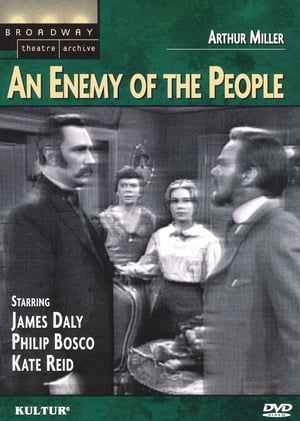
The defense and the prosecution have rested and the jury is filing into the jury room to decide if a young Spanish-American is guilty or innocent of murdering his father. What begins as an open and shut case soon becomes a mini-drama of each of the jurors' prejudices and preconceptions about the trial, the accused, and each other.
A story in which the author mocks the Slovak petty bourgeoisie and denounces the denationalization of the gentry in the nineteenth century. Some problems such as patronage, bribery, and imitation of foreign models sound surprisingly simultaneous.
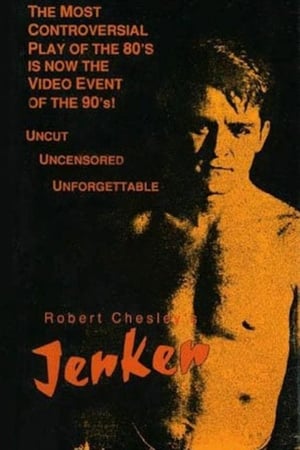
An alcoholic ex-football player drinks his days away, having failed to come to terms with his sexuality and his real feelings for his football buddy who died after an ambiguous accident. His wife is crucified by her desperation to make him desire her: but he resists the affections of his wife. His reunion with his father—who is dying of cancer—jogs a host of memories and revelations for both father and son.
Anna Moore, a poor orphaned country girl, and her little brother, Tommy, live with hypocritical Squire Simpson, who conspires with his son to acquire the inheritance due the girl.
The story, set in the context of the construction of long-distance power lines, captures the life and work of a group of fitters who come to a mountain village to electrify the local cooperative. After being transferred to a lower-paid and "demeaning" job, the group's relationships begin to break down. Debut film of Slovakian director Martin Hollý.
Pozdná láska
Britain is in crisis. An ineffectual Queen Cymbeline rules over a divided dystopian Britain. Consumed with grief at the death of two of her children, Cymbeline's judgment is clouded. When Innogen, the only living heir, marries her sweetheart Posthumus in secret, an enraged Cymbeline banishes him. Behind the throne, a power-hungry figure plots to seize power by murdering them both. In exile Innogen's husband is tricked into believing she has been unfaithful to him and in an act of impulsive jealousy begins a scheme to have her murdered. Warned of the danger, Innogen runs away from court in disguise and begins a journey fraught with danger that will eventually reunite Cymbeline with a long-lost heir and reconcile the young lovers.
After a brief and unhappy marriage, Gladys Dale finds work as the companion to Diana Dorset, the daughter of a society matron. Mrs. Dorset also has a spendthrift son, Robert, who makes a number of unwelcome advances to Gladys. However, with the arrival of Edwin Fairfax, Mrs. Dorset's younger brother, Gladys finds a soul mate. But then Fairfax has to report for duty in France (being as World War I is going on) and he leaves.
Škriatok
Comedy in five acts by Beaumarchais, filmed by Marcel Bluwal in studio and on location. The cast, in accordance with Marcel Bluwal's wishes, is in keeping with the age and character of the characters, to give it rhythm. At once "a comic baroque play, a bourgeois drama, a chansonnier's number, a social satire, a farce and a very pretty love story" according to Marcel Bluwal, it can also be summed up, according to Beaumarchais, as "the most bantering of intrigues".
The story of love struggles of 9 different couples, connected only by the complexity of human relationships.
The very first American-style Post Office robbery in Finland. In the midst of the 60's a gangster quartet led by Hilarius Ruokonen splits up and go into hiding after the heist.
A television recording of a theatrical production of Alfred Jarry's absurd drama about the gluttonous, gluttonous, compulsive and unscrupulous Father Ubo, who, with the generous advice of his ambitious wife, gets rid of the Polish king and seizes his throne. He establishes a reign of terror in which he only cares about his own benefit, so it is not surprising that the people rebel against him. The recording was made at the end of July 1968 and, thanks to a copy saved from destruction during the normalization period, was first published in 1990.
In Edo-era Japan, a ukiyo-e artist languishes in his master’s shadow. Creatively stifled, he finds consolation in the company of a prostitute, and becomes entangled in a love triangle. A mystery emerges involving two portraits and the sudden disappearance of the artist Sharaku. Helmed by Cannes-selected director Tatsuji Yamazaki, the film employs kabuki-inspired sequences and stylised sets.
Weller Martin and Fonsia Dorsey, two elderly residents at a nursing home for senior citizens, strike up an acquaintance. Neither seems to have any other friends, and they start to enjoy each other's company. Weller offers to teach Fonsia how to play gin rummy, and they begin playing a series of games that Fonsia always wins. Weller's inability to win a single hand becomes increasingly frustrating to him, while Fonsia becomes increasingly confident. While playing their games of gin, they engage in lengthy conversations about their families and their lives in the outside world. Gradually, each conversation becomes a battle, much like the ongoing gin games, as each player tries to expose the other's weaknesses, to belittle the other's life, and to humiliate the other thoroughly.
Based on Güner Sümer's play, Bozuk düzen tells the story of four children (Erol Keskin, Nedret Güvenç. Ekrem Bora and Salih Güney) trying to survive difficult relationships and situations they are involved in.
With the help of his assistant Anja, Ottocaro Weiss intends to put the plague on stage: circumstances beyond his control and a lack of fresh talent have forced him to close down his flea circus. For Weiss, the plague means the «extinction of everything that makes life miserable and low and freedom along with it. Unbeknownst to him, he has won the support of a patron who is of the exact opposite opinion: for Johannes Wagner, the plague is an organising principle, and, aided by his agent Moosbrugger, he is able to smuggle a new number onto the programme. Whereas Ottocaro Weiss means to represent the plague theatrically, what appears on stage is the scientific reality of the rat-borne infestation.