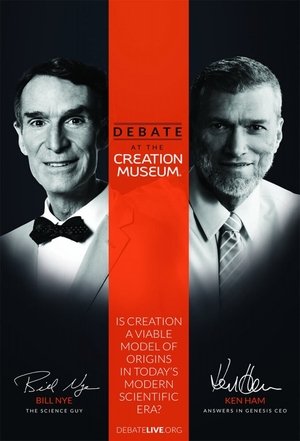
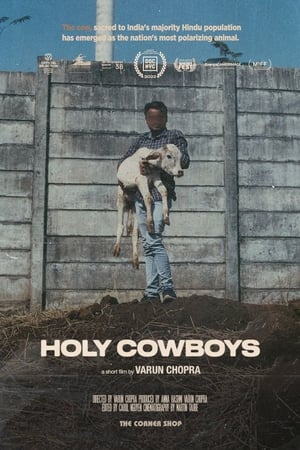
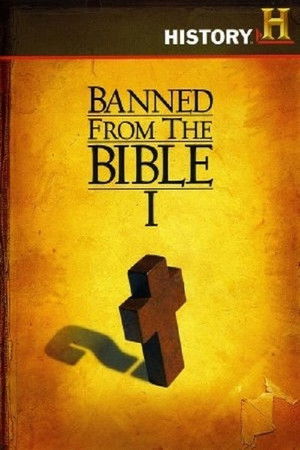
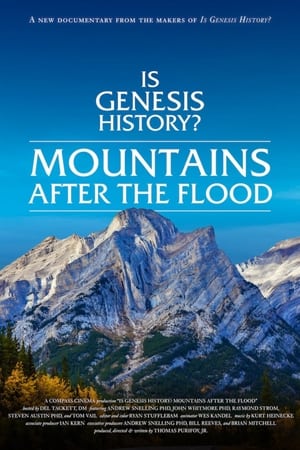
Punk rock, B-movies, and Jehovah’s Witnesses unite in this heartfelt documentary. As members of Jehovah’s Witness start to explore culture outside of their religion, they have to wrestle with the possibility of being excommunicated from friends and family. Featuring in-depth interviews and extensive home video footage, Witness Underground tells the story of punk rocker Witnesses pushing against the highly controlling Jehovah’s Witnesses religion as they build their own community through music and art. This prolific community of Witness musicians create their own record label, Nuclear Gopher, and become early adopters of promoting their music through the internet, including what may have been the first album to ever be livestreamed. This community’s history is well documented through archival footage of their home movies and self-produced music videos, all with a very charming energy.
Baseball, Dennis & the French tells the true story of Paul Croshaw, longtime liberal activist and connoisseur of French films, who amazed his family, friends and himself by becoming a churchgoing, conservative Christian after years of listening to nationally syndicated radio host Dennis Prager.
Creened in several international film festivals, as well as the Musée de L’Homme in Paris, this film takes viewers into a secret world rarely seen by outsiders. Nearly eight centuries after his death, Mevlana Jalaluddin Rumi, Sufi master and mystical poet, is ever-present in the whirling ceremony of today’s Mevlevi dervishes. The Halveti zikr, Mevlevi semas, and the Gharib, or secret, sema-not seen for over 100 years-were filmed in Cairo, Istanbul, and the Garden of Rumi in Konya. This unique footage set to Mevlevi music is enhanced by interviews with Sheikh Abu Bakr Siraj ad-Din (Martin Lings), Islamic philosopher and author Seyyed Hossein Nasr, and Sheikh Omer Tugrel Inancer, who reveals the hidden meaning of the reed flute.
Jesus never traveled more than one hundred miles from His birthplace during His three-year ministry, and His life has changed the world.
In 2012, Stephen Vaughan and Kay Ferreter are invited to address the congregation at St. Joseph's Redemptorists Church in Dundalk, Ireland for the Solemn Novena Festival. In a powerful speech, the pair describe their experiences being gay and lesbian in Ireland, feeling excluded by Catholic doctrine, and the importance of a more inclusive church.
When two friends collect money for the so-called "suffering in America" in the streets of Accra, is it for fun, political provocation, or a prophecy? Two Swiss filmmakers will answer these questions with the help of seven musicians from Ghana-M3NSA, Wanlov The Kubolor, Adomaa, Worlasi, Akan, Mutombo Da Poet, and Poetra Asantewa-who have written new songs and produced video clips especially for the documentary film Contradict.
Meet the Mormons examines the very diverse lives of six devout Mormons. Filmed on location and across the globe, Meet the Mormons takes viewers on a journey into the day-to-day realities of individuals living in the U.S., Costa Rica, Nepal and beyond. From their individual passions to their daily struggles, each story paints a picture as rich and unique as the next while challenging the stereotypes that surround the Mormon faith.
American academic Norman Finkelstein discusses foreign policy toward Israel and the Middle East.
Dr Martin Lings, a writer and scholar revered all over the world, performed the Hajj, or pilgrimage to the holy city of Mecca in 1948. Using unique archive material, he recollects his experiences along with his insight into its historical background. The original beauty and simplicity of the Hajj is brought to the viewer through the sheer presence and eloquence of Lings' narrative.
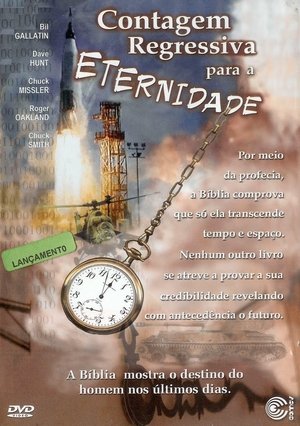
Bible expert Bill Gallatin explores biblical prophecies from the Book of Revelation that have transpired, with a discussion of whether these events signify that we are now living in the End Times preceding the return of Jesus Christ. Gallatin touches on events such as the increasingly acute difficulties in the Middle East, numerous environmental catastrophes, earthquakes and more, explaining how they connect to scriptural writings.
Twenty years ago, novelist Salman Rushdie was a wanted man with a million pound bounty on his head. His novel, The Satanic Verses, had sparked riots across the Muslim world. The ailing religious leader of Iran, the Ayatollah Khomeini, had invoked a little-known religious opinion - a fatwa - and effectively sentenced Rushdie to death. This film looks back on the extraordinary events which followed the publication of the book and the ten year campaign to get the fatwa lifted. Interviews with Rushdie's friends and family and testimony from leaders of Britain's Muslim community and the Government reveal the inside story of the affair.
The slave ships during the XVII and XVIII century transported millions of colored people from Africa to America carried within it the seed of a religious cult that would help the slaves in the Confederacy for their freedom. This is the story of the formation of African roots syncretic cults that worship spirits of two faces: black continent mystical entities hidden behind Catholic imagery.
In this two-part Channel 4 series, Professor Richard Dawkins challenges what he describes as 'a process of non-thinking called faith'. He describes his astonishment that, at the start of the 21st century, religious faith is gaining ground in the face of rational, scientific truth. Science, based on scepticism, investigation and evidence, must continuously test its own concepts and claims. Faith, by definition, defies evidence: it is untested and unshakeable, and is therefore in direct contradiction with science. In addition, though religions preach morality, peace and hope, in fact, says Dawkins, they bring intolerance, violence and destruction. The growth of extreme fundamentalism in so many religions across the world not only endangers humanity but, he argues, is in conflict with the trend over thousands of years of history for humanity to progress to become more enlightened and more tolerant.
Murder, rape, satanism and necrophilia is the staple diet of millions of teenagers who listen to the lyrics of extreme heavy metal music. This World investigates the potential links between "death metal" and a series of gruesome crimes around the world. In Italy a group of young death metal fans formed a satanic cult called the Beasts of Satan. At least four gruesome killings resulted. But death metal musicians deny that they have any responsibility for the actions of people who profess to be their fans. With exclusive access to the families, one of the killers and graphic police footage, the film tells the inside story for the first time. We hear from the musicians, the children and the parents from Oslo to California and ask just how far can music go in its ability to shock, and just how damaging might it be?
How do we live, knowing we are going to die? In search of answers, we probed the minds of atheists, Buddhists, Jews, Christians, physicians, philosophers, authors, academics, a legendary stand-up comic, and scores of random pedestrians.
OUTREMONT AND THE HASIDIM reveals the challenges of accommodating the “Hasidim” – or ultra-Orthodox Jews – in the affluent Montréal borough of Outremont.Some 7,000 Hasidim live in or near this choice neighbourhood of Québec’s Francophone elite. After settling there more than 70 years ago, the Hasidim are a rapidly growing minority group which today represents about 23% of Outremont’s population.Thanks to unprecedented access to this self-isolated community, the film lifts the veil on its practices, traditions, music and life as they had never before been seen on Canadian television, without ignoring the community’s expectations, fears. and hopes.
Split into five parts and filmed on location in Israel and elsewhere, Yeshua features interviews with scholars, reenactments of events, and recreations of ancient culture and ritual.
Commentator-comic Bill Maher plays devil's advocate with religion as he talks to believers about their faith. Traveling around the world, Maher examines the tenets of Christianity, Judaism and Islam and raises questions about homosexuality, proof of Christ's existence, Jewish Sabbath laws, violent Muslim extremists.
When a feature film is made about them seven years after their break-up, Benjie Nycum visits his ex-boyfriend Michael Glatze and finally tries to get answers about his bewildering shift from gay activist to ex-gay evangelical.
Released in 1796 posthumously, The Nun, a novel that Diderot did not dream of publishing during his lifetime, as he knew it to be revolutionary, caused the same explosion in the 19th century France as in that of the 1960s, when Jacques Rivette decided to adapt it, with Anna Karina in the title role. “This film is banned and it will remain so!” said the General de Gaulle. Exploration of an indictment of incredible modernity which, through the tragedy of the young Suzanne, locked up in the convent against her will, denounces the inequity of a society denying women all moral, political and sexual freedom.