In the seaside town of Rochefort, twin sisters Delphine and Solange dream of love and artistic fulfillment beyond their quiet lives. As sailors, artists, musicians, and chance visitors pass through town during a weekend fair, a web of near-misses and romantic longing brings ideal partners tantalizingly close—without their realizing it.
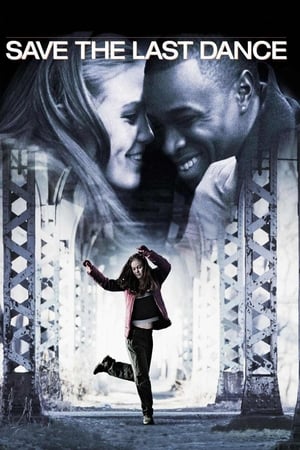
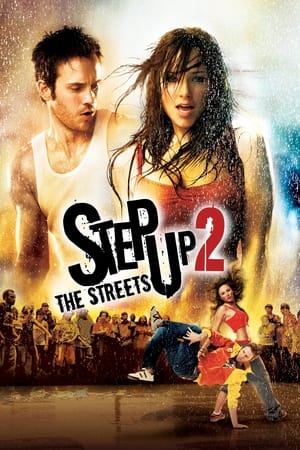
After the death of her mother, Sara moves to the South Side of Chicago to live with her father and gets transferred to a majority-black school. Her life takes a turn for the better when befriends Chenille and her brother Derek, who helps her with her dancing skills.
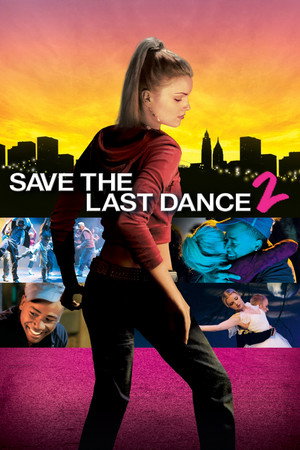
Sara joins Julliard in New York to fulfill her and her mother's dream of becoming the Prima ballerina of the school. She befriends her roommates, Zoe and Miles, who teach hip-hop classes. She has ballet classes with the rigid and famous Monique Delacroix that she idolizes - Monique requires full commitment, discipline and hard work from her students. When Miles, who is a composer, invites Sara to help him compose the music for the dance choreography Sara's passion for hip-hop is sparked and she also falls in love with Miles. When she is assigned to perform Giselle in an important event, she feels divided between the technique of the ballet and the creative work offered by Miles.
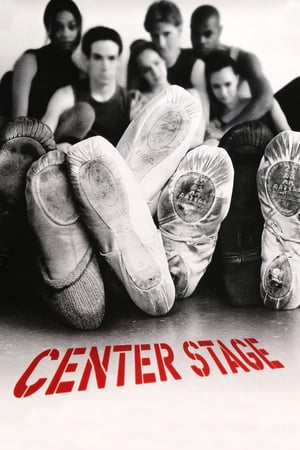
A group of 12 teenagers from various backgrounds enroll at the American Ballet Academy in New York to make it as ballet dancers and each one deals with the problems and stress of training and getting ahead in the world of dance.
In his 45th year as artistic director of Hamburg Ballet, John Numeier directs a modern adaptation of Tolstoy's masterpiece "Anna Karenina" in co-production with the Bolshoi Theatre and the National Ballet of Canada.
This thrilling, audacious, and witty production is perhaps still best known for replacing the female corps-de-ballet with a menacing male ensemble, which shattered convention, turned tradition upside down and took the dance world by storm. Filmed Live at Sadler's Wells.
Sergei Prokofiev's setting of the fairy tale "Cinderella" premiered at Moscow's Bolshoi Theater in 1945. In 1986, Rudolf Nureyev, then ballet director of the Paris Opera, choreographed the ballet anew and transposed the story into a private cinema, with sets reminiscent of Fritz Lang's "Metropolis." ARTE shows the Paris Opera performance from December 31, 2018.
A small-town shoemaker with a knack for spinning yarns, Hans encounters happiness and heartbreak on his road to becoming a full-fledged writer.
A magical blend of choreography, stop-motion and live action, Stories from a Flying Trunk captures the enchantment of three classic stories from Hans Christian Andersen. Conceived, written and directed by Oscar nominated Christine Edzard and featuring the dancers of the Royal Ballet, choreographed by Frederick Ashton. The Kitchen contains household objects which come to life and hold an animated conversation. The Little Match Girl updates Andersen's heart-rending tale to London's East End in the late seventies. Little Ida is an inspired celebration of dance featuring members of the Royal Ballet.
This all-time ballet favourite, in which young Clara is swept into a fantasy adventure when one of her Christmas presents comes to life, is at its most enchanting in Peter Wright's glorious production.
During a Christmas Eve party and a young girl, Clara, being given a nutcracker doll by her godfather, Drosselmeyer. Later in the evening when Clara sleeps, she finds herself in the midst of the Nutcracker’s battle against the Mouse King and his army of mice. Coming to Clara’s aid, the Nutcracker is transformed into a Prince and journeys with her to an enchanted island where spectacular celebrations are held in their honor. Pre-recorded at the Mariinsky Theatre in St. Petersburg in December 2011, Wassili Vainonen’s version of the beloved holiday ballet is for the first time in 3-D in select theaters.
Going to see Nutcracker with the whole family has been a tradition in other countries for many years. Now it is a tradition in the Netherlands as well. It became apparent that the Netherlands had also adopted this tradition in 1996, when the Dutch National Ballet presented its own version of the famous fairytale ballet. It is a magical production that has won the hearts of more than 250,000 people to date. Choreographers Toer van Schayk and Wayne Eagling created a Nutcracker for the children and adults of today. It is more dynamic and exciting, and less sweet than usual. They also chose to give a Dutch twist to their interpretation of the story, with skaters on the canals and a living room that transforms into a snowy forest. Unlike the original story, the production by Eagling and Van Schayk (who also designed the delightful sets and costumes) does not take place on Christmas Eve in a German town, but during St. Nicholas celebrations in Amsterdam, around 1810.
Franz Schubert's "Winterreise" is considered the pinnacle of German art song. Hans Zender (1936 - 2019) arranged the cycle in 1993, and his version for tenor and small orchestra brings to light emotions that pulsate beneath the surface in Schubert. Similar to Hans Zender, the choreographer Christian Spuck is also concerned with a journey into the interior of the human being.
Birgit Cullberg's 1950 dance adaptation of Miss Julie was the breakthrough for modern dance in Sweden. 30 years later one of her sons plays the role of Jean in this adaptation for TV.
Scenes from the ballet Petrushka, performed by the Paris Opera Ballet at the National Opera Theatre.
The film recording of the ballet performance of the State Theatre in Brno was expensively realized in a theatrically stylized set built in the Barrandov studios. The original ballet music by Václav Trojan, based on Shakespeare's fairy tale comedy, was preceded by incidental music for theatre and radio, and in particular the soundtrack to Jiří Trnka's feature-length puppet film A Midsummer Night's Dream.
This delightful ballet tells the story of Dr Coppelius, an eccentric toymaker, who attempts to bring life to his beautiful doll Coppélia. He is foiled by the mischevious Swanilda, who masquerades as Coppélia and saves her love, Franz, from the Doctor's magic. Recorded live at the Sydney Opera House, this acclaimed production by Dame Peggy van Praagh, the founding Artistic Director of the Australian Ballet, is a triumph.
A one-hour version of Tchaikovsky's classic ballet, with a somewhat revised storyline reminiscent of "The Wizard of Oz".
From The Royal Ballet’s classical origins in the works of Petipa, to the home-grown choreographers who put British ballet on the world stage, this mixed programme highlights the versatility of the Company. Petipa’s Raymonda Act III is Russian classical ballet summarized in one act, full of sparkle and precise technique, while Ashton’s Enigma Variations is quintessentially British in every way – from its score by Elgar and period designs by Julia Trevelyan Oman, to Ashton’s signature style, the essence of British ballet. Concerto, MacMillan’s fusion of classical technique with a contemporary mind, completes a programme that shows the breadth of the Company’s heritage.
A melancholy poet reflects on three women he loved and lost in the past: a mechanical performing doll, a Venetian courtesan, and the consumptive daughter of a celebrated composer.