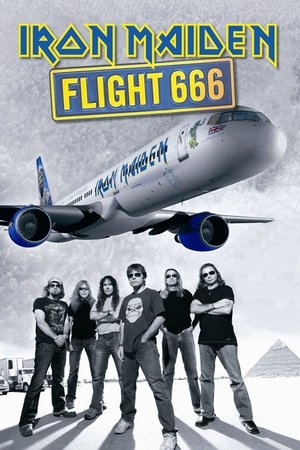
The film discusses the traits and originators of some of metal's many subgenres, including the New Wave of British Heavy Metal, power metal, Nu metal, glam metal, thrash metal, black metal, and death metal. Dunn uses a family-tree-type flowchart to document some of the most popular metal subgenres. The film also explores various aspects of heavy metal culture.
Chuck Amuck: The Movie is a 1991 documentary film about Chuck Jones' career with Warner Bros., centered on his work with Looney Tunes; narrated by Dick Vosburgh.
Through intimate stories and day-to-day routines we get a naturalistic glimpse into the lives of individuals with disabilities in the bustling urban landscape of São Paulo. The film captures personal moments and how modern societies confront (or fail to confront) ableism and inclusion.
The Hugo's Brain is a French documentary-drama about autism. The documentary crosses authentic autistic stories with a fiction story about the life of an autistic (Hugo), from childhood to adulthood, portraying his difficulties and his handicap.
A documentary about the cultural effect of film censorship, focusing on the tumultuous times of the teens and early 1920s in America.
Documentarians Andre Heller and Othmar Schmiderer turn their camera on 81-year-old Traudl Junge, who served as Adolf Hitler's secretary from 1942 to 1945, and allow her to speak about her experiences. Junge sheds light on life in the Third Reich and the days leading up to Hitler's death in the famed bunker, where Junge recorded Hitler's last will and testament. Her gripping account is nothing short of mesmerizing.
Tucumán, Argentina, 1965. Three years before George A. Romero's Night of the Living Dead was released, director Ofelio Linares Montt shot Zombies in the Sugar Cane Field, which turned out to be both a horror film and a political statement. It was a success in the US, but could not be shown in Argentina due to Juan Carlos Onganía's dictatorship, and was eventually lost. Writer and researcher Luciano Saracino embarks on the search for the origins of this cursed work.
What is the purpose of our existence ? What is the soul ? Which are the power of mind, of conscience ? What is our link to nature ? Pondering these existential questions, this movie invites us to find out an universal wisdom, meeting shamans, healers, yogis, but also philosophers and doctors. From Mongolia plains to the Amazonian forest, it leads us far than we expected at first.
Auschwitz: Countdown To Liberation
Germán Cipriano Gómez Valdés Castillo, a young radio announcer from Cuidad Juárez, succeeds in drawing attention to the pachuco movement through his character Tin Tan, laying the groundwork for a new form of binational and mass linguistic expression: Spanglish. He soon became a leading figure in theater and film on the American Continent. Singled out by critics as a destroyer of the language, he quickly won the approval of the public. His ability to improvise revolutionized the film industry. His talent as an actor, singer, dancer and comedian contributed to the Golden Age of Mexican Cinema. From El Hijo Desobediente to Capitán Mantarraya, from Cuidad Juárez to Havana, from mambo to rock, the legacy of Tin Tan makes him one of the great icons of Mexico today. This film tells his story as it has never been told before.
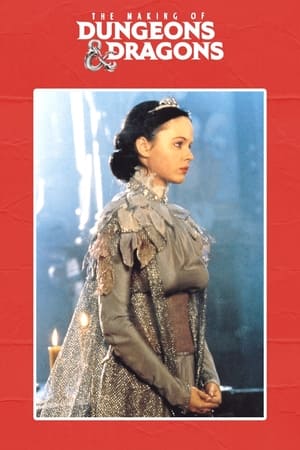
Alongside a passionate cast and crew, follow Walker Scobell, Leah Sava Jeffries and Aryan Simhadri as they step into worlds fit for gods, battle unforgettable creatures, and perform legendary stunts.
Gina Carano in Training
Delve into the musical influences of iconic rockers Led Zeppelin, whose epic brand of arena rock grew out of a deep love of the blues, the skiffle and folk rock. Music historians and authors join producers Joe Boyd and Larry Cohn, as well as performers John Renbourn, Chas McDevitt and Davey Graham, in their analysis of the band's musical roots. An enthralling section also explores Zeppelin's fascination with the occult.
Jacques Lemonnier of IBM France, Francois Dalle of L'Oreal and other ultrapowerful French moguls are surprisingly candid -- and cold-blooded -- as they discuss their attitudes about business in this startling 1978 documentary. After sounding off about unions, strikes, hierarchy and management, the subjects realized how callous they sounded and managed to convince the French government to suppress the film.
Ady Steg, un parcours juif, une histoire française
For ten years, Raymond Depardon has followed the lives of farmer living in the mountain ranges. He allows us to enter their farms with astounding naturalness. This moving film speaks, with great serenity, of our roots and of the future of the people who work on the land. This the last part of Depardon's triptych "Profils paysans" about what it is like to be a farmer today in an isolated highland area in France. "La vie moderne" examines what has become of the persons he has followed for ten years, while featuring younger people who try to farm or raise cattle or poultry, come hell or high water.
Norman Mailer and a panel of feminists — Jacqueline Ceballos, Germaine Greer, Jill Johnston, and Diana Trilling — debate the issue of Women's Liberation.
Paris : Les Lieux secrets de l'occupation
In his film "Far From Heaven", Todd Haynes refers very respectfully to Douglas Sirk's "All that Heaven Allows". Fassbinder was also strongly influenced by Sirk's work. Haynes now explains this double fascination.
For this informative new one-off, film writer Ian Nathan focuses on the first 60 years of British film, from the invention of cinema and the transition from stage to screen, to the emergence of the studios and the first popular idols. Nathan takes us through the work of leading British film-makers — a talent pool that, like Hollywood’s, benefited from the influx of refugees fleeing Europe — including Alfred Hitchcock, Powell and Pressburger, and many more besides.