Van Gogh, deux mois et une éternité
An intense and imaginative artist, revered Dutch painter Vincent van Gogh possesses undeniable talent, but he is plagued by mental problems and frustrations with failure. Supported by his brother, Theo, the tormented Van Gogh eventually leaves Holland for France, where he meets volatile fellow painter Paul Gauguin and struggles to find greater inspiration.
Van Gogh
The tragic story of Vincent van Gogh broadened by focusing as well on his brother Theodore, who helped support Vincent. Based on the letters written between the two.
After leaving the asylum, Vincent van Gogh settles in the home of Doctor Gachet, where he keeps painting amidst the torments of his failing mental health. He begins an affair with his host’s daughter, however, she soon realizes that he doesn’t love her and that his heart beats only for art.
Eight visually rich vignettes drawn from Kurosawa’s own dreams—fox weddings and vanished orchards, a soldier’s ghosts, a walk through Van Gogh’s canvases, nuclear nightmares, and a water-mill utopia—meditate on childhood, art, mortality, and humanity’s uneasy bond with nature.
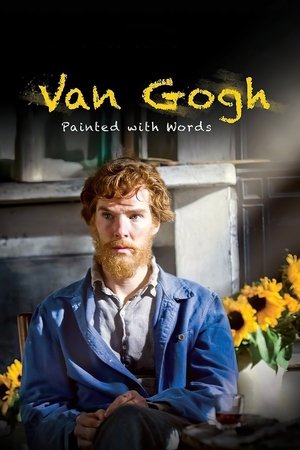
A drama-documentary presented by Alan Yentob, with Benedict Cumberbatch in the lead role. Every word spoken by the actors in this film is sourced from the letters that Van Gogh sent to his younger brother Theo, and of those around him. What emerges is a complex portrait of a sophisticated, civilised and yet tormented man.
A young man arrives at the last hometown of painter Vincent van Gogh to deliver the troubled artist's final letter and ends up investigating his final days there.
Vincent Van Gogh's life was a masterpiece painted with the dueling colors of madness versus genius. However, this inner battle gave birth to some of the greatest works of art known to man. The film traces Van Gogh's journey through the many twists and turns of his tumultuous and exciting life.
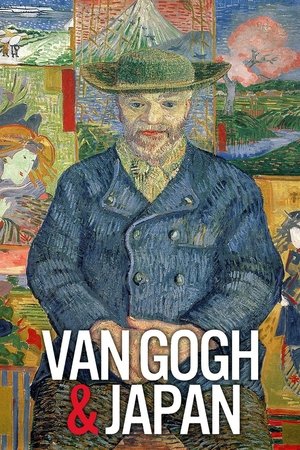
"I envy the Japanese" Van Gogh wrote to his brother Theo. In the exhibition on which this film is based - VAN GOGH & JAPAN at the Van Gogh Museum in Amsterdam - one can see why. Though Vincent van Gogh never visited Japan it is the country that had the most profound influence on him and his art. One cannot understand Van Gogh without understanding how Japanese art arrived in Paris in the middle of the 19th century and the profound impact it had on artists like Monet, Degas and, above all, Van Gogh. The film travels not only to France and the Netherlands but also to Japan to further explore the remarkable heritage that so affected Van Gogh and made him the artist we know of today.
Departing from peripheral details of some paintings of the Bilbao Fine Arts Museum, a female narrator unravels several stories related to the economic, social and psychological conditions of past and current artists.
Famed but tormented artist Vincent van Gogh spends his final years in Arles, France, painting masterworks of the natural world that surrounds him.
An artistic view of Van Gogh as if this movie is self narrated by himself.
Louco como Van Gogh
When reserved and lonely teenager Fenix meets popular high school girl Scarlett, the two form a bond that shapes the rest of his life.
How can a great painter live in a place where there is no other color than white? It is 1889 and Vincent Van Gogh's only desire is to leave the austere walls of the Saint Paul asylum. His first hope is placed in the unexpected visit of his brother Theo who had to take four trains and even a cart to go and see him ... Through the unpredictable metaphor of the temporary isolation in a mental asylum of Vincent Van Gogh
Frank Sinatra: In Concert at the Royal Festival Hall was an CBS musical television special starring Frank Sinatra broadcast on February 4, 1971, of a concert given by Sinatra at London's Royal Festival Hall on November 16, 1970. The special was directed by Bill Miller, and produced by Harold Davison. Sinatra was introduced on stage by Grace Kelly. Kelly had starred alongside Sinatra in the 1956 film High Society, the last film she made before her marriage to Rainier III, Prince of Monaco. Sinatra had been follicularly challenged for many years, hence all the hats in publicity stills, album covers etc. TV directors were forbidden to photograph him from the back because of this. However, at this concert, Sinatra had completed a very successful hair transplant and deliberately turned his back on the main audience a couple of times to acknowledge the audience sitting backstage, along with running his hand over the back of his head to draw attention to his new coiffure.
Filmed in front of a live audience on a soundstage in Hollywood, but with the feel of an intimate concert, this "comeback" special proves the Chairman hadn't lost a step.
Charged with the electricity of a heavyweight prizefight, " The Main Event " was filmed live at Madison Square Garden, a venue usually reserved for sporting events and rock 'n' roll concerts. Sinatrra dazzies the crowd with contemporay numbers as " You are the Sunshine of My Life ", " Let Me Try Again " and delivers the knockout blow with signature tunes " My Kind of Town " and " My Way ".