China Before China, an eight-episode documentary that tells stories of the origins and early development of Chinese civilization based on key archaeological findings.
中國通史TVB版
In old China at the beginning of the twentieth century, the warlords seized the people and did not live. Hunan Youth Mao Ze Dong actively participated in the revolutionary movement, established the Marxist belief under the guidance of Li Da Zhao and Chen Du Xiu, and participated in the founding of the Communist Party of China. Worker Zhao Zhao followed him all the way and became close to Chen Du Xiu. Chiang Kai Shek rebelled against the revolution, and Li Chun Feng joined the reactionary camp. Mao Ze Dong launched the autumn harvest uprising to advance into Jinggangshan to create a base, and Zhao Yu Chi became a revolutionary soldier.
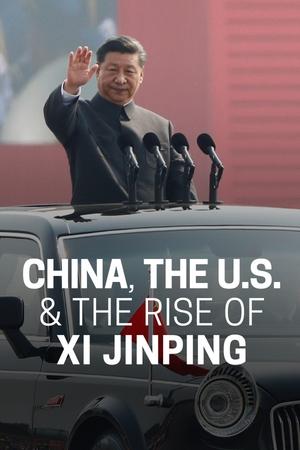
Tracing Xi Jinping's defining moments, how he's exercising his power and the impact on China and relations with the U.S.
Great Wall Of China
国宝里的新疆
The Return of Iljimae is a 2009 South Korean historical action television series, starring Jung Il-woo in the title role of Iljimae, Yoon Jin-seo, Kim Min-jong and Jung Hye-young. It aired on MBC from January 21 to April 9, 2009 on Wednesdays and Thursdays at 21:55 for 24 episodes. The series is based on comic strip Iljimae, published between 1975 and 1977, by Ko Woo-yung which was based on a Chinese folklore from the Ming dynasty about a masked Robin Hood-esque character during the Joseon era. MBC bought the rights to the comic strip for their adaptation, which was to star Lee Seung-gi in the title role of Iljimae. However he pulled out and was replaced by Jung, which makes him the third Korean actor to play the hero following Jang Dong-gun and Lee Joon-gi for Iljimae.
Tells the story of the succession of royal power in the Xia Dynasty and Shao Kang’s restoration of the territory. From the loss of royal power and the killing of the Prince of Xiang to Shao Kang’s hardships and accumulation of strength, and finally, the elimination of enemies and the restoration of the throne, comprising the historical process of the historical “Shao Kang’s Restoration”.
While testing out the interdimensional traveling gear, the representatives from KO One accidentally repeated the same mistake their predecessor made: They crushed Liu Bei with a boulder. In order to maintain silver dimension's timeline, Zhi Ge assumed the identity of his doppelganger Liu Bei and completed the sworn brotherhood ceremony with Guan Yu and Zhang Fei. As he awaits for Liu Bei's recovery, Zhi Ge must learn the ins/outs of Silver dimension while avoid being exposed as a fake.
Seven Wonders of China
Weakened by illness but strong in mind, Mei Changsu enters court politics to seek justice for a tragedy long forgotten.
In the heart of Beijing lies the largest palace in the world, The Forbidden City. For five hundred years, it served as the home of the almighty Emperors of China along with their wives, concubines, and entourages of tens of thousands of eunuchs and civil servants. But the Forbidden City is more than an imperial residence; it is the center of the universe, a unique complex of structures revealing a hierarchy of power both imperial and divine.
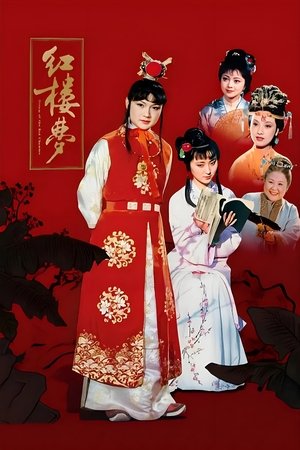
Dream of the Red Chamber, first released in 1987, was a television series produced by CCTV, adapted from the classic 18th century Chinese novel of the same name. It gained enormous popularity for its music, cast, and plot adaptation, being regarded by many within China as being a near-definitive adaptation of the story.
Zhang Xiao, a 21st-century woman, is transported back to the Qing Dynasty during Emperor Kangxi's reign after a bizarre accident. She awakens in the body of Maertai Rouxi, a teenage nobleman's daughter, and must navigate life in a past world shaped by her mysterious connection to this historical figure.
Chronicles China’s turbulent 20th century through rare archival footage and eyewitness accounts, tracing its most violent era marked by foreign invasions, civil war, and political upheaval. The documentary examines the decades-long conflict between Mao Zedong’s Communist forces and Chiang Kai-shek’s Nationalists (the latter supported by the U.S.), culminating in Mao’s establishment of the People’s Republic in 1949. It also explores Mao’s radical attempts to reshape China, followed by Deng Xiaoping’s transformative market reforms after Mao’s death, which steered the nation toward economic modernization.
Retrace almost 2,000 years of Chinese ancient history – a period that holds vital clues to understanding how this powerful nation was built. Witness the evolution of civilization and visit the places where the dignitaries are buried, also visit the mausoleum of China's first emperor Qin Shi Huang Di.
China's First Emperor was a documentary aired on The History Channel on 2008. It tells the story of Qin Shi Huang's career as a military leader and ruthless ruler and how he unified China during the Qin Dynasty. He is played by Xu Peng Kai.
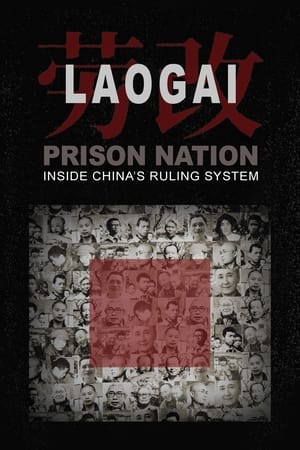
After the founding of the People's Republic of China in 1949, Mao Tsetung established a system of labor camps for systematic repression, known as Laogai, an abbreviation for "Reform Through Labor". In such camps, forced labor and physical and mental torture were used to bring about a so-called mental reform, re-education in the spirit of the Chinese Communist Party. Millions of Chinese were affected. Many were executed. In hundreds of camps, the Party took advantage of the prisoners' free labor to build the economy. Self-criticism and denunciation were often the only way to escape martyrdom. Successive waves of purges culminated in the Cultural Revolution, which saw massive human rights abuses, political assassinations, massacres, and exiles in remote parts of the country. Using unreleased archive footage, the documentary tells the story of the invention, development and improvement of China's totalitarian system of surveillance and repression up to the present day, never told before.
腾飞五千年
中华史记