Having devoted much of his career to programming and film history research, Law Kar, a.k.a. Uncle Kar, places himself before the camera for the first time. This nostalgic trip down memory lane, as he recounts his personal and cinematic experiences, from film criticism, experimental filmmaking to auditioning for Federico Fellini, cumulates in a brief history of Hong Kong cinema itself. Reflecting on the past 80 years, Law Kar's affectionate documentary sheds light on local movies and Chinese cinema, brooding over the socio-political transformation of our perplexed city, as the restless cinephile ponders the role cinema and art play in times of crisis.
A poetic, experimental portrait of four Hong Kong women in London working to digitise records of the handover agreement between the United Kingdom and China. Impressionistic and precise, personal and expansive, Cheung's elegant, eloquent work decodes history and how politics are enacted.
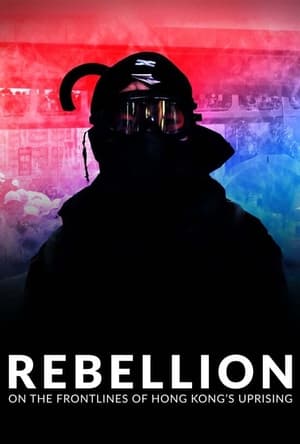
At the forefront of most of Hong Kong's demonstrations, 'frontliners' (aka 'the valiant', yung mo in Cantonese) are the black-clad, masked, often armed youth willing to use violence against the HK government and its heavily-armed police force. Willis Ho's remarkably revealing doc approaches from the inside, giving them voices and offering understanding, not judgment.
Although the Chinese government promised that Hong Kong would retain separate status until 2047, in recent years the Chinese state has consolidated its power over the metropolis. Large-scale protests by the populace have been brutally suppressed. This mix of documentary, fiction, and visions of the future reveals the current state of desolate depression among the people of Hong Kong. “A desperate attempt to capture the final moments of a sinking island”, as maker Chan Tze-woon himself puts it.
Revolutionary at 21. Lawmaker at 23. Most Wanted at 26. With intimate access to the leaders of Hong Kong’s Umbrella Revolution, Who is Afraid of Nathan Law? chronicles one of the world’s most famous dissidents in his fight for democracy against a superpower.
Documentary about Hong Kong.
The Umbrella Movement of 2014, also known as the Occupy Movement, paved the way for Hong Kong’s current upheavals, but unfolded in significantly different ways. This creative documentary focuses on the intellectual, political, and discursive underpinnings of the social and political actions of 2014, before fast-forwarding to 2019. A range of thoughtful and engaged intellectuals, students, scholars, activists, and artists including Benny Tai, Chan Kin-man, Ray Wong, and Agnes Chow (many of whom are facing imprisonment for their democratic activism) articulate a range of philosophies, viewpoints and emotions, set against Hong Kong’s spectacular urban background of skyscrapers, night lights, and street-occupying mass movements.
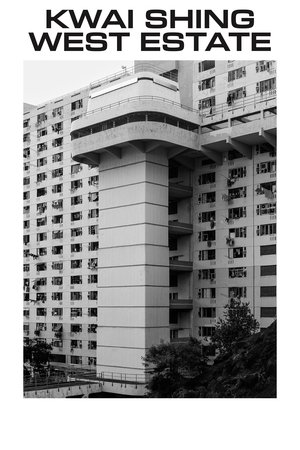
A homage to the social housing architecture that is so atypical of Hong Kong - especially the Kwai Shing West Estate. About half of the population lives in such building complexes, where one experiences a strong sense of loneliness. The neighborhoods are the scene of modern living conditions, but also of social protests, which have been punishable by life imprisonment in Hong Kong since 2020 due to a new law.
The first feature-length documentary to explore the career of Stephen Chow; featuring collaborators, critics, and academics. Produced for the Shout Factory release of his classic work on Blu-ray, "The Stephen Chow Collection" released in 2024. Fans will learn how Chow went from Hong Kong's TVB to feature film riches, with his peculiar brand of localized comedy, to becoming one of the most successful brand names in Mainland China, including the blockbuster reception for his comedy "The Mermaid" in 2016.
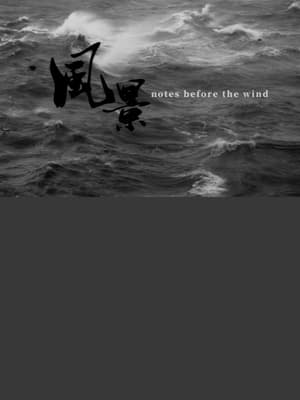
A loose collection of scenes in Hong Kong shot over a five-year period, this film begins with the Umbrella Movement in 2014 and ends right before the summer of 2019, when large-scale social unrest and violent resistance erupted. The everyday scenes capture the ambience and the landscape of change in the city, standing as a quiet prelude to the ensuing conflicts.
Young people are protesting on the streets of Hong Kong in order to bring about change. Air soaked with tear gas, the dark uniforms and loud commands of the police officers in the colourful umbrella sea of the protesters. In the midst of the action, the film documents a brand new protest movement.
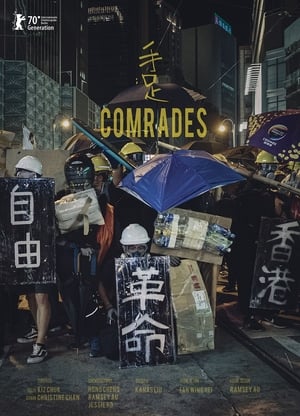
Throughout Hong Kong’s history, Hongkongers have fought for freedom and democracy but have yet to succeed. In 2019, a controversial extradition bill was introduced that would allow Hongkongers to be tried in mainland China. This decision spurred massive protests, riots, and resistance against heavy-handed Chinese rule over the City-State. Award-winning director Kiwi Chow documents the events to tell the story of the movement, with both a macro view of its historical context and footage and interviews from protestors on the front lines.
YAYA is a story about a filmmaker who explores the complex relationship between his family and the domestic worker who spent decades away from her family in the Philippines to raise his. This documentary is a tribute to all the domestic workers in Hong Kong, who has served as the backbone of Hong Kong's economy by unleashing a substantial female workforce into the economy and taken care of so many lives with love and care. You are all heroes in the hearts of the Hong Kong people. - Justin Cheung, the director
The camera floats quietly to capture the beauty that emerges from the mundane. Accompanied by Ryuichi Sakamoto's composition, Arseny Tarkovsky's poem celebrates life.
A single shot, taken during a confrontation between police and demonstrators in Hong Kong's Sham Shui Po neighbourhood, transforms a street confrontation into something transcendently beautiful. The voice of Louis Armstrong adds a level of almost unbearable irony.
The motions and gestures of military riot police, slowed down while performed by dancers, are surprisingly beautiful. Menace and violence estranged from context and time looks eerily strange, and all too familiar. In this gallery piece, Isaac Chong Wai somehow anticipates, a year early, key images of the Hong Kong protests.
Tells the story of how Edward Snowden managed to evade capture by the US. For the first time Snowden tells the story of how he managed to escape so that not to have to spend the rest of his life in an American prison.
The Kowloon Walled City in Hong Kong was once the densest place on earth, a virtually lawless labyrinth of crime, grime, commerce and hope. A Wall Street Journal documentary tracks its colorful legacy and brings the place alive 20 years later.
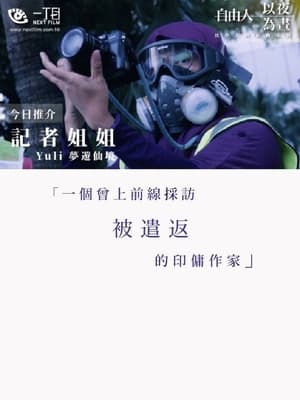
The work documented the story of Yuli, a Hong Kong domestic worker from Indonesia. She is a novelist who won a literature award and also a journalist dedicated to writing. Between the social event that happened in June in Hong Kong, her thoughts and caring about the city are far more from what people used to imagine a narrative of a domestic worker. They are not only domestic workers but they also have other social roles, e.g. a citizen who lived in Hong Kong.
“Umbrellas Move” is a long feature documentary capturing scenes from Hong Kong’s city-wide protest, the occupy movement in 2014. This documentary witnessed a critical page of Hong Kong after transfer of sovereignty over Hong Kong from Britain to China. Around 1200 thousand people have involved in this longest occupation in the history of Hong Kong in 2014. 79 days of occupation, Hong Kong people are fighting for their rights to vote under a fair election in order to be against the political controls from China.