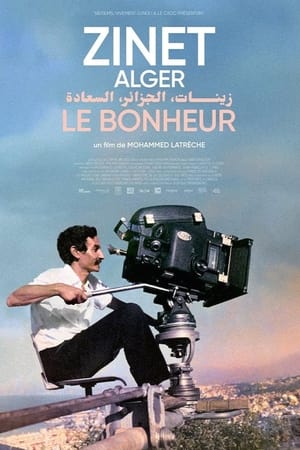
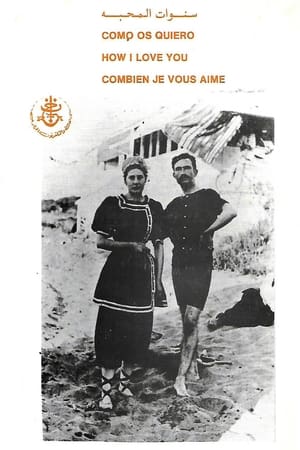
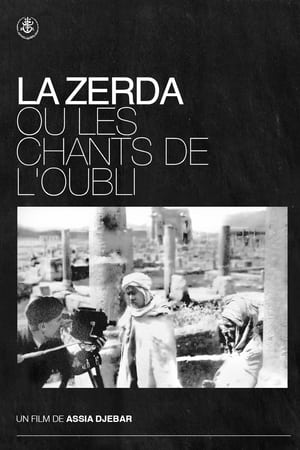
Jacqueline Gozlan - who left Algeria with her parents in 1961 - nostalgically retraces the history of the Algiers Cinematheque, inseparable from that of the country's Independence, through film extracts and numerous testimonies; notably that of one of its creators, Jean-Michel Arnold, but also of filmmakers such as Merzak Allouache and critics such as Jean Douchet. A place of life for Algerians, the Cinémathèque was the hub of African cinemas. Created in 1965 by Ahmed Hocine, Mahieddine Moussaoui and Jean-Michel Arnold, the Cinémathèque benefited from the excitement of Independence. The Cinematheque becomes a meeting place for Algiers society, future filmmakers find their best school there. In 1969, the Algiers Pan-African Festival brought together all African filmmakers, and from 1970, Boudjemâa Kareche developed a collection of Arab and African films.
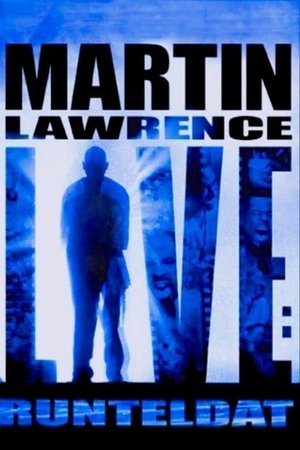
Captures the laughter, energy and mayhem from Hart's 2012 "Let Me Explain" concert tour, which spanned 10 countries and 80 cities, and generated over $32 million in ticket sales.
As the peaceful and determined Hirak movement gathers momentum and hopes for profound political change sweep across Algeria, women are combining femininity and feminism in the past, present, and future.
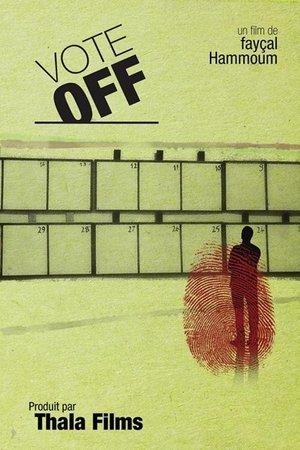
Fayçal Hammoum recounts the 2014 presidential election through non-voting inhabitants of Algiers who, like him, are in their thirties. Be it Bilel, a grocer by default exposed to his customers’ political babbling, or the more politically-charged comments of Younes, a militant FM radio journalist opposed to President Bouteflika’s fourth term, the variety of conversational scenes in no way changes the determination not to vote for an old man who has been invisible for almost two years. The rappers Omar and Brahim are as bereft of hope and voter’s cards as the Tellek webradio DJ, since “the match is fixed”. Moving away from his focus on this subject to film their daily life, the filmmaker draws the portrait of a generation who, as Bilal says with poignant simplicity, “just wants to live
The film depicts a situation that any family could find itself in and that is dealt with in different ways. The Buschner family has divorced. The film does not attempt to search for reasons for the separation and apportion blame, but rather to show how the woman in particular, with her two children aged seven and eleven, copes with the effects of this drastic life event. The woman expresses her feelings shortly after the divorce and her wishes for the future. The man, who now has a new family, also shares his thoughts. The children's statements are particularly moving: despite their great helplessness in the conflict between their parents, they still have new hopes for their mother's relationship.
In February 1966, Pierre Mazeaud and Lucien Berardini traveled to the Atakor massif, in the Hoggar mountain range of the Sahara in southern Algeria. There, they attempted a challenging first ascent: the Takouba spur, one of the peaks adjacent to Garet El Djenoun, a legendary mountain in the Hoggar massif, first climbed by Roger Frison-Roche and Raymond Coche in 1935. The documentary, superbly filmed by Jacques Ertaud, won the Grand Prize at the Trento International Mountain Film Festival in 1966.
TSR documentary on the 1979 expedition to Algeria in the Atakor massif (Hoggar desert), organized by Geneva mountaineer Michel Vaucher and Jean-Blaise Fellay. The climbers make a dozen ascents including the famous summit of Adaouda (which means "finger" in Tamasheq, the Tuareg dialect), by several routes. Then a new route on the peaks of the southern Tezoulegs. They discover the volcanic geological characteristics of the Atakor massif and meet the nomadic inhabitants of the region, the Tuaregs, who are increasingly settling in the town of Tamanrasset.
In 1950, the explorer Roger Frison-Roche made a crossing of more than a thousand kilometers on the back of a camel with the photographer Georges Tairraz II, in the heart of the Sahara, from Hoggar then Djanet in Algeria to Ghat in Libya. From their journey they brought back a large number of color films and documents. Among thousands of photos, they selected 47 images which reflect the various aspects of these immense spaces which occupy a third of Africa in the book "The Great Desert". “The Great Desert, 1000 kilometers on camelback” is the eponymous 85-minute documentary of this epic, released in 1950.
Habiba Djahnine went to meet activists who continue to take action. To meet them, to capture them in the spaces where they live, work or fight. They inscribe a few words of our tormented history. Memory, memory gaps, background noise, demonstrations... The film bears witness to 20 years of political mobilization/repression in Algeria.
In the heart of the Hoggar Mountains, Algerian and French climbers meet on the legendary walls of the central Sahara. More than just an ascent, Tissalatine tells the story of an encounter with oneself, with the land, and with history. The film also retraces Thomas Dulac's return, ten years later, to a site he helped to open up. Driven by the profound voice of singer Djam and the vision of director Hamza Mendil, Tissalatine unveils a living, vibrant Sahara, far removed from clichés, in a sweeping epic of adventure, brotherhood, and spiritual elevation.
In 1973, 6 guides from the National Ski and Mountaineering School (ENSA), including Charles Daubas and Walter Cecchinel, left by truck from Chamonix to Tamanrasset in the desert in Algeria with the aim of climbing some peaks of the Atakor massif including Adaouda and Tizouyag where they do the first of "La Voie de l'ENSA".
The controversial bad-boy of comedy delivers a piercing look at his life, lifting the metaphorical smokescreen that he feels has clouded the public view, commenting on everything from the dangers of smoking to the trials of relationships, and unleashing a nonstop litany of raucous anecdotes, stinging social commentary and very personal reflections about life.
Agnieszka Lukasiak travels to Algeria to capture it's conflict on camera. When she arrives, she's immediately sidetracked by romance with her host, Habib. She turns the camera on herself as she falls in love with him. the atmosphere quickly diminishes when Habib's family steps in and kicks her out. Not to be deterred, on her second visite to Algeria to seek Habib's love, she begins her real journey to expose the underside of the country.
No Jewish divorce is complete without the man literally giving the woman her freedom back. With Israel having neither civil marriage nor divorce, women can get trapped. The film follows several such "chained" women together with Batya, a religious lawyer, who embarks on a struggle against the rabbinical courts.
The climbing couple Heinz Mariacher and Luisa Iovane abandon their usual winter training spot to go in search of places more conducive to free climbing in Algeria in the Sahara desert, more precisely in the Hoggar massif, which saw pass the cream of world climbing Lionel Terray, Roger Frison-Roche, Lucien Bérardini, Michel Vaucher, Pierre Mazeaud, Guido Monzino, Patrick Edlinger, Patrick Berhault and many others. Their objective, to climb the east face of Garet El Djenoun, 500 m high, failed because the wall was too smooth and the cracks unstable. The journey continues in the Hoggar massif towards other peaks, where they find the climbing conditions they were hoping for. An overhang in the face of Tizouyag Nord will prove to be a major challenge for Heinz Mariacher.
Pierre Clément, student and photographer of René Vauthier, first accompanied him to Tunisia to make a film on the country's independence in 1957. Destiny led him to Algeria and his presence in February 1958 at the Tunisian-Algerian border changed his life. . Forever. He took his camera and photographed the attacks on Sakia Sidi Youssef before committing himself body and soul to the Algerian cause. Shortly after, he directed the film “Algerian Refugees” before being arrested, tortured and imprisoned, while his third film, “The National Liberation Army in Almaki”, was not finished. Abdel Nour Zahzah, a director who commemorates Pierre Clément, the director who risked his life, the brother of the Algerian resistance, who disappeared in 2007.
This docu-fiction recounts the difficulties overcome by an ALN detachment whose perilous mission is to transport weapons and ammunition from Tunisia across the Algerian Sahara during the Algerian liberation war (1954-1962) against the French army of occupation.
Cheikh Djemaï looks back on the genesis of Gillo Pontecorvo’s feature film, The Battle of Algiers (1965). Through archive images, extracts from the film and interviews with personalities, the filmmaker retraces the journey of a major work - from the events of the Algiers Casbah (1956-1957) to the presentation of the Lion of 'Or causing the anger of the French delegation in Venice - which left its mark as much in the history of cinema as in that of Algeria.
1962, at the end of the Algerian War, Algerian independence activists are released from Rennes prison. For one night, filmmaker Yann Le Masson films them. They tell him their vision for the future of Algeria and the place women must occupy in the new society to be built. Fifty years later, with the soundtrack missing, Raphaël Pillosio sets out to find these women. Two deaf people set about lip-reading the women filmed by Yann Le Masson, revealing snatches of sentences, words cut short by the camera's shifts. An investigative film in which the few activists still alive discover their old testimonies and tell us their silent story. The reconstruction of the lost soundtrack will remain in suspense; no happy ending will come to absorb the absence, to cancel the ferocious operation of time. An essay film about cinema that depicts their disappearance, and forever keeps them alive.
Pierluca Rossi's Lungo La Pista Dei Contrabbandieri (1990) is an adventure documentary about a mountain bike crossing of the 700 km between the towns of Tamarasset and Djanet in the southern Algerian Sahara, from the Hoggar mountain range to the Tassili n'Ajjer. This crossing, supported by a 4x4 truck and a motorcycle, and never before undertaken by bicycle, emphasizes the rediscovered dimension of slowness, similar to the caravans of the Tuareg, in contrast to the unnatural speed of mechanized desert travel in the 1990s, which was considered the norm at the time due to the distorted image provided by the Paris-Dakar Rally and other similar events.