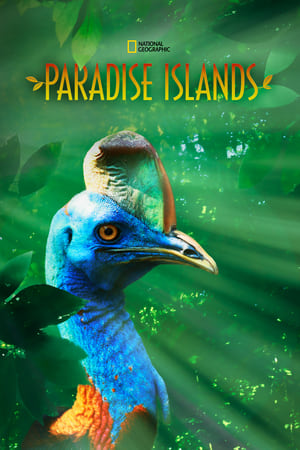
Namibia is a country of contrasts, from the arid savannahs to flowing rivers and rugged coastlines. This documentary explores the natural wonders of the country in southern Africa. Despite the dry and barren habitat, the Kalahari Desert in the east is home to a range of rare and fascinating creatures. Animals must be resourceful and clever to survive in the world’s oldest desert and one of the driest places on Earth, the Namib.
A celebration of California’s wildlife and wild places, and their coexistence with the 40 million people who call it home. Famous for its beaches and Hollywood, California is also a wellspring of biodiversity. Bounded by mountains, deserts and the Pacific Ocean, here are iconic wild places like Yosemite National Park and Death Valley, as well as Baja California’s lesser-known wild beauty.
L'archipel d'Hawaï
Sitting on top of one of the world’s largest super-volcanos are 3,500 square miles of the most spectacular American wilderness. This summer, National Geographic Channel opens this world to you LIVE with a four-night special event. The action reaches boiling point in the world’s first National Park, Yellowstone.
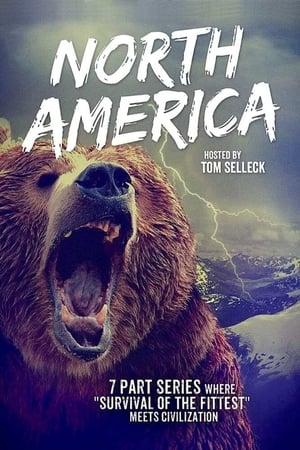
Millions of years ago, incredible forces ripped apart the Earth’s crust creating seven extraordinary continents. This documentary series reveals how each distinct continent has shaped the unique animal life found there.
Ireland is a very different place, seen from above. Looking down, the secrets of our natural landscape, architecture, history and human experience come to light in new and unexpected ways. The hidden stories, memories and the mythologies of a nation, written into the very landscape itself. Filmed exclusively from on high using the latest drone technology, this 2 x 1 hour documentary series showcase Ireland, its splendours and its secrets like never before.
Capturing the high drama of the Serengeti’s distinctive wildlife up close.
Zoologist Jack Randall journeys into Australia's Outback to encounter extraordinary wildlife.
See It Now is an American newsmagazine and documentary series broadcast by CBS from 1951 to 1958. It was created by Edward R. Murrow and Fred W. Friendly, Murrow being the host of the show. From 1952 to 1957, See It Now won four Emmy Awards and was nominated three other times. It also won a 1952 Peabody Award, which cited its
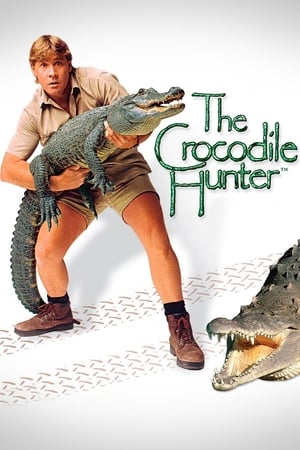
Australian host Steve Irwin and his wife Terri run a wildlife refuge. Their shared passion is educating the world about wildlife, including the much feared crocodile and numerous venomous snakes. Steve's specialty is the capture and relocation of crocodiles. No animal appears too threatening to Steve, his true respect for animals is the foundation for everything he does.
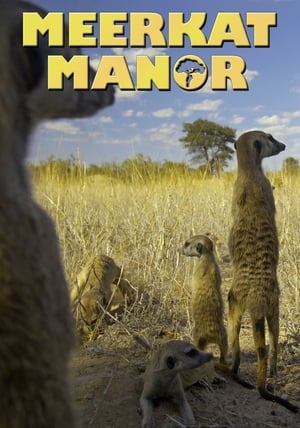
Meerkat Manor is a British television programme produced by Oxford Scientific Films for Animal Planet International that premiered in September 2005 and ran for four series until its cancellation in August 2008. Blending more traditional animal documentary style footage with dramatic narration, the series told the story of the Whiskers, one of more than a dozen families of meerkats in the Kalahari Desert being studied as part of the Kalahari Meerkat Project, a long-term field study into the ecological causes and evolutionary consequences of the cooperative nature of meerkats. The original programme was narrated by Bill Nighy, with the narration redubbed by Mike Goldman for the Australian airings and Sean Astin for the American broadcasts. The fourth series, subtitled The Next Generation, saw Stockard Channing replacing Astin as the narrator in the American dubbing.
Arena is a British television documentary series, made and broadcast by the BBC. Voted by leading TV executives in Broadcast as one of the top 50 most influential programmes of all time, it has run since 1 October 1975 with over five hundred episodes made, directed by the likes of Martin Scorsese, Alan Yentob, Roly Keating, Frederick Baker, Volker Schlondorff and Vikram Jayanti. Arena's subjects are a roll-call of the world's best known cultural figures from the 20th and 21st centuries, from singers Bob Dylan and Amy Winehouse to academics Edward Said and Eric Hobsbawm, from writers Jean Genet and V S Naipaul to artists Francis Bacon and Louise Bourgeois. The current series editor is Anthony Wall.
Polar Bear Week with Nigel Marven
An unprecedented look at the decade-long odyssey to land a man on the moon. This documentary pulls back the curtain on the familiar narrative of the moonshot, revealing a fascinating stew of scientific innovation, political calculation, media spectacle, visionary impulses and personal drama.
True crime fan Yinka Bokinni dives deep into the dark web's murder-for-hire sites. Can you really order someone's death online? And can she save a man with a contract on his head?
Through unprecedented access we showcase the spectacle that is Wild Russia. From east to west, via mountains, volcanoes, deserts, lakes and Arctic ice, this breathtaking six-part series uses stunning cinematography to chart the dazzling natural wonders of this vast country.
To live is to eat. For people around the world in precarious and dangerous circumstances, eating itself is dangerous, precarious, and essential.
Three wildlife camera operators follow six iconic baby animals as they face the challenges of surviving their first year on Earth.
Written and narrated by Dr. Ali Mazrui in the early 1980s and jointly produced by the BBC and PBS (WETA, Washington) in association with the Nigerian Television Authority. Africa's triple heritage, as envisioned by Mazrui is a product resulting from three major influences: (1) an indigenous heritage borne out of time and climate change; (2) the heritage of eurocentric capitalism forced on Africans by European colonialism; and (3) the spread of Islam by both jihad and evangelism. The negative effects of this history have yet to be addressed by independent African leaders, while the West has tended to regard Africa as recipient rather than as transmitter of effects. Yet Africa has transformed both Europe and America in the past, Mazrui points out, and the difficult situation in which Africa finds itself today (economically dependent, culturally mixed, and politically unstable) is the price it has had to pay for Western development.
As the Arctic changes faster than ever, a team of polar bear guides prepares for an epic journey; a first-ever attempt to follow the bears on the sea ice of Hudson Bay. In this high-stakes high-reward venture, they will document the secret world of bears, a mysterious and disappearing realm that is the bears key to survival. Life on the ice is a critical time for these bears. It also remains undocumented, deemed too dangerous for humans to follow, hinted at only through aerial reconnaissance and satellite collar research. The team, armed with traditional ecological knowledge and the latest 4K camera technology, will witness never- before-seen seal hunting strategies and document rapid adaptations to climate change, including whale predation and open-water hunting.