Otelinda and Lutoy, married for almost 50 years, are reminded of the moments of greatest tension they experienced, in the Angolan civil war, when confronted with the images on the news about the war in Ukraine. Narrated by Otelinda, her story, we learn her story from the 25th of April, until the day she waited alone for her husband on the verge of misfortune, in Cabinda. Her narration is accompanied by the contrasting images of their daily lives in 2023, as well as the landscapes and people of the country where they now reside. Their relationship initially appears distant, but becomes closer towards the end of the narrative, through the memories of everything they suffered together.
Angola: thirty years of independence, three years of peace. Capital, Luanda, a city built for 600 thousand people where four million now live. Ten characters guide us through different ways of living and interpreting the city. People from all of the country's provinces meet at this crossroads. They are the life of the city, transforming it by inventing ways to make money and reinventing themselves.
While the center of Angola's capital Luanda is now ranked as one of the most expensive places in the world, the majority of the city's population lives in abject poverty. But young people are rebelling and creating their own counterculture with their own music styles and acrobatic dances, using the "ghetto" as a trademark to define their style.
Sissako visits a war-torn Angola after thirty years of war in search of a friend and thereby through interviews reflects on the lost utopias of a generation of Africans who experienced the liberation struggles. His camera is witness to the dislocation and despair of those he encounters living in Angola, however he also discovers the resilient spirit of Africa and optimism for its future in unexpected ways.
An investigative documentary on the Angolan conflict, filmed on location in Portuguese-controlled Africa by Robert M. Young and first broadcast in 1961. (Note: Originally broadcast as an episode of NBC’s White Paper series (1961), but listed separately due to its independent documentary production, hazardous field filming, major journalistic impact, and sustained scholarly treatment as a standalone documentary work.)
Blood Diamonds is a made-for-TV documentary series, originally broadcast on the History Channel, that looks into the trade of diamonds which fund rebellions and wars in many African nations. The program focuses primarily on two nations: Sierra Leone and Angola. Diamonds which are traded for this purpose are known as blood diamonds.
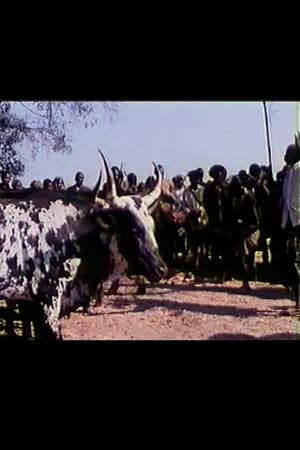
Scenes from the three last days of the festival in which the population of the old Kingdom of Jau participate yearly.
Racismo: Uma Descolonização Em Curso
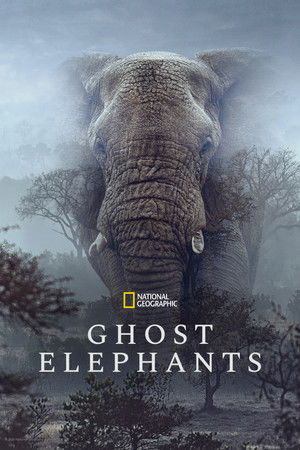
In Angola's mist-shrouded highlands, three KhoiSan master trackers embark on a spiritual quest to rediscover the legendary "ghost elephants" of Lisima, creatures presumed lost but remembered in ancestral trance, ritual, and memory.
In 1975, Ryszard Kapuściński, a veteran Polish journalist, embarked on a seemingly suicidal road trip into the heart of the Angola's civil war. There, he witnessed once again the dirty reality of war and discovered a sense of helplessness previously unknown to him. Angola changed him forever: it was a reporter who left Poland, but it was a writer who returned…
A proposito dell'Angola
In Luanda, one of the world's poorest and most dangerous places, three students from Angola's only music school work towards their end-of-year concert. The Music School is Angola's first and only school of its kind. It houses some 80 students, most of them desperately poor. Many face disapproval and outright rejection from their families who can't see a future in music. This film asks if, despite the ravages of 27 years of civil war, musical passion can overcome terrible hardships.
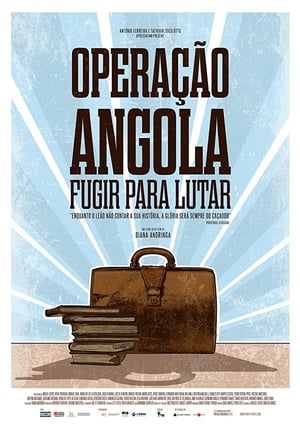
In 1961 the liberation struggles start in Angola against the portuguese colonial power. The African students in Portugal fear for their safety and plan to flee outside the country. With the help of Theology students, French and North-American pastors, the operation code name "Angola" fled over 100 african students abroad towards freedom, amongst them several future leaders of african countries.
An anthropological film of the people of Angola.
Filmed immediately after the end of the civil war in Angola, Há Sempre Alguém Que Te Ama records the return of Pocas Pascoal to the country where she was born, in an attempt to reconstruct the episode that, in 1975, led to the capture of the director along with her mother and sisters. An intimate documentary about memory and self-(re)construction.
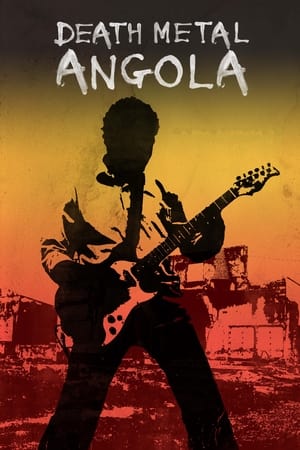
Following nearly 40 years of unrelenting war, peace and reconstruction are slowly arriving to Angola. Huambo, Angola’s second largest city, finds 55 children in the Okutiuka orphanage under the care of Sonia Ferreira. Her boyfriend, Wilker Flores, is a death metal guitarist who uses sounds and rhythms of this hardcore music as a path to healing. Or, as Sonia says, “to clear out the debris from all these years of war.” The feature documentary follows Wilker and Sonia’s attempts to stage Angola’s first-ever national rock concert, bringing together members from different strands of the Angolan hardcore scene from different provinces, as it all unfolds in fits and starts, against the bombed out and mined backdrop of the formerly stately Huambo.
RAI documentary filmed in 1996 about Angola, whose people, after more than ten years of anti-colonial struggle and twenty of civil war, still suffer due to the amount of active landmines scattered all over the country.
Brazil and Angola while on either side of the Atlantic Ocean have the same language, a common colonial past and many shared stories. In this film, correspondence is exchanged between these two places – some people are longtime friends, others have never met. Their stories intertwine and tell about migration, nostalgia, belonging, war, prejudice, exile and distance. The search for identity and flow of memory are driven by the line of affection that binds the seven pairs of speakers presented in this documentary, people whose life stories are traced between Brazil, Angola and Portugal.
Documentary about how the government in Angola used Fake News against the independence movement in its own country and how the Western press simply adopted much of the misinformation...
Following the 1884–85 Berlin Conference resolution on the partition of Africa, the Portuguese army uses a talented ensign to register the effective occupation of the territory belonging to the Cuamato people, conquered in 1907, in the south of Angola. A STORY FROM AFRICA enlivens a rarely seen photographic archive through the tragic tale of Calipalula, the Cuamato nobleman essential to the unfolding of events in this Portuguese pacification campaign.