Leonardo da Vinci finds it difficult to pursue his own dreams while serving as the Duke's court artist, but young Roberto takes risks to convince the Master not to give up on his dreams. In this moving story of friendship, the Renaissance genius invents a flying machine and helps Roberto reach new heights.
Drawing inspiration from his personal encounter with the Italian refugee child Giovanna during World War II, Markus Imhoof tells how refugees and migrants are treated today: on the Mediterranean Sea, in Lebanon, in Italy, in Germany and in Switzerland.
What are we talking about when we talk about negotiations? About the state's concessions to the Mafia in exchange for ending the massacres? About who assassinated Falcone and Borsellino? Of the eternal coexistence between the Mafia and politics? Between the mafia and the church? Between the Mafia and law enforcement? Or is there more? A group of actors enacts the most relevant episodes of the affair known as the Mafia-state negotiation, impersonating mobsters, secret service agents, high officials, magistrates, victims and murderers, Freemasons, honest and courageous people, and courageous people up to a point. Thus one of the most intricate events in our history becomes an exciting tale.
January 6, 1980. President of the Sicily Piersanti Mattarella is going to Mass with his family when a young man approaches his car and shoots him in cold blood, killing him. The young Deputy Prosecutor on duty that day is Pietro Grasso, future General Anti-Mafia Prosecutor and President of the Italian Senate. His investigations are continued by Giovanni Falcone, who uncovers dangerous connections between the Mafia, the ruling Christian Democratic Party, neo-fascist terrorists, and secret services.
In a race against time and all odds, the revolutionary F1 racing car Ferrari 312B will get back on the Monaco circuit, 46 years later, under the wing of it’s creator, the genius engineer Mauro Forghieri.
Dieci storie proprio così
The countryside around the Po delta is dotted with abandoned houses and farmhouses. The landscape appears desertic, almost humanless. Some people shares stories about their bond with the land while the italian writer Gianni Celati documents the tragedy and the loss of values in this new landscape of desolation, with a superb narrative style.
After the World War I, Mussolini's perspective on life is severely altered; once a willful socialist reformer, now obsessed with the idea of power, he founds the National Fascist Party in 1921 and assumes political power in 1922, becoming the Duce, dictator of Italy. His success encourages Hitler to take power in Germany in 1933, opening the dark road to World War II. (Originally released as a two-part miniseries. Includes colorized archival footage.)
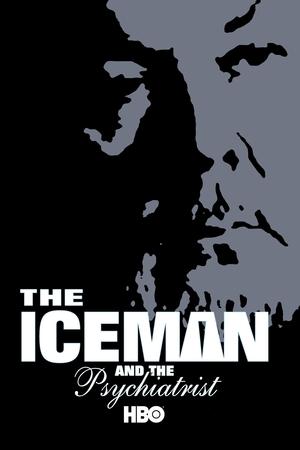
For the third time, HBO cameras go inside Trenton State Maximum Security Prison--and inside the mind of one of the most prolific killers in U.S. history--in this gripping documentary. Mafia hit man Richard Kuklinski freely admits to killing more than 100 people, but in this special, he speaks with top psychiatrist Dr. Park Dietz in an effort to face the truth about his condition. Filled with more never-before-revealed confessions, it's the most chillingly candid Iceman special yet as it combines often-confrontational interview footage between Kuklinski and Dietz with photos, crime reenactments and home movies that add new layers to this evolving and fascinating story.
In Made in Italy, the young filmmaker Fabio Wuytack discovers an old film which was shot more than 100 years ago in Carrara, Italy, by the inventors of cinema, the Lumière brothers. Fabio decides to bring the film back to the charming little marble city where even Michelangelo came to select marble for his sculptures. With the help of a sinister cinema owner, some rough mineworkers, an enthusiast old priest and other fascinating characters, he tries to find the mythical location where the Lumière brothers filmed. The result is an Italian journey full of commedia del'arte that brings Fabio closer to his roots than he could ever have imagined
The film follows Vincent Schiavelli as he returns to Polizzi Generosa, the very town in Sicily his grandparents emigrated from in 1901.
The intimate and passionate portrait of the late Max Croci in a documentary that recalls the human and cultural depth with the testimonies of friends and colleagues.
Every summer on Palermo's Mondello beach, over 1,000 cabins are built in preparation of the Ferragosto holiday. Centered around a family who goes into debt, three women holding onto the feeling of youth, and a politician seeking votes -- a vanity fair of beachgoers hiding behind the memory of a social status that the economic crisis of recent years has compromised.
He is considered the greatest European poet of the Middle Ages and his work unfolds the whole panopticon of occidental education – theology, philosophy, sciences, politics and literature. But who has really read it, the “Divine Comedy”? Who knows more of its creator Dante Alighieri than that he had an eagle-like profile and was in love with a woman named Beatrice? 700 years after Dante’s death, the filmmaker Adolfo Conti travels through Italy with Dante’s words in mind and eyes to see the world as Dante did. As the film encounters the beauty of arts and the Tuscan landscape, the forces of nature, a dramatic life story is unfolded.
A documentary that uncovers the careers of a population of entertainers never heard from before: Black actors in Italian cinema. With modern day interviews and archival footage, the documentary discloses the personal struggles and triumphs that classic Afro-Italian, African-American and Afro-descendant actors faced in the Italian film industry, while mirroring their struggles with those of contemporary actors who are working diligently to find respectable, significant, and non-stereotypical roles, but are often unable to do so. Blaxploitalian is more than an unveiling of a troubled history; it is a call-to-action for increased diversity in international cinema through the stories of these artists in an effort to reflect the modern and racially diverse Italy.
The 1960s opened with La Dolce Vita by Federico Fellini and its unforgettable lead: Marcello Mastroianni. The actor seemed to glide effortlessly through his roles — and through life — as if to say that life is not all that serious, or perhaps that it is far too serious not to be laughed at. But what kind of man was hiding behind the actor with the handsome, boyish looks, who appeared so gentle and nonchalant?
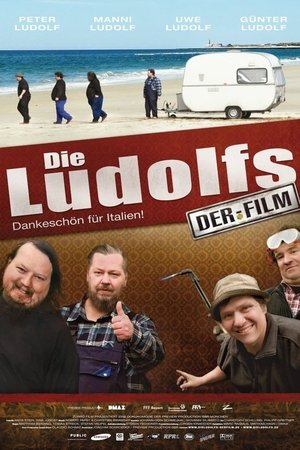
The four brothers Peter, Uwe, Manni and Günter live together in the German town of Dernbach and run what is probably the most chaotic car recycling business in Germany. Nothing is the same here as in other junkyards. Over four million spare parts lie in huge piles in the brothers' warehouse. Nevertheless, they manage to find just the right spare part time and time again and get a car back into shape.
A shocking investigation into the illegal rhino trade and the international crime syndicates pushing an endangered species toward extinction.
The capture of Naples, the first great European city to be liberated, revealed the magnitude of the tasks involved in re-creating the means of livelihood and the machinery of government in a devastated, starving and disease-ridden city.
Through the perils of air combat, and an emergency landing behind enemy lines in Italy, Hank Sciaroni utilized his capability to speak Italian to help get him and his men to safety as the Germans closed in.