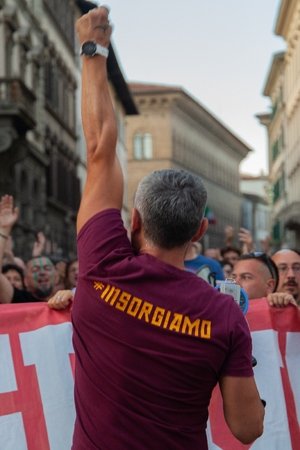
Negotiating Amnesia is an essay film based on research conducted at the Alinari Archive and the National Library in Florence. It focuses on the Ethiopian War of 1935-36 and the legacy of the fascist, imperial drive in Italy. Through interviews, archival images and the analysis of high-school textbooks employed in Italy since 1946, the film shifts through different historical and personal anecdotes, modes and technologies of representation.
La rosa dei nomi
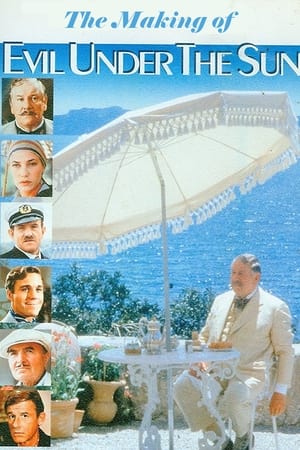
Director Guy Hamilton and several of the stars of Agatha Christie's "Evil Under The Sun" walk you through the making of the film.
A Place of Our Own
"City of Baseball" is a documentary that explores both the past and the present of the Italian baseball league in the seaside resort of Nettuno near Rome. Through league pioneers, current players, fans, and local historians, "City of Baseball" captures the story of how the 1944 Allied invasion of Nettuno brought the American pastime to a town which embraced the sport with a passion that continues today.
The film follows Vincent Schiavelli as he returns to Polizzi Generosa, the very town in Sicily his grandparents emigrated from in 1901.
Video diary from behind the scenes of 2002's "Cruise of the Gods."
This documentary was written with passion and love for cinema, and on the other hand, he blamed her. Our fictional character for this documentary talks about her passion for cinema and how it affected her life and recounts the decades that passed on the cinema one after the other.
Thousands of undocumented migrants are illegally employed and exploited in the Italian crops to grow Italy's food. One Day One Day follows their lives from the inside of Italy's biggest slum.
For eight centuries, between the 9th and 1st century BC, the Etruscans, inhabitants of the Italian peninsula, were one of the most powerful peoples of the Mediterranean basin, and when they disappeared they left behind impressive necropolises, vestiges of sanctuaries and even entire cities. How did they attain such power? How far did they extend their dominion and influence? What were the causes of their decline?
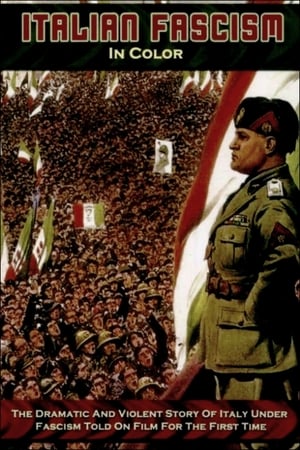
After the World War I, Mussolini's perspective on life is severely altered; once a willful socialist reformer, now obsessed with the idea of power, he founds the National Fascist Party in 1921 and assumes political power in 1922, becoming the Duce, dictator of Italy. His success encourages Hitler to take power in Germany in 1933, opening the dark road to World War II. (Originally released as a two-part miniseries. Includes colorized archival footage.)
What are we talking about when we talk about negotiations? About the state's concessions to the Mafia in exchange for ending the massacres? About who assassinated Falcone and Borsellino? Of the eternal coexistence between the Mafia and politics? Between the mafia and the church? Between the Mafia and law enforcement? Or is there more? A group of actors enacts the most relevant episodes of the affair known as the Mafia-state negotiation, impersonating mobsters, secret service agents, high officials, magistrates, victims and murderers, Freemasons, honest and courageous people, and courageous people up to a point. Thus one of the most intricate events in our history becomes an exciting tale.
It's a condition known as "hypertrichosis" or "Ambras Syndrome," but in the 1500s it would transform one man into a national sensation and iconic fairy-tale character. His name: Petrus Gonsalvus, more commonly known today as the hairy hero of Beauty and the Beast.
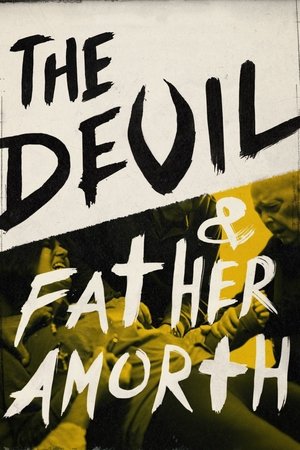
William Friedkin attends an exorcism with Father Gabriele Amorth, as he treats an Italian woman named Cristina for the ninth time. Prior to filming, Cristina had purportedly been experiencing behavioural changes and “fits” that could not be explained by psychiatry, and which became worse during Christian holidays.
Narrated by Sir Derek Jacobi - star of the landmark television series "I, Claudius" - this documentary explores art and culture around the Bay of Naples before Mount Vesuvius erupted in AD 79. The bay was then the most fashionable destination for vacationing Romans. Julius Caesar, emperors, and senators were among those who owned sumptuous villas along its shores. Artists flocked to the region to create frescoes, sculpture, and luxurious objects in gold, silver, and glass for villa owners as well as residents of Pompeii and other towns in the shadow of Vesuvius. The film concludes with the story of the discovery of Pompeii and Herculaneum from the 18th century onward.
Milo Manara revolutionized the comics imagination, liberating female desire through the protagonists of his comics. His career was marked by his encounter with Hugo Pratt, his mentor and companion, and by his exploration of the power of sex as a political act, culminating in the publication of Il gioco. His partnership with Federico Fellini redefined the boundaries between eroticism, cinema, and comics, and his unmistakable style made him a point of reference for entire generations.
The four brothers Peter, Uwe, Manni and Günter live together in the German town of Dernbach and run what is probably the most chaotic car recycling business in Germany. Nothing is the same here as in other junkyards. Over four million spare parts lie in huge piles in the brothers' warehouse. Nevertheless, they manage to find just the right spare part time and time again and get a car back into shape.
A powerful depiction of war in infamous global conflict zones. Directed by Oscar/Emmy documentary makers Buddy Squires and Graeme Scott (know for Sam Smith), this film provides a rare and powerful insight into humanity and hope in the depth of war and the greatest global humanitarian crisis of the last several decades.
In April 2015, two shipwrecks in the central Mediterranean resulted in over a thousand deaths. The first, on 12 April, occurred when an overcrowded boat was approached by a large commercial vessel. Less than a week later, on 18 April 2015, a similar incident led to over eight hundred deaths after an overcrowded vessel collided with a cargo ship that had approached to rescue its passengers. Both incidents are in part the result of changing EU policies toward at-sea rescue, particularly the retreat of state rescue operations and a resulting onus on commercial vessels to fill the ‘rescue gap’.
Erinnerungen an Lucio Fulci