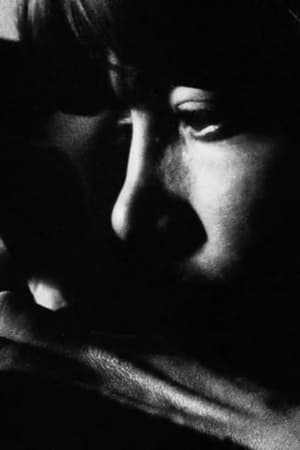
Featuring Joan Adler (who also appears in Chinese Checkers), Soliloquy is one of the four early Stephen Dwoskin films that were awarded the Solvey prize at the EXPRMNTL festival in Knokke, Belgium in 1967. “In Soliloquy a girl broods uncertainly over a failed love affair, while the camera roves over her fingers, her cigarette, her knuckles, her lips and the hand mirror in which she peers. In its dark reflection one isolated eye seems a dead thing, twitching; the split between her body and her spoken thoughts becomes a strange bilocation of consciousness; towards the end, an aeroplane drones overhead” (Raymond Durgnat)
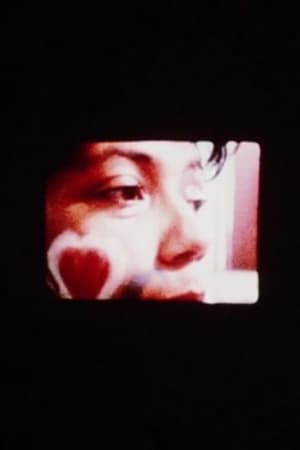
Two women in a living room: smoking, playing cards, listening to the radio. As often in Dwoskin’s films, the use of masks, make-up and costumes allows the characters to playfully transform themselves. Shot in colour film, C-film exuberates swinging London energy. In the second part of the film, the women appear to be watching the rushes of the film on an editing table. ”We are making a movie” we hear them say. As Dwoskin points out, “C-film asks how much is acting acted”, an ongoing question in Dwoskin’s cinema. Produced by Alan Power, with Esther Anderson & Sally Geeson.
A man walks towards the camera down the end of a street to the sound of 'Jesus’ Blood Never Failed Me Yet', a composition by Gavin Bryars based on a loop of an anonymous homeless man singing the song. The man’s voice is progressively intensified by an instrumental accompaniment, which increases in density and richness, before the whole thing gradually fades out. Dwoskin’s film was produced to be shown during the premiere of Jesus' Blood Never Failed Me Yet at the Queen Elizabeth Hall, London in December 1972. For Dwoskin, it represents “… the singing voice of the last days of a London drunk (anonymous) as the orchestra raises him to heaven. The faint ghost image of a figure swims gradually to you through the grains of film low light…”
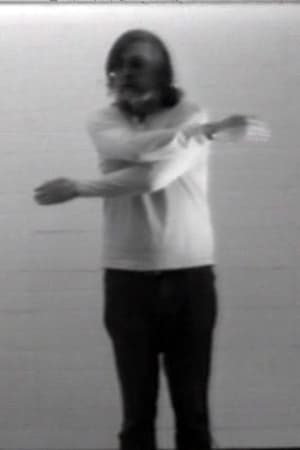
In an ironic reference to body art, process art and performance, Baldessari challenges definitions of the content and execution of art-making. Performing with deadpan precision, he moves his hands, arms and entire body in studied, minute motions, intoning the phrase "I am making art" with each gesture. Each articulation of the phrase is given a different emphasis and nuance, as if art were being created from moment to moment. This index of body movements is ironically offset by the repetitive monotony of the exercise.
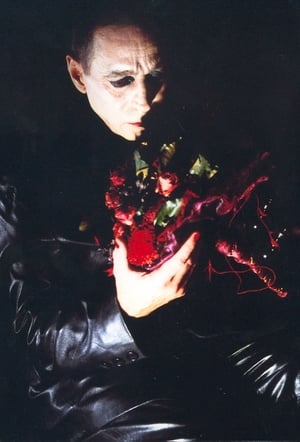
The film appears like a ritual with splendids and crypteds psalms. The Great Master of Order (Marcel Mazé, new fetish actor after Aloual) seduces the young male prey with a running cinema projector which carves Murnau's Nosferatu extracts on their bodies. Metamorphosis, rituals passages, Eros and Thanotos, illusion and reality, film into the film are the themes and images in perpetual osmosis in this Stéphane Marti's opus.
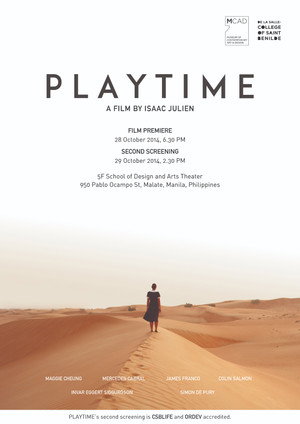
Playtime’s cosmopolitan spectacle, presented in a kaleidoscopic montage across seven large screens, interconnects the lives of its archetypical characters—hedge fund managers and art world players in London; a photographer in Reykjavik; and a Filipina houseworker in Dubai—each of whom is based on a real-life individual directly affected by the market collapse.
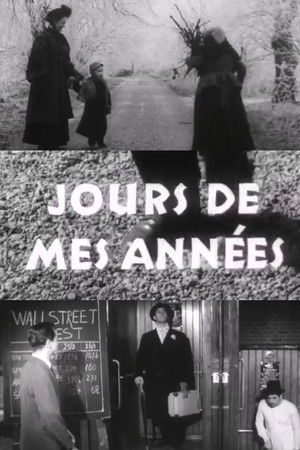
An experimental short film that evokes moments in the life of a man recreated through the magic of memory. Made from documents from various sources, this film is composed of several scenes: the stages of the day and of life between joy and carefree youth, the cruelty of the working world, the horror of war. The final result is put into perspective with the birth of a child, perpetuating the cycle of life.
Experimental short overlays footage of buildings and fields with that of a spiral galaxy.
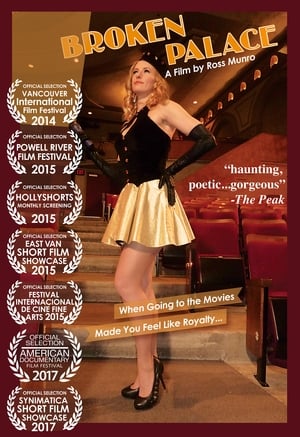
A short documentary about the rapidly disappearing era of heritage movie palaces and the film going experience once offered within those hallowed walls.
We live with stories. And it's hard for us to give up on these stories, which provide us our identity, a way of understanding ourselves. Reflections from three successive generations are dusted off and presented as remaining fragments. An attempt to archive thoughts on familial history, narrative traditions, human perception and "the story" from known and unknown sources. "There is history behind it and the history becomes the story and the story becomes the pattern and the pattern becomes rigidity."
Crashing waves, the cry of a gull, silence.
A Tibetan Lama. His disciple. The disciple's wife, young boy and terrier. An old tugboat crossing the Mississippi River. A man in his seventh month of solitude. His hermitage built by his own hands. The man's bloodhound; his cat. Clouds crossing the Continental Divide. A mountain stream. A girl. The sun.
Someone falls off the scene and a tree is upside down. In the search for the roots, people are torn from their usual order, while in the dark connections are made. A woman tastes of the primordial soup and we end up in a system of people spinning around themselves. Only one person remains alone, but he gets unexpected comfort from somewhere.
Goodbye Fantasy is about two bodies in relation to each other as they let go of multiple cinematic universes they occupy together. Transforming from a fantasy body to a dreaming body to a dying body, they enact different constellations of social and political power as they relate to each other within the tight construct of the frame.
After a sudden revelation about a partner, two close friends have a heart-to-heart that could tear them apart.
The story is the closure, the film is how pain and anxiety are carried by the wind. There is no use trying to exert control, it only causes the pain/anxiety to linger. It must run its natural course. The Mistral can be beautiful and terrible, if it catches onto you/your soul becomes wrapped in its temper. It dances over the water changing its course to make your light unpredictable, terrible but beautiful ... solo or in tandem. The story is the jazz by which these events take place. To exert any force over the film would not be the story. I am consumed by the flame.
"A good friend of mine died at 9:10 a.m. Saturday, July 21, 2007... my film piece is called "Quiet Chaos of Desire" it comes out of my experience in a sideward glance at my father in-laws passing and the resulting pain for my wife, then the resulting understanding and strength that has arisen from this between us. The flow of blood which creates the bond that is family was broken, bandaged, then coagulated...Life without suffering is impossible. Scars have the power to remind us that the past is real...and although this event is past the sound of death's rattle never leaves." (C.E.B.)
The surreal film Newscaster/Dragon/Maggots is a transmission of what lurks in between the channels. This is a rotoscoped piece of animation created from three randomly selected pieces of found footage. The foundation of this piece is based in mathematics, chance and montage editing measured in increments of triangular numbers. After the Formalist groundwork was laid, elements of Surrealism were employed to take the film beyond the initial framework of the metric and rhythmic editing process. The pixels were playfully manipulated and melded together into an entirely new form, backed by a noise composition set into place without regard for pacing, only duration. Music by legendary noise musician Merzbow.
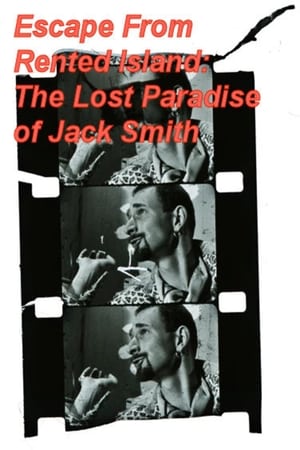
In his essay film, Jerry Tartaglia, longtime archivist and restorer of the film estate of queer New York underground, experimental film, and performance legend Jack Smith, deals less with Smith’s life than with his work, analyzing Smith’s aesthetic idiosyncrasies in 21 thematic chapters. It's a film essay about the artist’s work, rather than a documentary about his life. An unmediated vision of Jack Smith, an invitation to join him in his lost paradise.
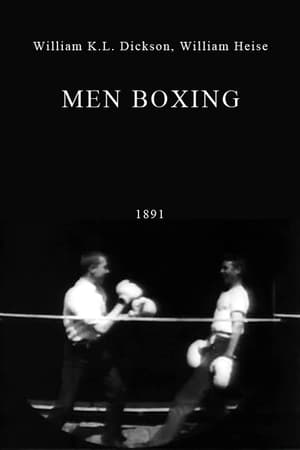
Experimental film fragment made with the Edison-Dickson-Heise experimental horizontal-feed kinetograph camera and viewer, using 3/4-inch wide film.