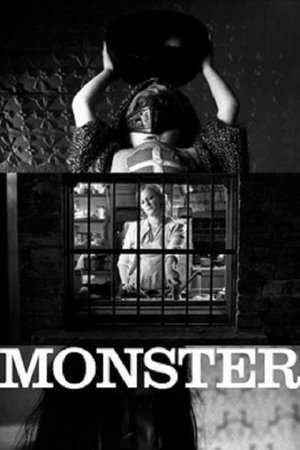
Erica has a secret relationship to the married Sebastian. When his wife Liv finds out, she decides to confront Erica over an evening of gin and tonics. Erica is soon being pushed to question what things in life are worth fighting for.
Kuhle Wampe takes place in early-1930s Berlin. The film begins with a montage of newspaper headlines describing steadily-rising unemployment figures. This is followed by scenes of a young man looking for work in the city and the family discussing the unpaid back rent. The young man, brother of the protagonist Anni, removes his wristwatch and throws himself from a window out of despair. Shortly thereafter his family is evicted from their apartment. Now homeless, the family moves into a garden colony of sorts with the name “Kuhle Wampe.”
Luise, called Pünktchen, and Anton are closest of friends. Being the daughter of a wealthy surgeon, young Pünktchen lives in a great house. Her mother, who always travels through the world more for public relation reasons than for the social tasks she pretends to fulfill, is never available to her as a mother. Anton, son of a single and sick mother in financial trouble, does his best to help her out of it by working late. Pünktchen decides to help her only friend (as nobody else would anyway) and starts singing in public places. Trouble arises when Anton can't resist stealing a golden lighter and Pünktchen's secret life is discovered by her parents. Two troubled families finally can see the need for actions to be taken.
Two homicide detectives are on a desperate hunt for a serial killer whose crimes are based on the "seven deadly sins" in this dark and haunting film that takes viewers from the tortured remains of one victim to the next. The seasoned Det. Somerset researches each sin in an effort to get inside the killer's mind, while his novice partner, Mills, scoffs at his efforts to unravel the case.
In this classic German thriller, Hans Beckert, a serial killer who preys on children, becomes the focus of a massive Berlin police manhunt. Beckert's heinous crimes are so repellant and disruptive to city life that he is even targeted by others in the seedy underworld network. With both cops and criminals in pursuit, the murderer soon realizes that people are on his trail, sending him into a tense, panicked attempt to escape justice.
Traveling businessman David Mann angers the driver of a rusty tanker while crossing the California desert. A simple trip turns deadly, as Mann struggles to stay on the road while the tanker plays cat and mouse with his life.
After the death of his mother, a young boy calls a radio station in an attempt to set his father up on a date. Talking about his father’s loneliness soon leads to a meeting with a young female journalist, who has flown to Seattle to write a story about the boy and his father.
Antonin and Leonor are hunting larks. He is as submissive as his sister is voracious. One day, a dog attacks them.
A nurse's aid, Cathy lives alone. Too alone. When her sister, with whom she's had a falling-out, calls her for her birthday and invites her to the beach, Cathy is exhilarated. But the day gradually slips away from her.
FBI Agent Lee Harker is a gifted new recruit assigned to the unsolved case of an elusive serial killer. As the case takes complex turns, unearthing evidence of the occult, Harker discovers a personal connection to the merciless killer and must race against time to stop him before he claims the lives of another innocent family.
Pride is the first of the seven deadly sins. The introduction is made through early allegorical forms and figures (triumphal procession, dance of death, Baroque tragedy etc.) The triumphal procession of the giant haystack as a symbol of human vanities becomes a military parade of abrupt, functional and arrogant gestures. The most diverse musical fragments and rhythms intone the montage of details in the staged triumphal procession, juxtaposed with documentary images, including marches, ticker-tape parades and military review.
Aurelio Saravia is a powerful politician who holds office in Uruguay in the mid-1960's. When Aurelio's mistress kills herself, he adopts their illegitimate daughter Masangeles despite the stern objections of his wife Aurora. Masangeles finds herself growing up in a home ruled by a corrupt and self-centered tyrant and his manic colleagues while Uruguay teeters on the brink of civil war as bands of revolutionaries battle government militias. When she turns fourteen, Masangeles discovers a secret passageway in their home that leads to sanctuary in a nearby church which also serves as a storehouse for guns and ill-gotten cash. Teenage Masangeles falls in love with Santiago, her stepbrother who has joined the rebels fighting against the state, and she persuades him to take her virginity.
Vadim, a part-time dump truck driver in Leningrad, picks up an extremely young woman, along with a newborn baby. Vadim is forced to spend the rest of his day with Anna, helping her untangle herself from unpleasant, dramatic, and even tragic situations – and she and she alone is to blame for all of them. The baby, which Anna stole in order to make an impression on an estranged lover, is finally returned to its parents, but the problems that the theft caused remain.
In Georgia during WWII Zurikela, an orphan boy, meets Khatia, a blind girl, and vows to help her to see again.
Zura, a son of a rich businessman, steals a car of his father’s friend to amuse his classmates. When informed about it, the school principal discards him from the bike tournament. Nevertheless, Zura’s father manages to persuade her to allow his son to participate and even succeeds in bribing his championship. Zura’s classmates know that he became a champion undeservedly but can’t do anything about it. Only Khatuna, his alleged girlfriend, and Lexo, Zura’s friend, dare to protest against it. Their lack of loyalty enrages Zura and in the rush of the blood he crashes his father’s car. The accident takes Laxo’s life. Zura’s father does his best to save his son from deserved punishment but the first one against his decision is Zura himself.
Sophiko, a well-known journalist, seems to be more close to many of her respondents when they need her advice than to her family members. All engrossed in her work, she suddenly finds out that she is losing her husband who has started a love affair with another woman. Of course, it strikes her badly but life never lets her to concentrate on her personal problems.
A cult of diners, restaurants and an excessive eating prevails in the City of Joy. Different contests are held in cooking the Georgian cuisine. Makro, a famous singer, decides to lend some spirituality to the city of gluttons. For that purpose she decides to set up a gallery of beautiful paintings in one of the city’s restaurants. The owners of the restaurant oppose that decision, but due to Makro’s agility the tenants of the city carry the paintings to the new museum.
In early 20th century Vietnam, a nobleman scorns everything Western after his beautiful fiance dies in an auto wreck and forces the poor villagers to destroy all their "modern" possessions. Loosely based on the novel "Chùa Đàn" by Nguyễn Tuân
On May 1, 1975 with Viet Cong troops march through Saigon celebrating their victory. Tham, caretaker of Victory Hotel, a relatively small establishment in downtown Saigon, nervously observes these celebrations. The owners have fled Saigon and the hotel is to be requisitioned by the new government. Tham wonders what his fate will be under the new regime. The next day he is told that that the hotel is to be transformed into a collective flat for the Viet Cong cadre and their families now entering the city. Tham is not hostile to this but is concerned about his place in the new set up. Will he still have a job? Will he be treated as an enemy?
Charlie, a 17-year-old girl tortured by doubt, is thrilled when she becomes friends with Sarah, but when Sarah tires of Charlie and looks for a new friend, their relationship takes an ominous turn.