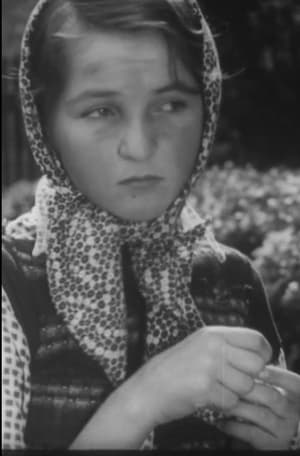
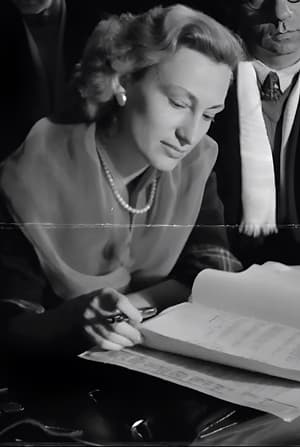
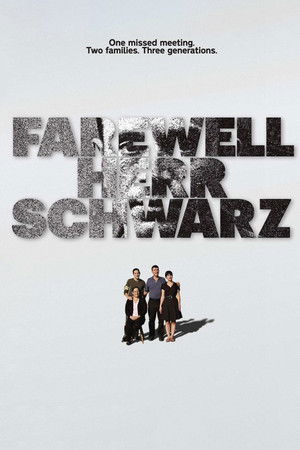
The story of Leo Bretholz, who was born to Jewish parents in Vienna in 1921 and fled Nazi Austria in 1938 at the urging of his mother. Starting with this, the documentary depicts the community of Holocaust survivors in Baltimore, one of the largest in the United States, and creates a touching portrait of the Austrian-American and the Polish emigrant Bluma Shapiro.
Documentary on the attempted murder of two Mexican day laborers in Farmingville, New York.
Branching Paths is a mosaic of the developers, publishers and people who gravitate to indie games in Japan.
An in-depth look at the prison system in the United States and how it reveals the nation's history of racial inequality.
The Indians that the British failed to subdue were called "born criminals" and were parked in camps. Yolande Zauberman's film tells the story of a family. The grandparents, Hira Bai and Serjian, grew up in the jungle. This is where their tribes lived, which the British were unable to subdue.
In 1988, 20-year-old Kirsi Marie Liimatainen travels from Finland to the GDR, to study Marxism-Leninism at the International Youth Academy. In summer of´89 the course ends and the students spread out over the world. Afew months later, the Berlin Wall falls. 24 years later Kirsi, sets out on a cinematic journey to Nicaragua, South Africa, Chile, Bolivia, Lebanon, Germany and Finland to meet up once more with her former fellow students. What remains of their dream of the liberation of the oppressed?
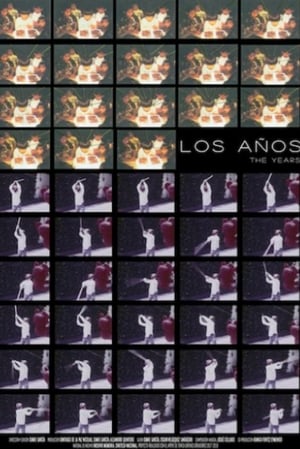
Jorge de Sena was forced to leave his country. First he moved to Brazil, and later to the USA. He never returned to Portugal. During his 20-year-long exile, he kept an epistolary correspondence with Sophia de Mello Breyner Andresen. These letters are a testimony of the profound friendship between the two poets, letters of longing and of desire to “fill years of distance with hours of conversation”. Through excerpts and verses, a dialog is established, revealing their divergent opinions but mostly their strong bond, and their efforts to preserve it until their last breaths.
Documentary on the life and accomplishments of the members of this uniquely talented musical family. The film focuses on the Figueroa family’s history within the context of its creative universe, dating back to the 19th century. Through the use of photographs, historic film footage, recordings, sheet music, newspaper clippings, and posters, the musical trajectory of the family is brought to life and their role in transforming the musical history of Puerto Rico and the world is portrayed.
Use the miles in any combination that fits your schedule and your goals. Try a 1 Mile walk every morning to start your day the right way…or do a 2 Mile Walk before dinner…why not 3 Miles every Wednesday? There are so many combinations to keep things fresh and effective! It all WORKS to keep you walking strong and slim!
Living under the Himalayan sun, their eyes have slowly gone milky white. Manisara and Durga have cataracts, and their mountain home in Nepal has become a warren of darkness. Shot over three days, Open Your Eyes follows their extraordinary journey down the mountain for a chance to see again.
Chronicles the first-ever, senior citizen hip-hop dance team for the New Jersey Nets Basketball team, 12 women and man - all dance team newbies, from auditions through to center court stardom.
"Man in the Sand" is a 1999 music documentary that chronicles the collaboration between Billy Bragg and Wilco, which involved the musicians creating new music to accompany lyrics that were written decades earlier by folk singer Woody Guthrie. The project, which was organized by Woody's daughter Nora, spawned two albums: "Mermaid Avenue," released in 1998, and "Mermaid Avenue Vol. II," released in 2000.
The Cambridge Squatter tells the story of refugees, recently arrived in Brazil who, together with a group of low-income workers, occupy an old abandoned building in downtown São Paulo. Daily dramas, comical situations and different views on the world commingle with the threat of impending eviction.
On April 25, 1974 the iconoclastic Brazilian filmmaker Glauber Rocha was in Portugal. There, he joined the collective collective film "As Armas e o Povo". With his foreign and peculiar look, he broke the rules of conventional filmmaking.
The film is the life of a woman from birth to death. All scenes will be real. The character will be lived by several people, of different ages, in different regions of the country. Filmed as a documentary, it will be transformed into fiction through the manipulation of images.
The film gets into the underworld of crimes involving homophobia, soccer organized fans, and gangs in Sao Paulo city. It shows the team’s work routine of DECRADI, the only unit specialized in this field, as they search for people who have made hate speech into cruel murders.
A journey inside the world of a legend of modern art and an icon of feminism. Onscreen, the nonagenarian Louise Bourgeois is magnetic, mercurial and emotionally raw-an uncompromising artist whose life and work are imbued with her ongoing obsession with the mysteries of childhood. Her process is on full display in this intimate documentary, which features the artist in her studio and with her installations, shedding light on her intentions and inspirations. Louise Bourgeois has for six decades been at the forefront of successive new developments, but always on her own powerfully inventive and disquieting terms. In 1982, at the age of 71, she became the first woman to be honored with a major retrospective at New York's Museum of Modern Art. In the decades since, she has created her most powerful and persuasive work, including her series of massive spider structures that have been installed around the world.
While the 2016 election catalyzed the Women’s March and a new era of feminist activism, Tamika Mallory and Erika Andiola have been fighting for their communities for decades. Their stories expose the fundamental connection between personal and political and raise the question: what's intersectionality and can it save the world?
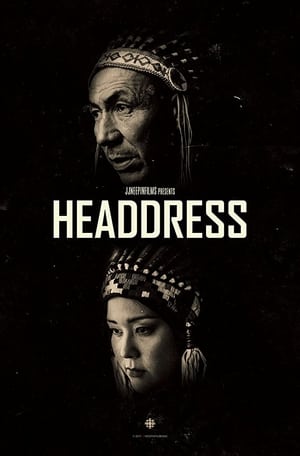
The Blackfoot bareback horse-racing tradition returns in the astonishingly dangerous Indian Relay. Siksika horseman Allison Red Crow struggles with secondhand horses and a new jockey on his way to challenging the best riders in the Blackfoot Confederacy.
British documentary filmmaker Chloe Ruthven’s grandparents were aid workers in Palestine. Growing up, she had avoided getting too involved in the subject, recalling how mention of the country made all the adults in her life angry. In her forties, after revisiting her grandmother’s book on the subject, she starts to research a documentary on the effects of foreign aid in the area and is shocked at the continued reliance on it there. Along the way she meets Lubna, a Palestinian woman who acts as her driver and fixer, and who is fiercely critical of Western aid efforts in her country. What begins as a quest to better understand her family history turns into a deeply emotional account of two women trying to understand one another. Ruthven’s determination to focus her film on deeply subjective analysis results in a unique joining of the acutely personal and complexly political. (Source: LFF programme)