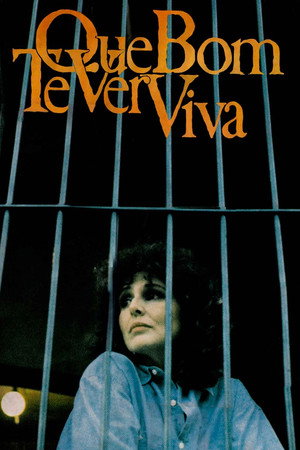
Four years after a military coup overthrew the Brazilian government in 1964, all civil rights were suspended and torture became a systematic practice. Using a mix of fiction and documentary this extraordinary film is a searing record of personal memory, political repression and the will to survive. Interviews with eight women who were political prisoners during the military dictatorship are framed by the fantasies and imaginings of an anonymous character, portrayed by actress Irene Ravache.
China is the first country in the world to classify Internet addiction as a clinical disorder. Caught in the Net features a Beijing treatment center where Chinese teenagers are being "deprogrammed," and follows the story of three boys from the day they arrive at the center, to their three-month treatment period, and their long awaited return home. The film provides a microcosm of modern Chinese life and investigates one of the symptoms of the Internet age. It examines inter-generational pressures and the disregard of the human rights of minors who get caught in the net.
A story from the lost town of Koza - a silver paradise.
AFTER THE STORM is a feature-length documentary film that follows a group of New York Broadway actors who were inspired to help the youth of New Orleans. They stage a musical theater production of the Broadway play "Once on this Island" with local teenagers at the St. Marks Community Center located at the edge of the French Quarter. The film follows the crew and the kids from auditions through performances and also includes the story of each young actor's life in the wake of Katrina.' The story of the musical reflects very much so the life in New Orleans post Katrina.
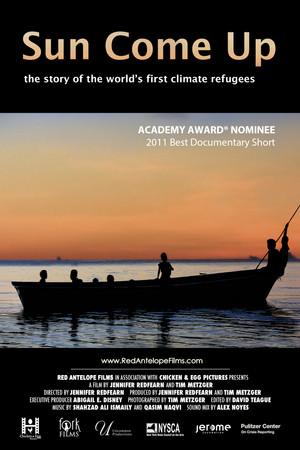
Sun Come Up tells the story of some of the world's first environmental refugees, the Carteret Islanders. The film follows relocation leader Ursula Rakova and a group of young families as they search for new homes in war torn Bougainville, an autonomous region of Papua New Guinea.
In 1977, when she was four years old, Albertina Carri's parents vanished without a trace, victims of Argentina's brutal military junta. In this fresh and politically daring film, the young Argentinian filmmaker attempts to unravel the mystery, piecing together her memories and fantasies in a quest to understand her parents' untimely fate.
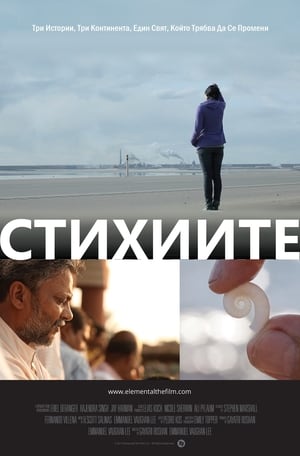
Elemental follows three outsiders who are obsessed by nature and driven by a deep desire to change the status quo. Rajendra Singh, an Indian government official gone rogue, mounts a national crusade to save the Ganges River. Activist Eriel Deranger leads a David and Goliath fight against the oil giants who are destroying her homeland in the Canadian Tar Sands. Australian inventor, Jay Harman, is attempting to halve the world's energy consumption by mimicking natural systems. Separated by continents, each character is part of a global story about water and climate change that goes beyond the issues to reveal the public triumphs and emotional scars of life on the front line.
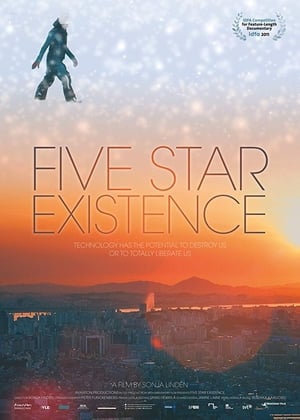
Director Sonja Lindén's personal and sensitive quest to the core of the modern information society where technology and human beings get more and more entwined. This documentary explores our society on the verge of turning ubiquitous - a wireless society, where the laws of time, space and distance are revolutionizing the concept of liaison. Do the consequences of the technological revolution increase our freedom, or do they limit us? Is it possible to find a balance between one's natural rhythm and the society that spins at an ever increasing and demanding speed? Are we chasing echoes of our lost inner wholeness in our everyday lives, which are becoming busier and more fragmented than ever before?
Serpentine dance.
A woman wearing dragonfly wings performs a romantic dreamlike dance.
Essay on the influence of arts at the end of the 20th century produced by the Museum of Modern Art.
Ten women in Canada talk about being lesbian in the 1940s, 1950s, and 1960s: discovering the pulp fiction of the day about women in love, their own first affairs, the pain of breaking up, frequenting gay bars, facing police raids, men's responses, and the etiquette of butch and femme roles. Interspersed among the interviews and archival footage are four dramatized chapters from a pulp novel, "Forbidden Love".
The history of the irreverent "The Smothers Brothers Comedy Hour" and the content battles it fought with its television network.
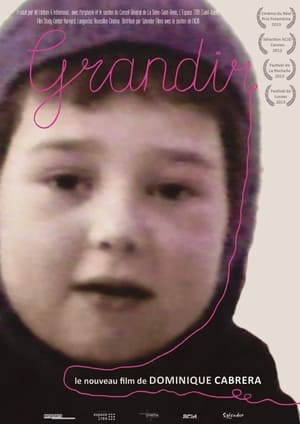
In 2002, on the occasion of her brother’s wedding, Dominique Cabrera begun to shoot the gathering, and decided to continue over 10 years, time imprinting its marks on her family and "becoming the film" as she expresses it. Halfway between Agnès Varda and Alain Cavalier, Dominique Cabrera delivers a sensitive film both intimate and universal: "Ten years ago, my brother Bernard got married for the second time. We all went to the wedding in Boston, where he lives. It felt as if we were four little children again with our mom and dad. I had brought along a small camera, which I began to use to film our family. I've continued to this day..."
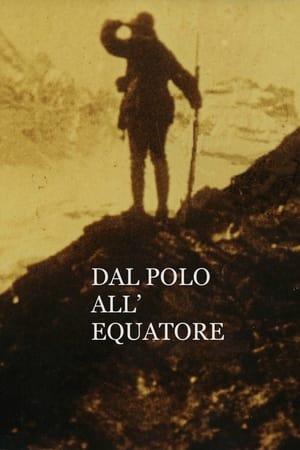
The title Dal polo all'equatore was first used by the pioneering documentary maker, Luca Comerio, for a compilation film of 1925; it was used again by Yervant Gianikian and Angela Ricci Lucchi for their film of 1985. Much of the original has been re-worked: the 'found footage' has been re-shot, slowed down, tinted, and re-edited with a sound track of minimalist composition. As a result, the exotica of colonial travel and sport take on new and sinister meanings. The acts of violence, especially those of hunting, recur in patterns that suggest visually that war is a logical development. A close examination of the work, starting with the opening sequence of a railway journey, explores the centrality of questions of memory and history to this remarkable and influential film.
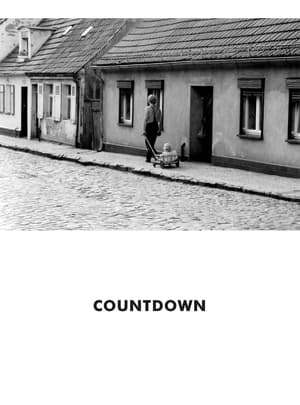
Countdown follows a chronological sequence. The movie was shot in Berlin and environs over a ten-day period leading up to the unification of the currencies on July 1, 1990. The film thus ends on the date marking “the first stage of German reunification”.
You'll be hard-pressed to find a more unusual circus, or father-daughter performing duo. The Moscow Cat Theater is just that: a traveling show of cats that perform amazing tricks for the owners who love and train them. Everybody in Russia may be used to seeing cats perform tricks, as the theater's manager explains in this funny, charming film, but felines walking tightropes, crossing the stage on giant balls and walking upside down is not a common sight in most countries. As a balalaika and accordion circus score plays in the background, Creative Director Vladimir and his daughter Maria combine their love of cats and stage to create a captivating act and illustrate the tricks of the trade - giving new meaning to the expression 'herding cats'.
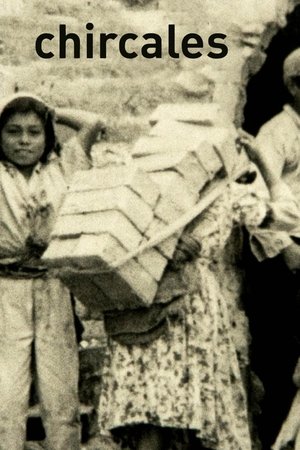
This film documents the life of a family of brick makers in the outskirts of Bogotá, using the personal experience of the Castañeda family to expose the exploitation of manual laborers. Marta Rodríguez and Jorge Silva worked on this documentary from 1966 to 1972, establishing a relationship with the family which allows the viewer an intimate look at their hardships.
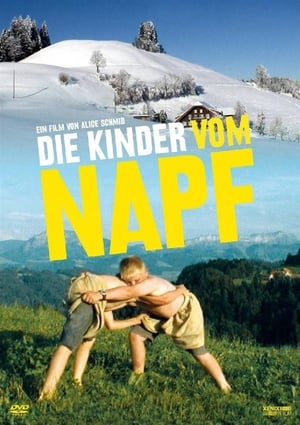
In the tradition of ETRE ET AVOIR and some of THE STORY OF THE WEEPING CAMEL Fifty children of mountain farmers, six miles of walking to school, a childhood in the heart of Switzerland.
Auf Wiedersehen Finnland deals with a largely silenced issue in Finnish history: the fate of Finnish women who left for Germany with German soldiers during the final stages of World War II.