Trebizondská princezna
Parížsky život
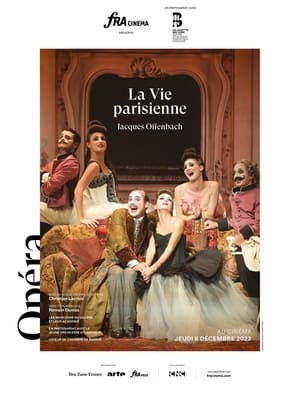
La Vie parisienne (Parisian life) is an opéra bouffe, or operetta, composed by Jacques Offenbach in 1866, with a libretto by Henri Meilhac and Ludovic Halévy. This work was Offenbach's first full-length piece to portray contemporary Parisian life, unlike his earlier period pieces and mythological subjects. It became one of Offenbach's most popular operettas.
Based on the classic Broadway operetta by Victor Herbert and Glen MacDonough, this live television special became an annual Christmas tradition with rotating cast members.
A young girl becomes lost in a department store during the Christmas shopping rush. The frightened child is comforted by a department store Santa Claus who tells her a tale of storybook characters brought to life - of Tommy Tucker's love for the lovely Jane Piper and the cold-hearted villainy of evil Silas Barnaby. Through the girl's dreams, the viewer is transported to Toyland. Based on the classic Broadway operetta by Victor Herbert and Glen MacDonough, this was its second live television special production, with some new cast members and some returning.
Noc v Benátkách
Gipsy
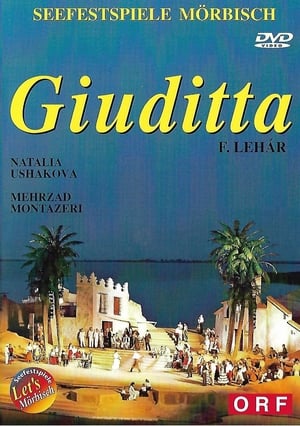
Giuditta
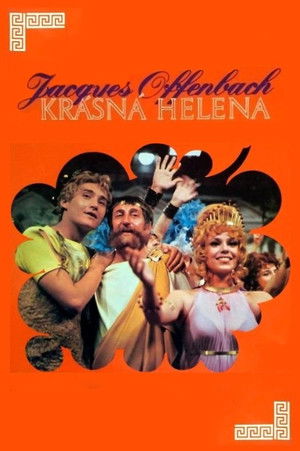
Orfeus v podsvětí
Giroflé-Giroflá
Země úsměvů
Polská krev
Pericola
This musical comedy based on an opera by Jacques Offenbach incorporates a twist on the classic Greek myth: Orpheus, a music teacher at a girls’ school in the ancient Greek city of Thebes, actually does not miss his wife Eurydice that much – until the gods and Offenbach himself pressure him to retrieve her from Hades.
Perly panny Serafinky
A British musical film directed by Victor Hanbury and Ladislao Vajda
Ottilie Van Zandt is forced to wed her cousin, despite her love for Richard Wayne, the gardener's son. Richard leaves, vowing to return a wealthy man and eligible suitor for her. He returns to find she has already married and, in turn, marries another girl on impulse. Two generations later, the grandchildren of Ottilie and Richard, who both have inherited their names as well, meet and develop a close friendship that culminates in the romance that their grandparents began but could not consummate years before.
Kálmán Imre's beloved operetta comes to the screen in this comedy of music, marriage and class set in Budapest and Vienna before the outbreak of the First World War, recorded at the Budapest Opera in 1963.
A film about Johnny Bode. Schlager diva, Operetta hero, filth musical innovator, enfant terrible, compulsive liar and amoral rogue. Johnny Bode (1912-1983) was very successful in Sweden and Europe. Yet he is today almost completely forgotten. Why? His life was so overwhelming, glamorous, fast and bizarre. So un-Swedish. He became fascinated by the nazism. Was arrested by the Gestapo and detained at Grini concentration camp in Norway. For five weeks. After the war he moved to East Berlin and proclaimed himself a dear friend of the GDR. Later he was deported and returned to Sweden. A time of fencing and small crimes followed. Escaped to Brussels at first and later Vienna. He was, as Juan Delgada, hired by the Vienna Opera to create new operettas. And was very successful. Johnny Bode died exhausted alone and abandoned in Malmö during the summer of 1983.
Celestin is the singing teacher in a monastery and Denis is one of her students. They both dream about the life outside. (It's a Swedish version of the famous vaudeville-opérette "Mam'zelle Nitouche").