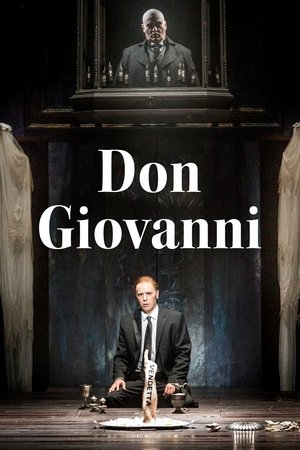
Mozart’s Don Giovanni was first performed in 1787, and was based on the story of the Spanish lothario, Don Juan. The title character seduces, deceives and murders his way through the opera, doing his utmost to experience life, and all that it has to offer, to the full.
Idomeneo, König von Kreta - Mozart bei den Opernfestspielen Aix-en-Provence
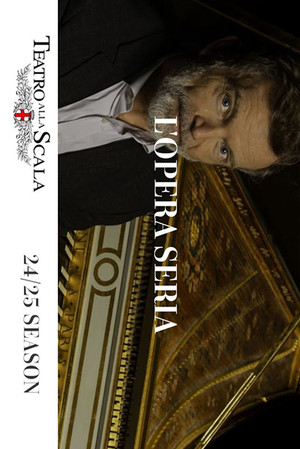
In search of an opera for his theatre, an impresario finds himself grappling with a group of egotists and jealous individuals. Based on a score by Florian Leopold Gassmann, this caustic satire of the 18th-century opera world is directed by Laurent Pelly. Starring Julie Fuchs as the prima donna.
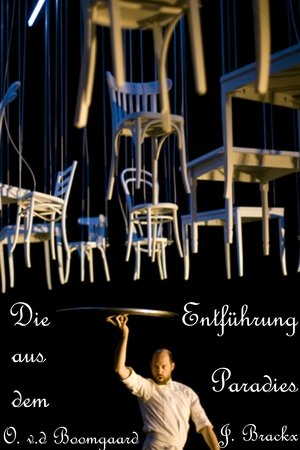
The man looks back on a turbulent love life, which he does not dare to opt definitively for a permanent love. He loves Tosca, but leaves her for another new love, Alpha. He cherishes the infatuation at the start of a relationship, meaning he is not yet ready for real life. However, at the end, he is able to make his choice ...
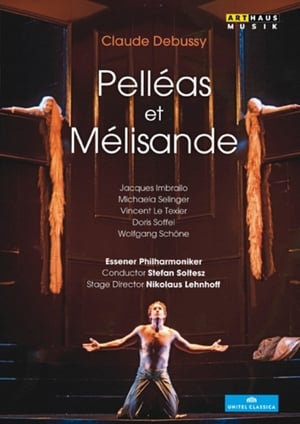
Drama lyrique in five acts, after the play by Maruice Maeterlink
Running through Bartók’s disenchanted tale, whose haunting music was initially condemned as unplayable, and the expression of despair in Poulenc’s monologue, the director Krzysztof Warlikowski perceives a shared dramatic thread, a shared feminine consciousness and a shared sense of imprisonment and suffocation: for the woman who penetrates the confines of Bluebeard’s castle and Elle, the woman who clings to a telephone conversation with a man as the only thing worth living for, are condemned to share the same fate. And this man she speaks to, does he really exist? Unless the director has interpreted Cocteau’s words to the letter and the telephone has become a “terrifying weapon that leaves no trace, makes no noise”…
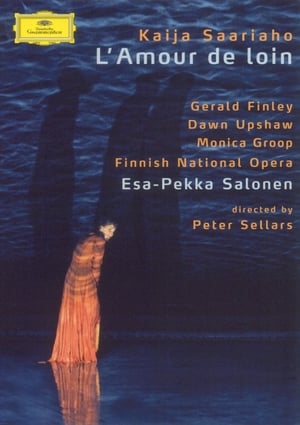
This is the 2004 version of Kaija Saariaho's opera performed by the Finnish National Opera and conducted by Esa-Pekka Salonen.
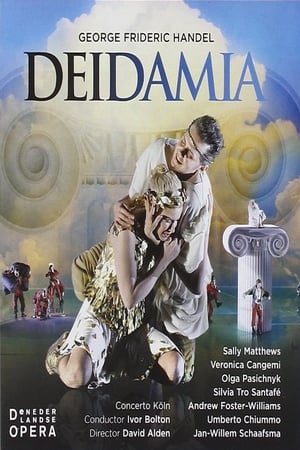
A production of an opera by George Frideric Handel, about the Skyrian princess Deidamia helping Achilles while he is disguised as a girl to avoid dying in the Trojan War, based on Greek mythology.
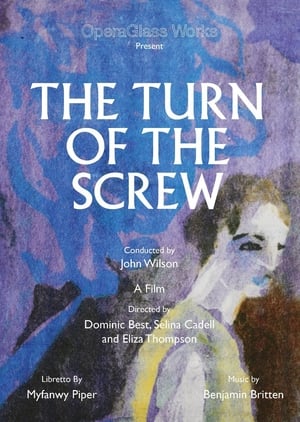
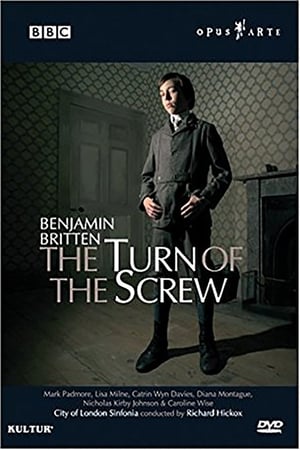
A film of the opera The Turn of the Screw by Benjamin Britten. A young governess arrives at an old house in the country to look after two orphans. What unfolds is a chilling tale as she experiences strange ghostly encounters with some of the previous occupants of the house and finds herself engaged in a battle to protect the children’s souls from evil. Myfanwy Piper’s libretto of Henry James’s famous short story leaves much to our imagination and Britten’s score is haunting, terrifying and brilliant. Shot on location at Wilton's Music Hall, London, the whole space of the venue, not just the stage, is used to tell the story.
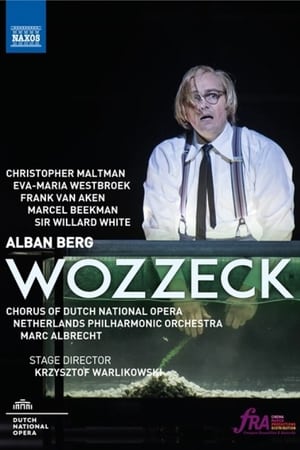
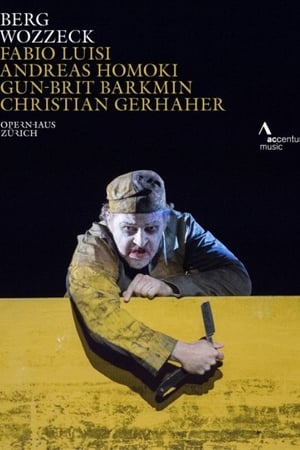
Based on real events and drawing on Georg Büchner's revolutionary play, Alban Berg's Wozzeck turns a grimly tragic narrative of violence and murder into one of the most powerful and original operas of the 20th century. Berg's uncompromising portrayal of brutality and madness generated much controversy, but the significance of Wozzeck was soon recognised; its compelling lyrical expansiveness, large-scale dramatic gestures and remarkable musical structures producing music of overwhelming emotional intensity. The Financial Times declared this to be 'a beautiful, moving, engrossing production… this is a consummate Wozzeck, blending clarity, lyricism, compassion and crushing force.'
The soldier Wozzeck (Christian Gerhaher) flits through a world that he is unable to decipher. The doctor torments him with absurd medical experiments; the captain humiliates and ridicules him. And Wozzeck’s lover, Marie (Gun-Brit Barkmin), with whom he has a child, cuckolds him with the drum major. Wozzeck becomes a murderer, stabbing Marie to death. Georg Büchner’s drama fragment, on which Alban Berg based his first opera, is an unflinching case study of social injustice and human suffering. But it is also a grotesque piece that thrives on exaggeration – and in which only a fine line separates the unfathomable from the ridiculous. Accordingly, director Andreas Homoki forgoes all realism.
The operatic version of the famous story about a governess who fears her two charges are possessed.
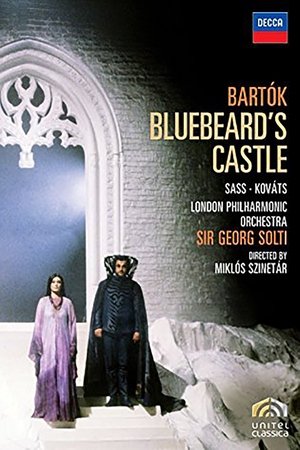
The great Georg Solti conducts a spectacular studio production of this masterpiece of 20th century opera. Two internationally celebrated Hungarian opera stars perform Bartók's darkly psychological parable with searing dramatic intensity.
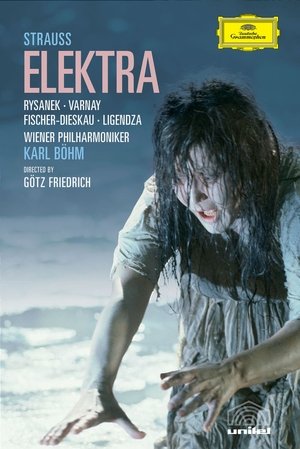
Strauss's opera adapted to the screen by Gotz Friedrich.
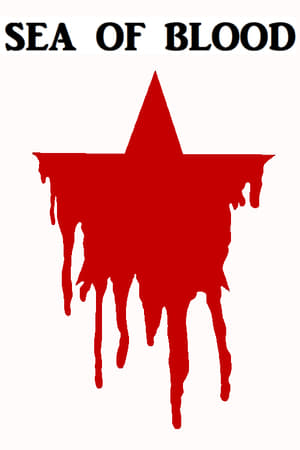
Based on a revolutionary play supposedly written by the Eternal President of the Democratic People's Republic, Kim Il-sung, and rumored to have been co-directed by Kim Jong-il. This revolutionary work is also popular among the Chinese, especially those who lived through the Cultural Revolution, and have fond memories of revolutionary antics.
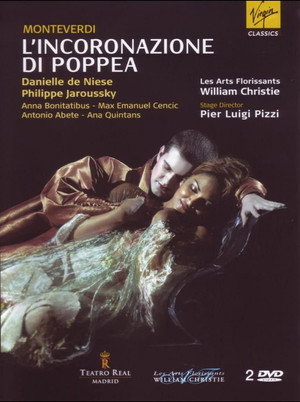
L'Incoronazione di Poppea by Monteverdi is the last Opera of the Monteverdi trilogy filmed by the Italian label and producer Dynamic at the Teatro Real, Madrid, May 2010.
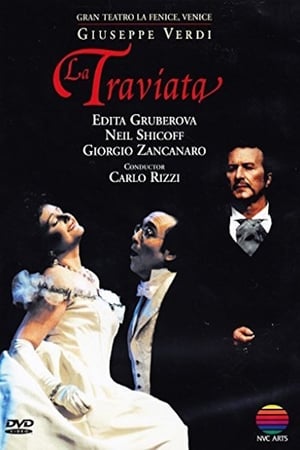
This set has Edita Gruberova singing in top form, all her scooping cast aside, which one finds in abundance in her Lucia under Richard Bonynge. Here, however, she makes ravishing use of those bits of tone that only she can produce: those instances of coloratura and dramatic legato with little asides and small florishes of style that suggest her intelligent approach and her high degree of musical involvement in this role. She does this in her I Puritani and her Anna Bolena, less so in Roberto Deveraux and Maria Stuarda(both sets). Listen to Addio del passato and the Sempre Libra...ravishing, yes, but there are again those nuances learned from Callas that she makes her own. A very singualr perform,ance, and extremely moving with its detail and cry for pity throughout..from the start even. Neil Schicoff is excellent, not an unworthy Alfredo at all! His is a great lyric tenor voice that should have been in the top line.
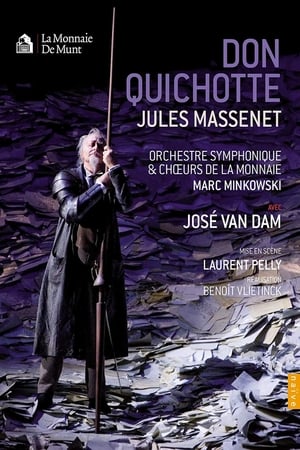
This May 2010 production of Massenet's 1910 opera "Don Quichotte" marked the opera's centenary and also Jose Van Dam's operatic farewell at the Theatre de la Monnaie, Brussels. It is beautiful in every way--vocally, scenically, sonically, and visually--and a worthy record of Van Dam's farewell. Van Dam is just shy of 70 in this production, but you would never guess it from his singing or stage movements--a consummate artist. His is a noble portrayal and deeply moving. The Act V death scene is a model of beautiful singing and acting.
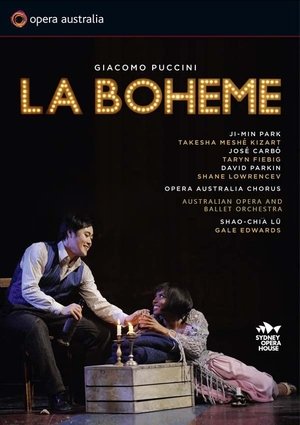
La Bohème (Sydney Opera House)
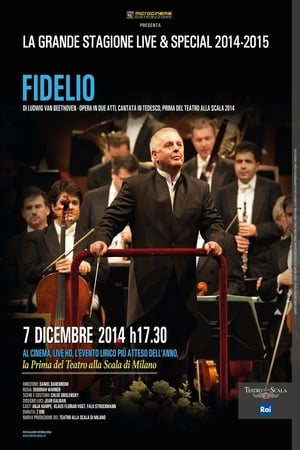
A tribute to marriage coming from a bachelor is a tad suspicious. But for Beethoven the idealization of the woman-bride was heartfelt and sincere. It has always been a unique opera starring a courageous wife who wows audiences. Fidelio is a moral title, associated with the ideals of liberty of the French Enlightenment. Nobility and commoners are united in their thirst for justice against the oppression of power. For once the faithful consort of a desaparecido wins her battle against a treacherous tyrant, and the collective joy truly is “nameless”, as is sung on the stage. Especially because the “our heroes to the rescue” finale is recounted by the triumphant symphonic flair of the quintessential musician. Beethoven really does bring the world to collapse at the conclusion of this opera, which begins like a delightful little comedy, but which scales and transcends all the summits of the dramatic-musical art.