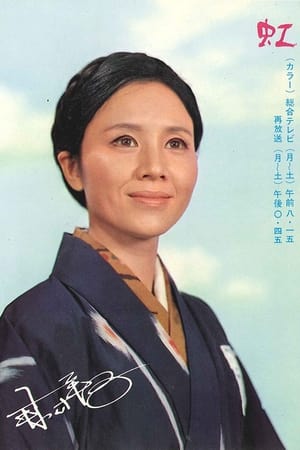
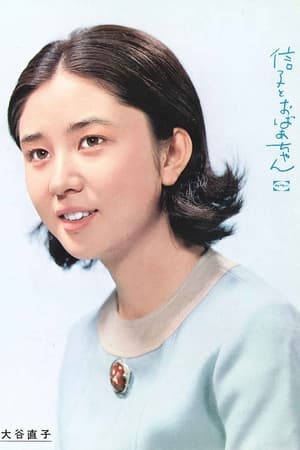
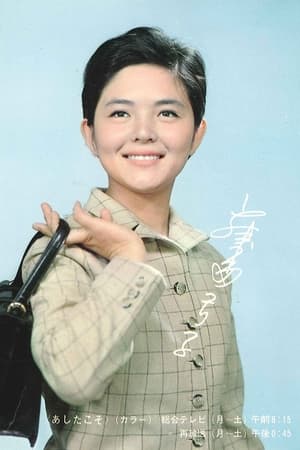
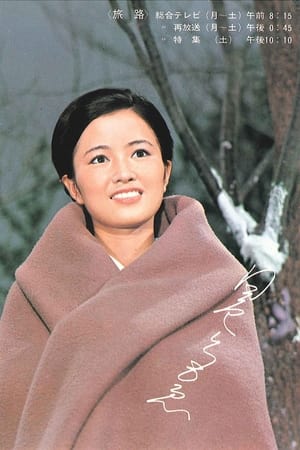
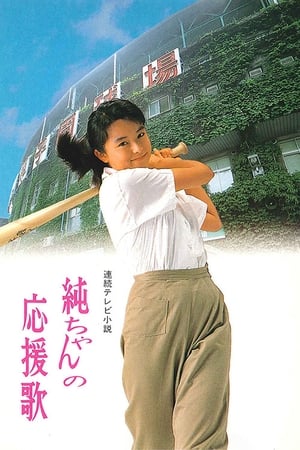
The year is 1947, August. Ono Junko's family is being evacuated to Wakayama and the father is going to war. A few years later, the father has returned from Manchuria but he also brought a boy that had been abandoned by his mother. The boy is Yuta and the family will adopt him.
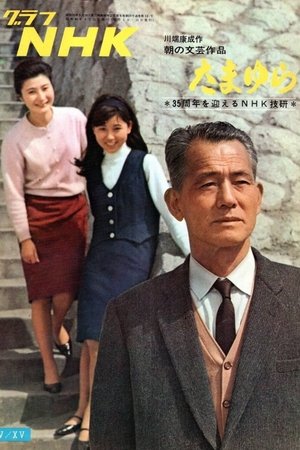
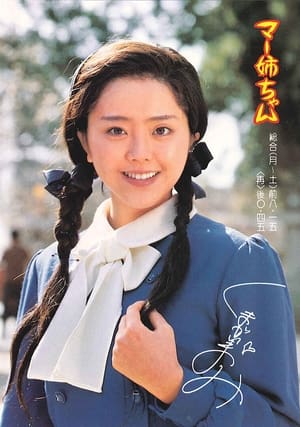
A serialized television series, aired in 1979, based on Hasegawa Machiko's "Sazae-san Uchiakebanashi" (Sazae-san Confessions), which depicts the true vibrant energy and strength of the common people, through their laughter and tears, from the pre-war to the post-war period in Japan.
Massan is based on the lives of Masataka Taketsuru and his wife Jessie Roberta "Rita" Cowan, a Scotswoman Taketsuru met while studying abroad.
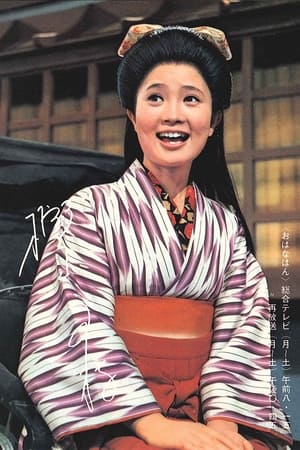
Oshin is a Japanese serialized morning television drama, which aired on broadcaster NHK from April 4, 1983 to March 31, 1984. The series follows the life of Shin Tanokura during the Meiji period up to the early 1980s. Shin was called "Oshin", which is an archaic Japanese cognomen.
The 97th NHK asadora is about Ten who becomes the first female comedian.
Aki Amano, a high-school girl from Tokyo moves to the Sanriku Coast in the Tohoku region to become a female diver. She becomes a local idol, then returns to Tokyo to try to become a real idol, and finally returns to Tohoku to help revitalize the area after the Great East Japan earthquake.
The 69th NHK Asadora Drama, based on Rei Nakanishi's novel, is about the Iwata family living in Ikeda, Osaka City between 1950s and 1960s. The story is told through the eyes of the youngest daughter, Fuyuko. The family runs a bakery. The mother, Teruko, is a very energetic woman who is determined to make her dreams come true. Responding to Teruko's expectations, the eldest daughter becomes a figure skater and the second daughter becomes a very famous professional singer. In contrast, Fuyuko finds her joy in bread making.
Higa Nobuko was born and raised with her four siblings in a farmhouse in the "Yanbaru region" in the northern part of the main island of Okinawa. She aims to become a chef drawing inspiration from Okinawan cuisine. The four siblings follow very different paths, but the memories of their hometown connect their hearts and they're able to overcome their hardships as a family.
Suzume is a girl born to a family running a small restaurant in Gifu Prefecture. She loses her hearing in one ear from a disease. Encouraged by her loving parents and childhood friend, she lives through an eventful life with a tenacious spirit.
Natsumi is the 23 years old daughter of a master baker in Yokohama and in training with her father to become a pastry chef. She lives with her parents and younger brother in Yokohama. One day she travels to Iwate Prefecture with her boyfriend Masaki for his grandmother Katsuno's 77th birthday. While they are there, Katsuno, head okami of a famous ryokan in Morioka City, becomes ill and asks Masaki to return to run the ryokan. Natsumi returns to Yokohama and later Masaki visits, asking her to disregard their earlier plans to get married because he will return to Morioka as requested by Katsuno. However, Natsumi surprises him with a vow to become the ryokan's okami. Is Natsumi in for clear skies as suggested by the series name?
Carnation is a Japanese television drama that aired in the Asadora slot on NHK from 3 October 2011 to 31 March 2012. It is the 85th Asadora. It is based on the life of the fashion designer Ayako Koshino in Kishiwada, Osaka. Ayako was the mother of the internationally famous designers Hiroko Koshino, Junko Koshino, and Michiko Koshino.
In the early Showa era, the town of Choshi in Chiba Prefecture was divided by the conflicts between the worlds of "land" and "sea". Born to Kyubei Bando, the owner of a long-established soy sauce brewery, and his mistress Rui, Kaworu was taken in by her father and raised as a prim and proper lady. As she grew up, she fell in love with Sokichi, the eldest son of an established fisherman; alas, their two families were in conflict. This is a story of pure love between two people that grew beyond the boundaries of the old customs that they were brought up with. It is a drama that depicts their turbulent journey of love and the bonds of the people from an old and established family working tirelessly to protect their naturally brewed soy sauce business through the ups and downs.
The 17-year-old Yatabe Mineko grew up in a family of seven in a mountain village in northeastern Ibaraki Prefecture. Her father Minoru has gone to Tokyo to work in order to earn extra money. However, her life completely changes when her father does not come back for the New Year. Mineko asks her family to let her go to Tokyo to find him and promises to send money home. In the autumn of 1964, she and two childhood friends Tokiko and Mitsuo are hired to start working at a small factory in Tokyo’s working class neighborhood. After work each day, Mineko searches for her father and gets disheartened at times. Mineko overcomes challenges and starts to lay down roots in Tokyo as she experiences many meetings and farewells amid the laughter and tears with regulars, people of the shopping street, friends, and colleagues. But will she be able to find her father?
In 1930 and as a young child, Tsuneko Kohashi lives at Enshu in Shizuoka Prefecture. She has a happy life with her parents and two younger sisters. Things change after her father dies from tuberculosis. Her father asked Tsuneko Kohashi to take care of the family in his place. Due to financial difficulties, her mother Kimiko decides to move the family to Tokyo where Tsuneko's grandmother lives.
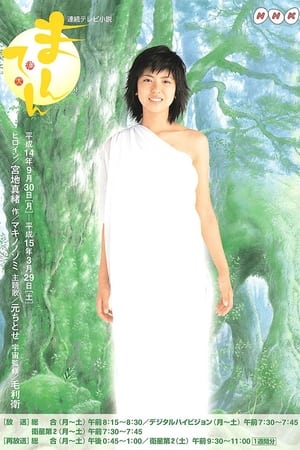
ほんまもん
The story of Makino Mantaro (Kamiki Ryunosuke), a botanist who ran through the Meiji era (1868-1912) in full bloom, begins. Born the heir to the Tosa sake brewery Mineya, Mantaro (Yurito Mori) is a boy who loves plants and flowers and led a straightforward life. His life was colored by the many vivid encounters he had with many people. People whom Mantaro met in his hometown of Kochi, and whose way of life and words gave him a guideline for his life. "Ranman," is a drama in which charming characters bloom freely around the main character, Mantaro, just like flowers.
The story follows the 20-year-old Tsubasa who dedicates her life to her family and their shop. Her life is turned upside down when her mother who was missing came back home. To pay of her mother's debt she starts to work at a small radio station as a DJ.
The twin girls Tajima Megumi and Ichijo Nozomi was separated at birth after their parents had divorced. Years later they meet each other. Both of them have a career within the entertainment industry. Megumi who lives in Matsue, Shimane sings in the band Shijimijiru, and Nozomi is a maiko, an apprentice geisha in Kyoto.
Uno Meiko is the daughter of parents who run a western style restaurant in Tokyo. She marries and moves to Osaka with her husband. Meiko experiences cultural differences between Tokyo and Osaka, as she lives as a mother and wife in Osaka.
Come Come Everybody is a Japanese television drama series and the 105th NHK Asadora series, following Okaeri Mone.. It depicts the lives of three generations of women who have close links to the English lessons on radio which began in 1925.