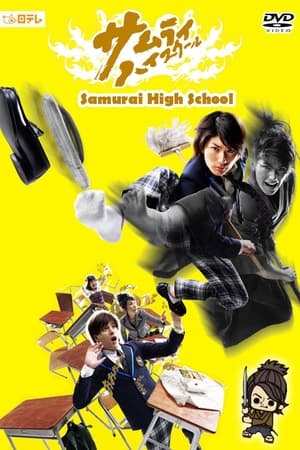
Kotaro Mochizuki (Haruma Miura) is a timid, introspective teenager who attends a private high school. One day he discovers a mysterious old book and from that day on, whenever he finds himself in a difficult situation, he turns into a samurai warrior.
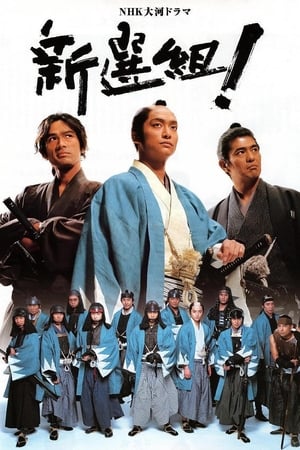
Shinsengumi! is a Taiga drama television series produced by Japanese broadcaster NHK. It was a popular drama about the Shinsengumi, a Japanese special police force from the Bakumatsu period.
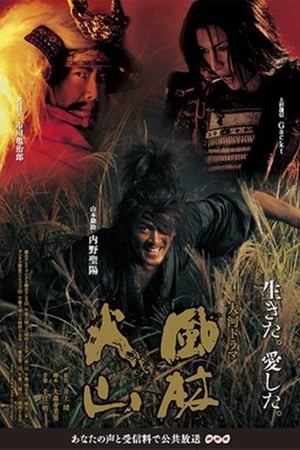
Fūrin Kazan was the 46th NHK Taiga drama beginning on January 7, 2007. It was aired throughout 2007. The four characters from left to right are wind, woods, fire, and mountain. The title is a reference to the war banner used by Takeda Shingen, which in turn was taken from Sun Tzu's The Art of War. It means "Swift as the Wind, Silent as a Forest, Fierce as Fire and Immovable as a Mountain."
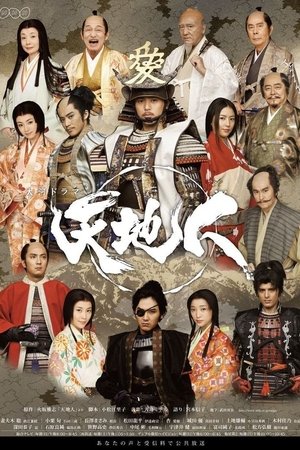
Tenchijin is the 48th NHK Taiga drama. It airs on NHK from January 4, 2009 every Sunday from 20:00 to 20:44 JST to November 22, 2009 spanning 47 episodes. The story centers on the life of the 16th century samurai Naoe Kanetsugu. Production began on April 27, 2007. The story is based on the novel Tenchijin by Masashi Hisaka and was adapted for screen by scriptwriter Eriko Komatsu. The series' music composer was Michiru Oshima. The protagonist of the drama, Naoe Kanetsugu, was taught by Uesugi Kenshin in his youth that to conquer the world is a trifling matter, but what matters is to live one's life with righteousness. After Uesugi's death, Naoe supports Uesugi Kagekatsu, who holds the destiny of Echigo province.
Makio Sakaki, a 27-year-old aiming to become his father's successor. To prove his worth, he must pass high school and overcome various challenges including friendship, righteousness, and potential love.
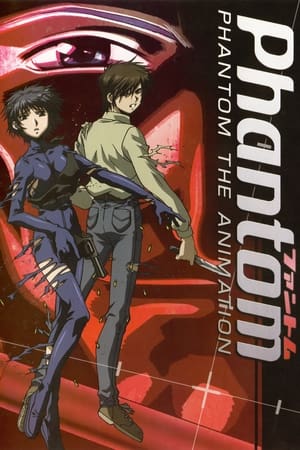
Zwei traveled to a new city to start a new life. There he sees the girl of his dreams, Ein, for the very first time. Strangely, he spots her from 500 meters away, while she's crouched behind a military issue sniper rifle picking off mobsters. Soon Zwei's uncanny alertness comes to the attention of Ein's employers, and he's given a simple choice: train to become an assassin, or be marked as Ein's next target.
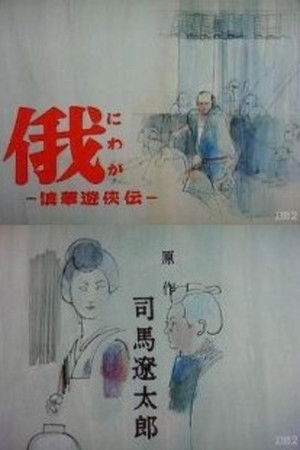
A dramatization of Ryotaro Shiba's novel of the same title about the life of Kobayashi Sahē, a chivalrous man who actually existed at the end of the Edo period.
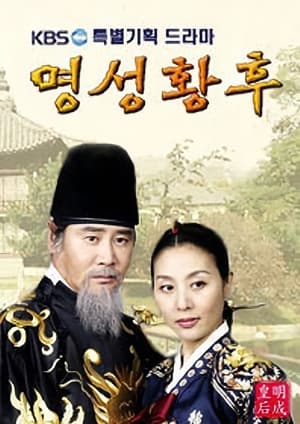
Based on the life of Empress Myeongseong (1851 - 1895), the first official wife of King Gojong, the 26th king of the Joseon dynasty. She was killed on October 8, 1895 by Japanese assassins.
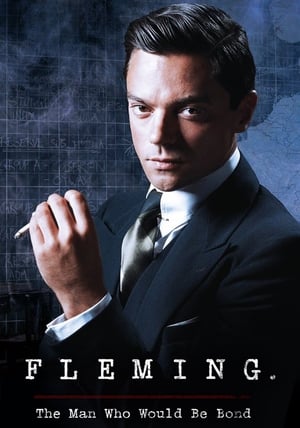
Set at the outbreak of WWII – mischievous playboy Ian Fleming is untroubled by the specter of impending war – chasing women, collecting rare books and living off his family fortune. Forever in the shadow of his brother Peter, and an eternal disappointment to his formidable mother Eve, Fleming dreams of becoming the ‘ultimate’ man – a hero, a lover, a brute and the one who always gets the girl. He is finally given some direction in his life when he’s recruited by the Director of Naval Intelligence to help in the effort against the Nazis. Suddenly, Fleming finds his chance to shine and prove his worth.
Legendary yakuza actors Hakuryu and Hitoshi Ozawa star in this epic series where money, power, and brutality fuel turf wars across the land.
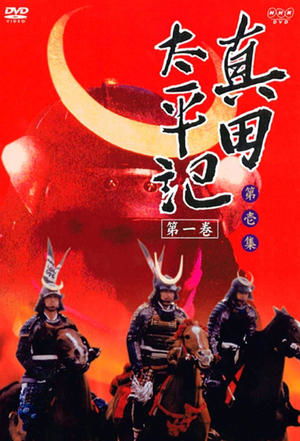
The drama tells the story of the Sanada family. Originally serving the Takeda Clan they ruled the northern district of Shinano. The story begins right after the death of Takeda Shingen, continues through the rise of Tokugawa Ieyasu who founded the Tokugawa shogunate and covers roughly the period 1580-1610.
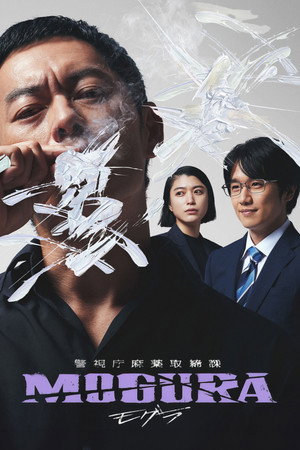
A certain city in Japan where the spread of marijuana has become a social problem. The purpose of the investigation was to crack down on Hip-hop groups suspected of cultivating marijuana. Izanagi, a practicing detective, is suddenly ordered to infiltrate a group of rappers.
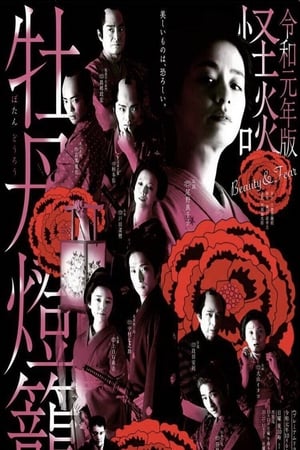
Botan Dōrō is a Japanese ghost story that is both romantic and horrific; it is one of the most famous kaidan in Japan. The plot involves sex with the dead and the consequences of loving a ghost.
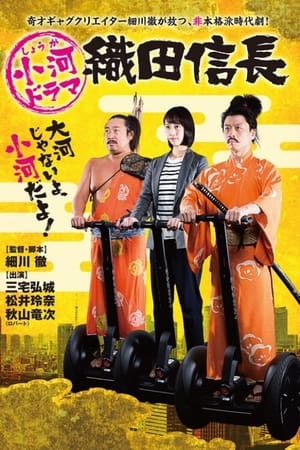
Oda Nobunaga slips back in time to the present and arrives on the set of "Oda Nobunaga", a historical drama serial. "This is not who I really am!", the short-tempered Nobunaga loses his temper and rewrites the script without permission. It was a small, small-scale drama, just a bunch of maniacal and slightly funny episodes, not a "Taiga Drama" at all. Now filming has begun on a historical drama directed by the real Nobunaga that is "ridiculous but all true"!
A high-tech squadron protects Earth from evil monsters and aliens with the help of a giant super-being named Ultraman Tiga.
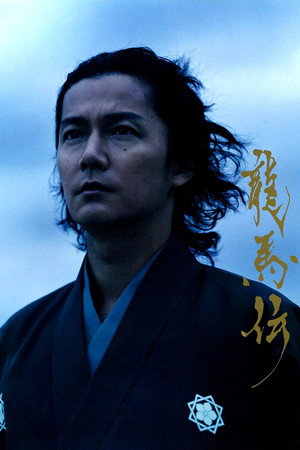
Ryōmaden is the 49th NHK Taiga drama. It was shown on NHK from January 3 to November 28, 2010 spanning 48 episodes. The story centers on the life of 19th-century Japanese historical figures Iwasaki Yatarō and Sakamoto Ryōma. It has been announced that the series will be aired in several other countries, for example Hong Kong, South Korea, Taiwan and Thailand.
In an alternative feudal Japan, a strange disease that only affects males caused a massive population reduction, leaving females to fill the vacant jobs, therefore changing the social structure. Now, 80 years after the initial outbreak with a 1:4 male:female ratio, Japan is a completely matriarchal society. Females hold all important political positions, and males are their consorts. Only the most powerful female—head of Tokugawa shogunate—may keep a harem of handsome and unproductive males, known as "Ōoku".
Blamed by some, hailed as heroes by others, those involved with Fukushima Daiichi face a deadly, invisible threat — an unprecedented nuclear disaster.
Set in an old prestigious ryotei (Japanese-style restaurant) in a small town in the center of Tokyo, a young itamae (cook for Japanese dishes) struggles his life, love and work while the long-lasted ryotei and the beloved old town face the change to survive the time. This heartwarming drama shows the intimate relationship of the community that has been lost nowadays, asks what the most important things in your life is, and tells how difficult it is to make a decision. The story is told in the form of a letter from him to his unknown father with lots of humor and love.
Jinta journeys through a century-spanning epic, all while questioning why he wields a sword.