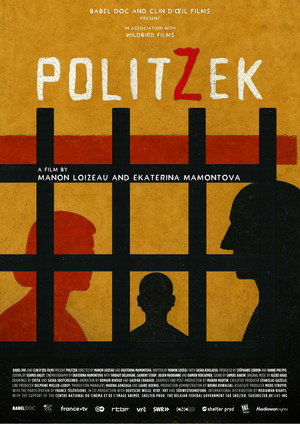
A young investigative journalist and his fiancée are brutally murdered in their home in Slovakia. Their deaths inspire the biggest protests in Slovakia since the fall of communism. The story takes an unexpected turn when a source leaks the secret murder case file to the murdered journalist’s colleagues. It includes the computers and encrypted communications of the assassination’s alleged mastermind, a businessman closely connected to the country’s ruling party. Trawling these encrypted messages, journalists discover that their country has been captured by corrupt oligarchs, judges, and law enforcement officials. A reckoning awaits.
Every km of ocean now contains an average of 74,000 pieces of plastic. A 'plastic soup' of waste, killing hundreds of thousands of animals every year and leaching chemicals slowly up the food chain. In Holland, scientists found plastic in the stomachs of 95% of all fulmar birds. In Germany, plastic has been found to affect the reproductive systems of animals, while in the US, conservationists are seeing increasing numbers of dolphins die in agony, their guts blocked with rubbish. What will be the long term impact of this 'plastic pollution'? Can anything be done to clean up our oceans?
Shoot The People is a documentary capturing photographer and activist Misan Harriman’s journey documenting global protest movements that drive social change. Following Harriman as he highlights the resilience of grassroots activists fighting for equality, civil rights, and social justice, the film showcases the intersectionality of these movements and their collective power. With historical context, interviews with activists, and explorations of digital activism, the documentary reveals how Harriman's lens brings the world's activism to light, inspiring viewers to recognize their own power in shaping a more just society.
A documentary chronicling the "youth movement" of the late '60s on Los Angeles' Sunset Strip and San Francisco's Haight-Ashbury district.
In the winter of 2002-'03, as the US was building its case to attack Iraq, people around the world responded with a series fo the largest peace protests in history. Shutdown: The Rise and Fall of Direct Action to Stop the War, is an action-packed documentary chronicling how DASW successfully organized to shut down a major US city and how they failed to effectively maintain the organization to fight the war machine and end the occupation of Iraq. Created by organizers involved with DASW, Shutdown combines detailed information on organizing for a mass action, critical interviews on organizing pitfalls, and the wisdom of hindsight. It is a must-see film for those engaged in the continuous struggle toward social justice.
Lebanon today. The traces of the civil war are all too tangible as government corruption becomes unbearable. In a country where conflict and peace are caught in an endless cycle, musicians from different backgrounds pool their talents to create an underground music scene. Each evokes his or her representation of Lebanon: its shifting geographical, political, historical and social borders, its painful passage through conflict and instability. A touching portrait of a young generation trying to build an oasis in a hostile environment where the forces of destruction continue to wreak havoc.
Summer 2017, a string of brutal police killings of young African American men has sent shockwaves throughout the country. A Black community in the American South tries to cope with the lingering effects of the past and navigate their place in a country that is not on their side. Meanwhile, the Black Panthers prepare a large-scale protest against police brutality.
A forgotten history of Northern Ireland is unveiled through a journey into Ulster Television’s archives, and the rediscovery of the first locally-produced network drama, Boatman Do Not Tarry.
Genoa 2001: As the G8 Summit drew to a close and the press and politicians departed, 300 riot police stormed the Diaz School looking for members of the infamous Black Block. They found instead young activists, mostly students, teenagers and journalists from around Europe preparing to bunk down in the school gym. Undeterred, they unleashed a calculated frenzy of violence, beating young and old, male and female indiscriminately. Those seriously injured were rushed to the hospital in ambulances, though soon after they were forced to join those who had been arrested and driven to a detention centre and subjected to further abuse and degradation.
A travelogue through the remains of São Paulo failing 80s economy, including its in ruins film industry.
This short documentary serves as a portrait of Lawrence Paul Yuxweluptun, one of Canada's most important painters. We meet him at the Bisley Rifle Range in Surrey, England, where he's literally shooting the Indian Act in a performance piece called "An Indian Shooting the Indian Act." It's in protest of the ongoing effects of the Act's legislation on Indigenous people. We then follow him back to Canada, for interviews with the artist and a closer look at his work.
Louis meets the Phelps family — the people at the heart of the controversial Westboro Baptist Church. The Phelps have rabid anti-homosexual beliefs, and often campaign at the funerals of American soldiers. They believe that every tragedy in the world is God's punishment for homosexuality.
A documentary that chronicles the life of South African leader Nelson Mandela. Mandela is probably best known for his 27 years of imprisonment, and for bringing an end to apartheid. But this film also sheds light on the little-known early period of Mandela's life.
In May 1968, workers, students and young people rise up against the morality and power of the establishment. Faculties and factories are under occupation. Barricades are erected. Paving slabs are launched. Words give way to actions. This is the confrontation. These images bear witness to the men and women who, in their indignancy, march towards their revolution. 50 years ago, as part of our ARC collective, we filmed the uprising of May and June 1968. Out of this material and scenes borrowed from our other filmmaker friends, we created this film.
Film from Andrew Morgan. The True Cost is a documentary film exploring the impact of fashion on people and the planet.
An in-depth look at the early 2011 crisis for public sector unions in Wisconsin, and why it matters in Alberta.
In 1975, 80,000 coal miners in the Appalachians downed their tools for several weeks to fight for their right to strike. The film crew is in the thick of the dynamic events.
The documentary features the British miners and their family experiences told through songs, poems, pictures and words.
A personal reflection on 2020's Black Lives Matter protests.
The documentary Two Doors traces the Yongsan Tragedy of 2009, which took the lives of five evictees and one police SWAT unit member. Left with no choice but to climb up a steel watchtower in an appeal to the right to live, the evictees were able to come down to the ground a mere 25 hours after they had started to build the watchtower, as cold corpses. And the surviving evictees became lawbreakers. The announcement of the Public Prosecutors’ Office that the cause of the tragedy lay in the illegal and violent demonstration by the evictees, who had climbed up the watchtower with fire bombs, clashed with voices of criticism that an excessive crackdown by government power had turned a crackdown operation into a tragedy.