After he's sent to his room for refusing to eat his vegetables, angry little Timmy prays to God to deliver him from his cruel parents. What unfolds next is an irreverent black comedy.
The Dead Man returns, but it's too late to save us. We are already dead.
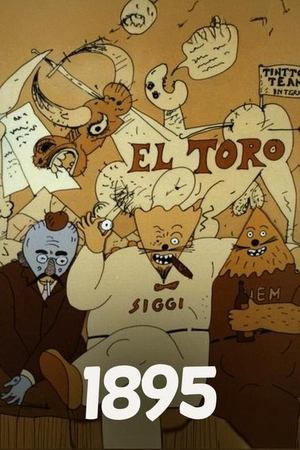
1895 is a picture about the life of brothers Auguste and Louis Lumiere, who have immortalized their names as inventors of cinematography. What inspired them?
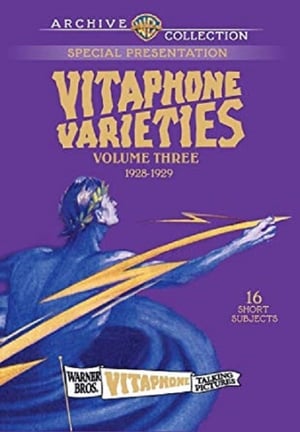
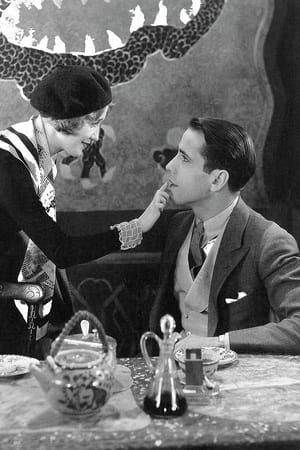
This Vitaphone one-reel short, written by the author of "Show-Off", George Kelly
A short dance film in Pathécolor, also know as stencil colouring. The editing cuts correspond with the dancers' costume changes. More about stencil colouring at http://zauberklang.ch/filmcolors/timeline-entry/1218/.
This story takes place in Lisbon at the time of the great maritime discoveries. Explorers, looking like pigs, arrive in the harbor after a long voyage across the oceans. Everywhere in the city small groups gather and congratulate each other. They organize spontaneous round dances and celebrate their return. Meanwhile, a young pig has the strange feeling of being completely isolated from the others in his own native city...
Based on two poems by Rafael Alberti, Garabatos (“Scribbles”) is a reflection on childhood, education and the demise of innocence. Music by Pierre Henry, Pierre Schaeffer and Edgard Varèse.
The day his computer turns into sand, Crassus, brilliant trader, goes insane. Counting the grains of sand like gold, it is lost in the Syrian desert where, as its namesake, the avid triumvir, he finds a tragic death.
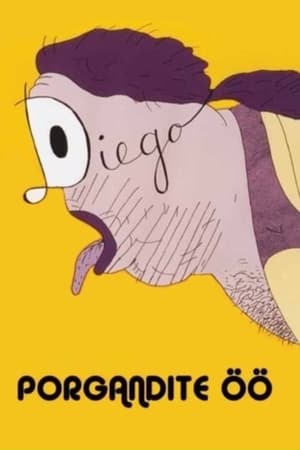
Diego the bicyclist waits to check into the PGI hotel, where each room's inhabitant seems more bizarre than the last, and the rabbits on the top floor have discovered the secret of voodoo, using electronics and carrots. Can the rare and unpredictable night of the carrots save everyone, or will their connections to the room's electrical sockets restrain them too much? Will Diego find love with an egg that speaks incessantly in German? Will the cellist, who is actually a room full of a gelatinous substance, affected in some way by buttons labeled K, G, and B, have dreams that explain everything? Or will the audience just leave scratching their heads? Not all questions get answered.
“In this legendary sculpture/performance Acconci lay beneath a ramp built in the Sonnabend Gallery. Over the course of three weeks, he masturbated eight hours a day while murmuring things like, "You're pushing your cunt down on my mouth" or "You're ramming your cock down into my ass." Not only does the architectural intervention presage much of his subsequent work, but all of Acconci's fixations converge in this, the spiritual sphincter of his art. In Seedbed Acconci is the producer and the receiver of the work's pleasure. He is simultaneously public and private, making marks yet leaving little behind, and demonstrating ultra-awareness of his viewer while being in a semi-trance state.” – Jerry Saltz (via: http://www.ubu.com/film/acconci_seedbed.html)
The warping lens used to photograph 10th Avenue seems to puzzle the filmmakers.
Black & White, Short Film, United States, Silent.
A glimpse into the lives of thousands of street cleaners who sweep the streets of Kuwait
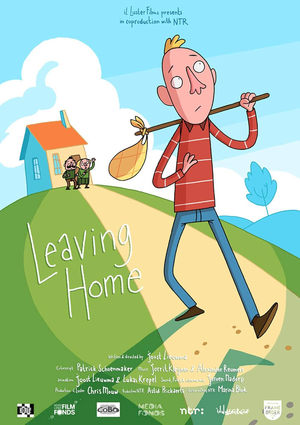
When father decides Richard is old enough to leave his parental home, he sends him out into the world. Only Richard keeps returning home: everytime in a more bizarre way. Somehow he seems attached to the house. When an unfortunate alteration in life takes place, Richard is forced to stand on his own feet.
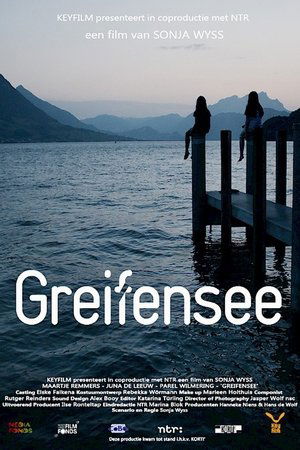
What started out as a simple holiday trip on the Swiss mountain lake, is beneath the surface an intense drama between a mother and her daughter.
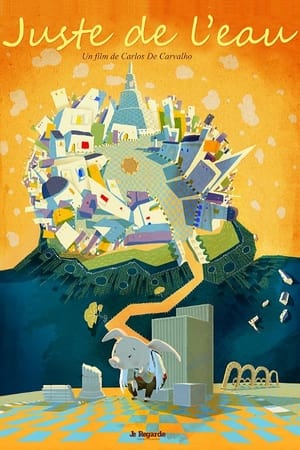
A 40-year-old middle-class man who loves his domotics to toe the line will figure out, because of a water drop, that things you own end up owning you.
The bizarre adventures of the cartoon character Foska, drawn by 22 animators working in collaboration. Each animator worked on his or her own sequence only and did not know what action preceded or followed his or her sequence, except that the first drawing of a sequence is the last drawing from the previous sequence. Preserved by the Academy Film Archive in 2010.
Young kids face off in a dance competition.
As a young couple discuss the idea of giving up smoking, the sounds of a neighboring argument spill into their flat. The argument makes them question their own marriage, while doing nothing about the neighboring situation. Meanwhile, a young teenager argues with his mother as he tries to sneak out to a party with friends. His mother blackmails him into staying home, using his guilt against him.
Pop Warner shows 1890s football equipment and explains to his modern 1931 team how the game was played.