La Cieca Di Sorrento (also known as Revenge of the Black Knight is a 1963 cloak and dagger film directed by Nick Nostro and based on the novel of the same name by Francesco Mastriani. Masked knights fight the cruel Tyrant Amedeo, tutor of the beautiful, rich and blind orphan Isabella. The knights are led by a young doctor who in the end will defeat Isabella's evil oppressor, give her her sight and marry her.
The main character Danilo was one of Petlyura’s military commanders. But 1920 began, the struggle against the Soviet power ended, it was the time for the former irreconcilable fighters to return to their peaceful occupations. The only thing is that a former Petlyura’s fighter is not sure, that he is awaited in his own home or at least they understand for what he shed his blood.
Two close friends' plan to execute a flawless crime is crushed when one of them inadvertently leaves his glasses at the crime scene.
Benito Mussolini: Anatomy of a Dictator
The inner world of the great painter Max Ernst is the subject of this film. One of the principal founders of Surrealism, Max Ernst explores the nature of materials and the emotional significance of shapes to combine with his collages and netherworld canvases. The director and Ernst together use the film creatively as a medium to explain the artist's own development.
Il Fornaretto di Venezia (US TV title: The Scapegoat) is a 1963 Italian film directed by Duccio Tessari who co-wrote screenplay with Marcello Fondato, based on novel by Francesco Dall'Ongaro. It tells the story of 16th century's Venice where a young worker is sentenced to death on the suspicion of attacking a noble.
In 1939, Hitler is at the height of his power and is steering Europe into a monstrous tragedy. The young Georg Elser recognizes the danger posed by the fascist system and decides to put an end to the Führer. To do so, he builds a bomb himself, which is supposed to explode during one of Hitler's events. Everything seems to be going well until Hitler ends his appearance earlier than planned...
Writer/Director Kaneto Shindô recounts his time spent in the Japanese Navy in WWII. He tells about the harsh training, grueling conditions, and tragic losses which are reenacted in black & white sequences.
This story follows one man's quest to uncover the origins and reveal the mysteries of a possible Holocaust artifact some historians now say never existed: lampshades made of human skin. When the flood waters of Hurricane Katrina receded, they left behind a wrecked New Orleans and a strange looking lamp that an illicit dealer claimed was 'made from the skin of Jews.'
In 1944, two prisoners miraculously escaped from Auschwitz. They told the world of the horror of the Holocaust and raised one of the greatest moral questions of the 20th century.
A captivating and personal detective story that uncovers the truth behind the childhood of Michaël Prazan's father, who escaped from Nazi-occupied France in 1942 thanks to the efforts of a female smuggler with mysterious motivations.
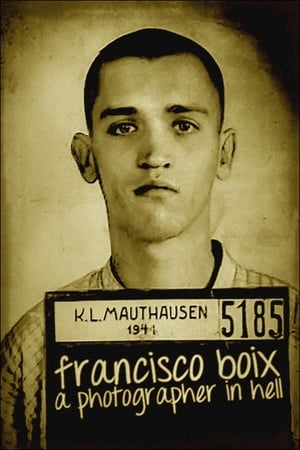
In 1939, just finished the Spanish Civil War, Spanish republican photographer Francesc Boix escapes from Spain; but is captured by the Nazis in 1940 and imprisoned in the Mauthausen concentration camp, in Austria, a year later. There, he works as a prisoner in the SS Photographic Service, hiding, between 1943 and 1945, around 20,000 negatives that later will be presented as evidence during several trials conducted against Nazi war criminals after World War II.
The fourth film in Shin-Ei's series of annual WWII themed anime television movies for children "Sensou Douwa".
The lives of two French sisters are torn apart by the onset of World War II.
When Italy capitulated 1943 and joined the allied forces, some soldiers from the German Wehrmacht also changed sides and joined the Italians in their fight to liberate the country. This film tells the story of Rudolf Jacobs, Walter Fischer and Heinz Brauers, three of the ‘Good Germans’ remembered in Italy for their efforts in fighting the Nazis.
1938. Austria has been annexed by Nazi Germany, and Switzerland has closed its borders for Jewish refugees - a death sentence for thousands. But not all Swiss officials observe this inhuman order.
In a tale of double agents and decoys, this documentary reveals, for the first time, the story of King George VI's elaborate ruse to divert German attention away from the Normandy landings in 1944.
Ireland, 1845. When a deadly fungus destroys potato crops throughout northern Europe, the most impoverished Irish population, whose main source of food is precisely the potato, suffers a cruel famine that will cause more than a million deaths and, in the following ten years, the mass exodus of more than two million people.
Join an American couple’s courageous mission in 1939 to help refugees escape Nazi-occupied Europe. Over the course of two years, the pair will risk their lives so that hundreds can live in freedom.
From Race Track to Assembly Center documents life for San Francisco Bay Area residents of Japanese ancestry incarcerated at the Tanforan Race Track in San Mateo County after being evicted from their homes during World War II.