Encouraging visitors to engage and connect with on site artist's, Artpark provides a unique environment for those craving culture away from the whirring city. Located in Lewiston, New York the outdoor venue opens itself to artists, musicians and performers seeking a spot to reflect and create. During the summer seasons Artpark serves as an immersive experience, inviting the public to observe the artists as they work. Artpark People observes the vibrant scene and captures candid interactions between artist and onlookers. With a heavy emphasis on outdoor space and environmental influence, Artpark asserts itself as a cultural and communal haven for creatives.
Bas Jan Ader rides his bike into a canal in Amsterdam.
In 1969, Christo and Jeanne-Claude wrapped 2.5 kilometers of coast and cliffs up to 26 metres along the coast of Little Bay, in Southeast Sydney, Australia.
A contemplation of art and adventure in the southern wilds of New Zealand by both a landscape photographer and an adventure filmmaker. This film is the unexpected result of their two unique perspectives.
In this unique, compelling film, those who knew him speak freely, some for the first time, to reveal the many mysteries of Francis Bacon.
This movie chronicles the life and times of R. Crumb. Robert Crumb is the cartoonist/artist who drew Keep On Truckin', Fritz the Cat, and played a major pioneering role in the genesis of underground comix. Through interviews with his mother, two brothers, wife, ex-wife and ex-girlfriends, as well as selections from his vast quantity of graphic art, we are treated to a darkly comic ride through one man's subconscious mind.
In this film, Laerte conjugates the body in the feminine, and scrutinizes concepts and prejudices. Not in search of an identity, but in search of un-identities. Laerte creates and sends creatures to face reality in the fictional world of comic strips as a vanguard of the self. And, on the streets, the one who becomes the fiction of a real character. Laerte, of all the bodies, and of none, complicates all binaries. In following Laerte, this documentary chooses to clothe the nudity beyond the skin we inhabit.
Two dolls accidentally meet in the middle of nowhere. They dwell on life in the country where nature, love, and humans face the cruelty of war, loneliness, and separation. What can keep us all together during this uneasy time? What do we really want and need? How can our country and love in its various manifestations pave their way to something immortal and encouraging? Feel it and experience it through the reportage of the unknown man.
Explores the paths being forged by six modern artists, giving us rare insight into the minds behind this rousing new wave of painting.
In 1971, graduate student Gloria Orenstein received a call from Surrealist artist Leonora Carrington that sparked a lifelong journey into art, ecofeminism and shamanism. This short film uses art, animation and storytelling to celebrate this wild adventure. Now more than 40 years later, award-winning Dr. Gloria Feman Orenstein is a feminist art critic and pioneer scholar of women in Surrealism and ecofeminism in the arts. Her delightful tale brings alive an often unseen history of women in the arts.
BURNING MAN: BEYOND BLACK ROCK goes behind the scenes of a social revolution to explore the philosophy that fuels it, the social contract that drives it, and the transcendent experience that makes it a worldwide cultural force. Granted unprecedented access to the inner workings of the Burning Man organization, the filmmakers spent 18 months with the founders, organizers, artists and participants to document the full complexity and diversity of the Burning Man community. But, true to its title, the film goes beyond the city they raise in the desert - revealing the Burning Man's plans to bring its unique culture to the rest of the world. BEYOND BLACK ROCK tells, for the first time ever, the real story of Burning Man - from the inside out.
Commissioned by the journal Présence Africaine, this short documentary examines how African art is devalued and alienated through colonial and museum contexts. Beginning with the question of why African works are confined to ethnographic displays while Greek or Egyptian art is celebrated, the film became a landmark of anti-colonial cinema and was banned in France for eight years.
Portrait of the Italian sculptor Donatello (1386-1466), a precursor of the High Renaissance who considerably influenced sculptural art with his innovative way of conceiving space. Donatello is already a legend in his own lifetime. The sculptor is the forefather of the High Renaissance and pioneer for artists such as Raphael or Michelangelo. His bronze sculpture of the "David" or the "Pazzi Madonna" in marble are icons of art history and testify to his sculptural power of renewal.
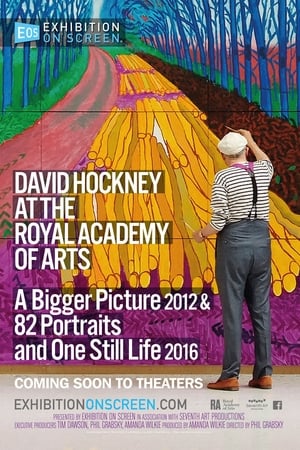
Director Philip Haas and artist David Hockney invite you to join them on a magical journey through China via a marvelous 72-foot long 17th-century Chinese scroll entitled The Kangxi Emperor's Southern Inspection Tour (1691-1698), scroll seven . As Hockney unrolls the beautiful and minutely detailed work of art, he traces the Emperor Kangxi’s second tour of his southern empire in 1689.
A documentary film directed by seven famous directors, and narrated by several famous Hollywood actors. The film attempts to give the general filmgoing public a taste of art history and art appreciation.
Melbourne-based Stelarc burst into prominence in the early 1970s with confronting, and outrageous public art performances. Following his mantra that ‘the body is obsolete’ he set about testing the limits of his own body in a series of death-defying stunts. Stelarc has always fought to escape the force of gravity. A third arm, an extra ear, a cheeky prosthetic head and an ambidextrous hand all play parts in this lively biopic as Stelarc wrangles the intersection between humanity and technology.
"I especially hope to inspire young women, because I often feel like so much emphasis is put on how beautiful you are, and how thin you are, and not a lot of emphasis is put on what you can do and how smart you are. I'd like to change the emphasis of what's important when looking at a woman." Filmed in San Francisco in 2000, Margaret Kilgallen (1967-2001) discusses the female figures she incorporated into many of her paintings and graffiti tags. Loosely based on women she discovered while listening to folk records, watching buck dance videos, or reading about the history of swimming, Kilgallen painted her heroines to inspire others and to change how society looks at women. Three of Kilgallen's heroines—Matokie Slaughter, Algia Mae Hinton, and Fanny Durack—are shown and heard through archival recordings. Kilgallen is shown tagging train cars with her husband, artist Barry McGee, in a Bay Area rail yard and painting in her studio at UC Berkeley (source: Art21).
Topo estrellado
A one-of-a-kind cinematographic experiment. A grotesque fairy tale, staged in the real lives of the characters. A completely self-produced movie, designed and directed by two visual artists, with the purpose of telling the tale of Artaserse, a retired worker, boxer, trainer and life-long painter. Everything is staged in an industrial, now decadent Terni; like a steel bay without the sea, here it's difficult to dream about becoming an artist. This movie is like a suburban western movie; the boxer and the painting dancing the communal square dance together, in life and death, the meeting-match between Artaserse and an allegorical and remorseless art world, and more generically, the battle of all the colorful characters, appearing throughout.
"Graphic City" explores Lisbon's vibrant urban art scene through the unique eyes of artist Mariana Duarte Santos. Between murals and interventions that transform public space, the film delves into the streets of the Portuguese capital to reveal the artistic expression that arises from the city's walls. This documentary captures the creative spirit of Lisbon, where every corner becomes an open canvas for the imagination.