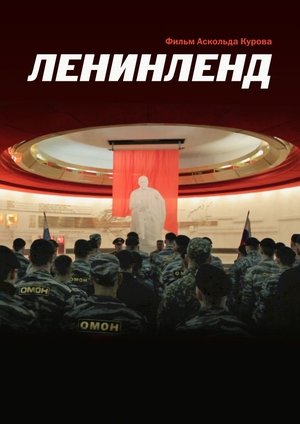
At the peak of Perestroika, in 1987, in the village of Gorki, where Lenin spent his last years, after a long construction, the last and most grandiose museum of the Leader was opened. Soon after the opening, the ideology changed, and the flow of pilgrims gradually dried up. Despite this, the museum still works and the management is looking for ways to attract visitors. Faithful to the Lenin keepers of the museum as they can resist the onset of commercialization. The film tells about the modern life of this amazing museum-reserve and its employees.
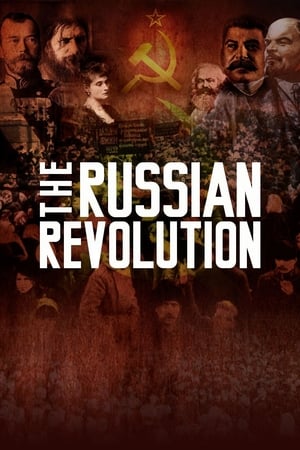
Starting in 1881 this film shows the personal battle between Lenin's Ulyanov family and the royal Romanovs that eventually led to the Russian revolution.
The Falcons is an intimate, observational documentary that delves into the world of the Tshakhruk Ethnoband, a remarkable musical ensemble in the Armenian highlands. Comprised of special-needs children that reside at the state orphanage, these young musicians find solace, strength, and self-expression through the transformative power of music.
Traces the new Cold War between Russia and the West from the ban on American citizens adopting Russian children to the Kremlin’s anti-LGBTQ campaign, which positions the international marriage equality movement as a national threat.
Ever since the war in Nagorno-Karabakh, the still disputed territory is contaminated by landmines. This documentary follows five female de-miners on their risky job.
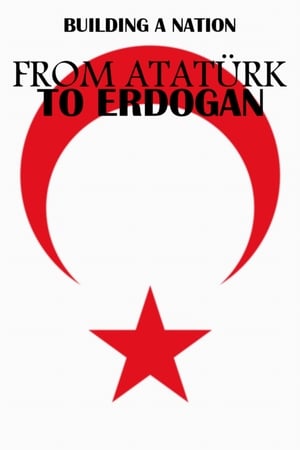
Turkey's history has been shaped by two major political figures: Mustafa Kemal (1881-1934), known as Atatürk, the Father of the Turks, founder of the modern state, and the current president Recep Tayyıp Erdoğan, who apparently wants Turkey to regain the political and military pre-eminence it had as an empire under the Ottoman dynasty.
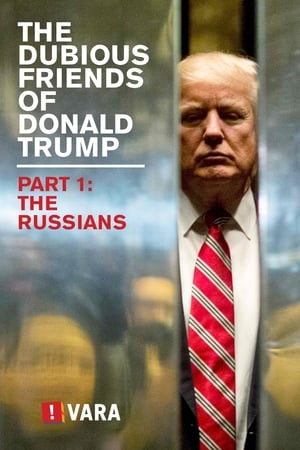
For months, the FBI have been investigating Russian interference in the American presidential elections. ZEMBLA is investigating another explosive dossier concerning Trump’s involvement with the Russians: Trump’s business and personal ties to oligarchs from the former Soviet Union. Powerful billionaires suspected of money laundering and fraud, and of having contacts in Moscow and with the mafia. What do these relationships say about Trump and why does he deny them? How compromising are these dubious business relationships for the 45th president of the United States? And are there connections with the Netherlands? ZEMBLA meets with one of Trump’s controversial cronies and speaks with a former CIA agent, fraud investigators, attorneys, and an American senator among others.
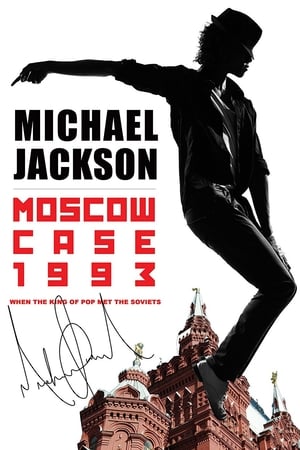
The Moscow Case is a 52 minute documentary with never-before-seen footage of Michael Jackson in Moscow during the "Dangerous" tour. This film tells the behind the scenes story of Jackson's ill fated concert in September 1993. It includes unique archival footage showing Michael close up and personal while meeting fans and playing with orphan children.
Russia as you have never seen before: from the bird's eye view. From Kaliningrad, to the Bering Strait, from the Icebreakers on the Polar Sea to the antelopes in the Kalmykia steppes, from the Caucasus peaks to the volcanoes of Kamchatka.
Twenty-five years after she moved away, Canadian filmmaker Kristina Wagenbauer (a participant in the 2019 Talent Lab) returns to her native Russia to visit her grandmother – her Babushka – with whom she spent part of her childhood, in this film brimming with tenderness and humour. The two women reflected in the mirror bear an undeniable resemblance, and each seeks to recognize herself in the other. Plumbing her memories, Wagenbauer hopes to re-establish a lost bond of intimacy and to confront the wounds of the past. Babushka has survived the Second World War, the break-up of the Soviet Union, the void that her daughter and granddaughter left behind when they moved abroad, and, more recently, the death of the love of her life. Despite all of this, she holds to life with a strong spirit of resilience.
Dos Islas is a poetic story about old age, family and the bond between a granddaughter and a grandmother. The woman, who just turned 102, tells stories about her past and childhood. In a literary and visual way she describes the most minute details. The film dazzles the viewer with love and optimism, the time passes slowly between the two islands, which might be real people, real places or the products of the main character’s imagination.
The last collaboration of Artavazd Peleshian and cinematographer Mikhail Vartanov is a film-essay about Armenia's shepherds, about the contradiction and the harmony between man and nature, scored to Vivaldi's Four Seasons.
A film essay by Asher de Bentolila Tlalim, an Israeli filmmaker living in London, GALOOT ("Exile" in Hebrew) is an extended meditation on the Israeli-Palestinian conflict through the eyes of those living at a distance. Through international visits (London, Israel, Morocco and Poland) and dialogue-with Palestinian refugees, the new immigrants to Israel who now occupy their homes, the current occupants of his family's former house in Tangiers, the residents of the former village of his wife's family in Lisensk, a scientist, a jazz musician, and others-the filmmaker explores the position of exile, with its unique pain and perspective on what others may be too close to perceive.
As his country is gripped by revolution and war, a Ukrainian victim of the Chornobyl nuclear disaster discovers a dark secret and must decide whether to risk his life and play his part in the revolution by revealing it.
Cartas
Leon Trotsky is considered one of the most controversial revolutionary figures of his time. Was he a practical revolutionary or a naive idealist? On the practical side, he was the mastermind behind the Bolshevik seizure of power in 1917, and was totally ruthless during the ensuing Civil War. As an idealist, he was committed to the pursuit of international revolution, but created many political enemies. After Lenin's death, Trotsky lost in a power struggle with Stalin, and later was expelled from the Communist Party. Trotsky was exiled from the Soviet Union, eventually finding refuge in Mexico. In 1940, Stalin ordered his assassination, and Trotsky died after being struck in the head with an ice-pick. History records that Trotsky was a master theoretician, a skillful propagandist and a brilliant orator.
Moscow, January 1996. Boris Yeltsin gets ready to run for a second mandate of the presidency of the young Russian Federation. Polls are in the single digits. A painful economic transition, war in Chechnya, and the rise of criminal groups have left the majority of Russians dissatisfied with Yeltsin… and willing to vote for the communist leader Gennady Zyuganov. Yet six months later, Yeltsin won the election with nearly 54% of the vote. How did that happen?
The Russian filmmaker, Pavel Klusjantsev, has had an extraordinary influence on an entire genre of films. Throughout his career at the film studio in St. Petersburg, Klushantsev pioneered and invented legendary techniques for filming the planets, stars and weightnessless - long before anyone else. He went on to redefine the science fiction genre and influence the way Hollywood made their science fiction films, including the Academy Award-winning Visual Effects Master, Robert Skotak, a man who spent years trying to track Klushantsev down
An effervescent facilitator and mother figure, Multicultural Liaison Officer Rosemary is undoubtedly a force of nature. Isolation in Auburn’s migrant community is a huge obstacle, and cultural norms mean that women are often tied to the house or a limited locale. Rosemary, with her larger-than-life spirit and generosity, works tirelessly to draw the women out of their homes and into society. She hosts a lively African Women’s Dinner Dance and takes them on a trip to the Blue Mountains and the NSW South Coast – introducing them to an Australia they’ve never seen before.
Dutch ice freediver Kiki Bosch swims in the world's coldest waters without a wetsuit as therapy for a trauma she experienced, and to inspire others.