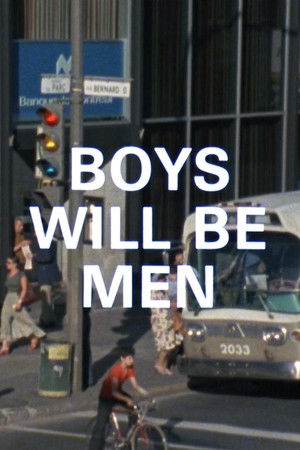
This film takes a candid, inside look at the world of juvenile delinquency. We are shown the tough existence on the streets of Montreal, but it could be any city in North America. Some boys as young as ten years of age talk about their lives of crime, the things that are important to them, and the hopes they hold for the future.
Insights into the automobile production line at Studebaker.
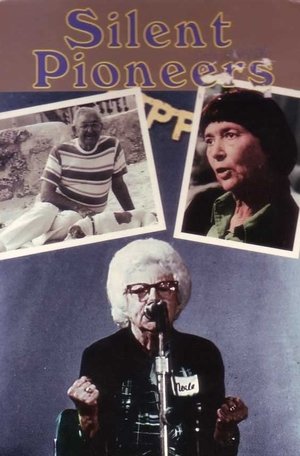
Contrary to the public stereotype of a youthful homosexual community, gay men and women do grow old. Silent Pioneers presents an upbeat focus on the lives of these people today, showing them living full and diverse lives and sharing concerns on ageing, health and housing, with other senior citizens. It also considers how support networks within the gay and lesbian community have enriched and strengthened their individual lives.
Die Demonstration
The shocking story of Richard Leopold and Nathan Loeb, two wealthy college students who murdered a 14-year-old boy in 1924 to prove they were smart enough to get away with it.
Letter Beyond the Walls reconstructs the trajectory of HIV and AIDS with a focus on Brazil, through interviews with doctors, activists, patients and other actors, in addition to extensive archival material. From the initial panic to awareness campaigns, passing through the stigma imposed on people living with HIV, the documentary shows how society faced this epidemic in its deadliest phase over more than two decades. With this historical approach as its base, the film looks at the way HIV is viewed in today's society, revealing a picture of persistent misinformation and prejudice, which especially affects Brazil’s most historically vulnerable populations.
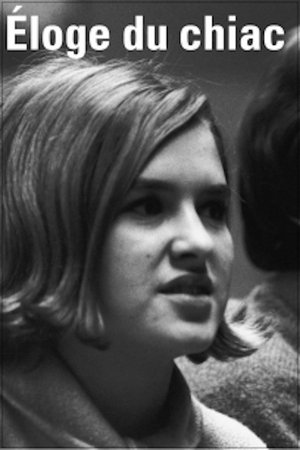
Set in New Brunswick, "Éloge du chiac" takes the form of an open discussion between a young French-language teacher and her students in Moncton. Through their exchanges, Michel Brault examines the challenges of preserving French in a bilingual region where English predominates, and explores the contested status of Chiac, a local French dialect shaped by centuries of linguistic contact.
A portrait of Jamaican-born artistic polymath Barbara Samuels. Featuring an account of her first generation, diasporic experience in Southend and London, and her discovery of hippiedom and the personal freedoms offered by entry into creative life.
An engagement with love and loss, presence and absence that become ritualised in need for recognition.
In Kitchen Beets, Bea Haut presents – with punchily sequential rhythm – an itemised domestic space, placing before her 16mm camera a succession of utensils that speak to the tactility of the artist’s own analogue practice.
An insight into the fishing business in the North Sea.
An explanation of the diazotype or ozalid copy, which is used to create film prints.
PaaPaa Chipskwenewh Sibii
Arvitarniit is a series of short videos presenting the journeys of inspiring post-secondary students from Nunavik. In this clip, we invite you to meet Louisa Papigatuk Argun, from Salluit.
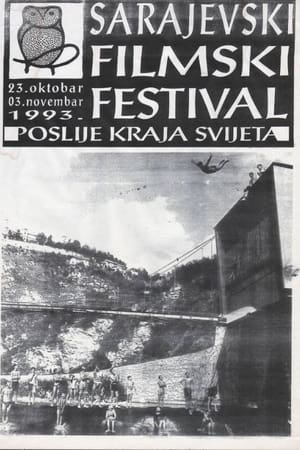
Sarajevo in the twentieth month of its besiegement. The situation is critical, but the city chooses to organise an international film festival. Dutch filmmakers Johan van der Keuken and Frank Vellenga present Van der Keuken's documentaries Face Value and Brass Unbound there, and one of the festival organisers asks a festival visitor: "What is the significance of film in war?" In Sarajevo Film Festival Film, a reflection on film, war and daily life, fictional images are juxtaposed in a disconcerting way with the gruesome reality of the life of a festival visitor.
ASMR: A feeling that disappears because it’s too subtle to notice, leaving a trace of a soft tingling sensation behind.
As the day grinds to a halt, agricultural workers gather to street race in the quiet, contemplative night.
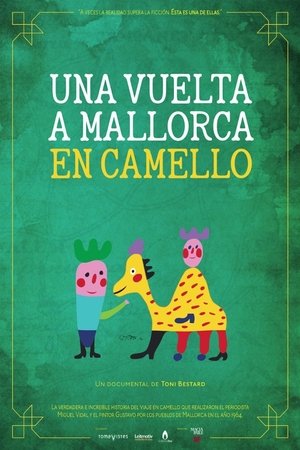
The real story about the camel ride around Mallorca, that journalist Miguel Vidal and painter Gustavo Peñalver did in 1964. Sometimes truth is stranger than fiction. This is one of them.
A heavily edited look at a routine dog walk with 3 small pups.
Juitamai is a dance full of contradictions. It gives the female performers a voice, but does not let them have their say. It emancipates Japanese women living in a strongly patriarchal society where they often go unheard, but does so by imposing strict rules. In addition, the dance is a form of accusation towards men, yet it takes an erotic form that confirms and stimulates the male gaze.