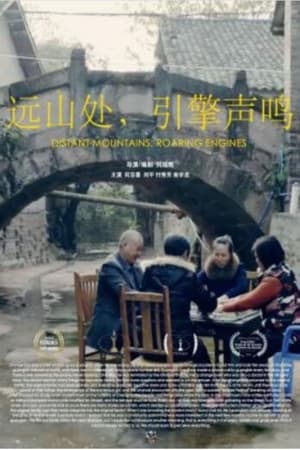
Li Shouwang is the leader of a blind storytellers team, learned storytelling at the age of 19. His childernare living hard in other cities. Li's money amost goes to his children's pocket every year. But with urbanisation, the storytellers have lost almost all their audience. As the conflict between the storytelling team and the village team intensified, his son, who was far away from home, became the only spiritual sustains... When he was excited that his son would be taking his family home for Chinese New Year, what's await is a sigh.
In Yuncheng County, Shandong, there is a girl born in the 90s named Han Wenjing who was paraplegic in a car accident in her childhood. As Han Wenjing gets older and older, she is worried about her future life. Marriage has become the biggest concern of parents. Han Wenjing got acquainted with a soldier online, but finally broke up under his father's opposition. The younger sister-in-law also had a dispute between the two over her marriage. When Han Wenjing was depressed, her father proposed to carry her to Liangshan. First, fulfilling Han Wenjing's wish was also compensation for Han Wenjing. Later, Han Wenjing met a dumb while studying e-commerce sales. The dumb liked her very much. Both parents were satisfied when they met. However, Han Wenjing felt that she still couldn't accept the disabled and wanted to try to combine healthy people, even if it failed. Under the pressure of her parents and sister-in-law on Han Wenjing, Han Wenjing still insists on her choice
This film is a realistic record of a sixty-year-old couple living in a remote village (Gurenay) in the Badain Jaran Desert of Alashan, Inner Mongolia plant thousands of mu of ammodendron and euphratica to fight against expanding deserts.
Xiayao Village, Youyu County, Shanxi ProvinceThe 7-year-old and big-footed Bai Nu and Liu Buhan, both of whom died because of their loved ones, were brought together with their three children more than 40 years ago. (Bai Danu 2 Men 1 Women) (Liu Buhan 3 (Daughter) Nowadays, the children have become grandparents, and most of them are not next to Bai Bainu and Liu Buhan. The children of both sides have differences over the old age of raising the two elderly people ... so despite the two They are all in their eighties, and still need to get up and return to the field to farm in the morning and night, and the old lady Bai is more because of her little feet, she has to stagger in the wind and rain, kneeling in the fields ... A foot-binding old lady faces the camera and talks to her little feet ...
Video essay ‘Rock and Cliff' investigates the creation of Horn Town, a new model village and centre of large scale tourist development, and the experiences of rural residents moved there through government-led displacement. Horn Town is located in Wulong, a rural district near the Three Gorges Dam administered by the Chongqing municipality (a city of 30 million people). Narrated in the style of a science documentary but using local Chongqing dialect, the video brings a geological and topographical perspective to types of 'rocks' found in the area,from mythological stones from a mountain cliff, to ruins of the original settlement, to a stone sculpture from a dubious 'Land Art Biennial', in order to address issues of land acquisition, top-down development and spatial politic.
Zhang Ming went back to his hometown Wushan to record the last images before it being changed forever by the upcoming Three Gorges Dam.
Follow the lives of the elderly survivors who were forced into sex slavery as “Comfort Women” by the Japanese during World War II. At the time of filming, only 22 of these women were still alive to tell their story. Through their own personal histories and perspectives, they tell a tale that should never be forgotten to generations unaware of the brutalization that occurred.
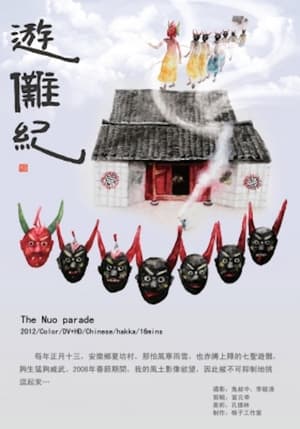
Seedlings protection rite (also called the parade of big rice dumplings) is a spring agricultural festival of Hakka people in Western Fujian, China. People worship the God of Grains (Shennong) in the rite. People collect thousands of fresh bamboo leaves, sew them together and make a pair of big dumplings filled with 120 kilograms of rice each. They also make tens of thousands of finger-sized rice dumplings for believers to take home. On the 15th day of the 2nd lunar month, villagers carry out the statues of the God of grains and big dumplings. Followed by flowers cars, eight sheds carry children chosen from every clan name in the village who are dressed up as ancient heroes, as people parade around the village. After the rite, villagers believe that farmland is awakened and that disasters are averted. A new agricultural cycle begins.
Record the entangled experience for changing the genealogy. Record the experience for engraving movable type, hand-printed.
As a kind of traditional handmade paper in the area of Ninghua in western Fujian Province, Yukou paper is named after its soft and delicate quality as well as white and jade-like color. It is the best of handmade papers and needs to go through several complicated and elaborate processes. In a small village deep in the Wuyi Mountains, Xikeng, there were once more than five hundred paper mills, but now only one remains, still struggling to survive. The film crew focused their camera on the paper maker Hu Lanshan's family, quietly recording the process of making Yukou paper, the joys and sorrows of the paper maker’s family, and the changes of the whole era...
A Jian, Zhang Chiand Gou Zi took the train from Beijing to Tongliao. They made a promise that no one could speak during the trip, and who broke the rules should be punished. But it's still necessary to pick up some phone call, ask the way after you get off the train...For educated decadents, life is as if always in a state of intoxication, without goal or objective.
The artist works around the different individual experiences which consolidates the different changes in the body while examines intimate relationships under the structure of the disease, all by making her experience visible and public. Within the realms of Ruijing’s discussions, she hopes for the work to push the boundaries of the marginality of the body, for the work to allow oneself to look at their and others’ body in an objective manner that escapes the ontological. She further wished for the experience of living and the reflection on the mass would help the discovery of the self and its connection with society, while reflecting on life itself by doing so.
The "Wugong sutra" is also known as "Transfer to the Sky". A prophecy written by the people since the Five Dynasties Northern Song Dynasty is said to be the proverb of the Tiangongshan Zhigong, Huagong, Yigong, Tanggong and Baogong Wugong Bodhisattvas. The salvation people were robbed at the end, often used by rural secret social organizations, and also banned by the imperial court rulers. The belief in the "Five Annals" in the rural society of northwestern Yunnan has abandoned the function of politics, and only pays attention to the practical effect of the Wugong sutra curse on treating and saving people and protecting one side. This film is a field survey of the Wugong sutra as a folk belief in rural society in northwestern Yunnan.
The arrogant Hua Pozi, the first-time brother who is full of joy. Even the seemingly greasy, exaggerated, and gaudy drum art seems to be unrelenting in the villages and villages.
Geomancy is to say hinding winds to gain water. The earth is mother , burial brings peace to the deceased, symbolizing reincarnation. So the name of this story in English is “Revive”, which means getting into the cycle of reincarnation. The documentary is going to tell a story contains several elements such as Geomancy of compass, Hakka funeral and interment culture, General om teach, Seance. Moreover, it also porse deeply on the floating life with fleeting time- the sanguine life of a wise man in countryside. This is an old man whose life is full of hardships, he possesses real learning and stories, owns peace after overcoming severe difficulties, and has the special graciousness as being in such an age…
In the mountains of western Fujian, mushrooms emerge in large numbers after rain. Hakka people pick mushrooms up the mountain with baskets at three or four o 'clock in the morning. The process of picking mushrooms is also the process of harvest.
In the sound of rice huller, the rice falls to the jar; and in the booming sound of thunder, the rain drops falldown on the ground. Witha shovel on shoulder, we're farming under the sky. -- This is a children's folk rhymes used to be very popular among the Hakka people lived in the westernpart of Fujian Province, China. While farming is not an easy work, rice hulling is an even more laborious work. Rice-huller is a tool used by the peasants in southern China to hull the rice for thousands of years in theirfarming history. This documentary films the making of probably the last rice-huller ever made by mankind.
Workers, peasants, soldiers, students and merchants were five groups of Chinese society in the 1950s, after the so-called elimination of the exploited class. Borrowing this concept, the umbrella is taken as the clue to rediscover changes in various social classes after the economic reform, and to analyze the social problems in China. Workers making umbrellas, merchants selling umbrellas, students looking for jobs in the rain. Umbrella is used as a metaphor that can be seen everywhere. As the raindrop, what we see is sometimes clear, sometimes untraceable.
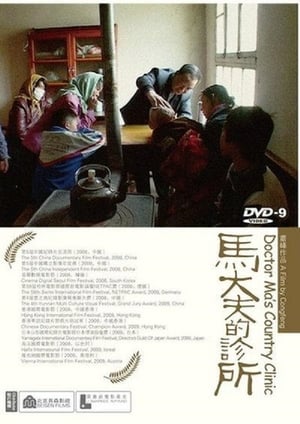
"Huangyangchuan, Gansu province, China. It's an arid mountain area with poor roads. Ma Bingcheng is well-respected local doctor, so many patients (most of them farmers) come to see him every day. In his small clinic, people chat with each other about their lives, local conditions, or the people they know. The clinic seems to open up like a microcosm, the information and experiences of different people intertwine, revealing the conditions of typical Chinese farmers, and the typical fates of both young and old--"
Filmed over three years on China’s railways, The Iron Ministry traces the vast interiors of a country on the move: flesh and metal, clangs and squeals, light and dark, and language and gesture. Scores of rail journeys come together into one, capturing the thrills and anxieties of social and technological transformation. The Iron Ministry immerses audiences in fleeting relationships and uneasy encounters between humans and machines on what will soon be the world’s largest railway network.