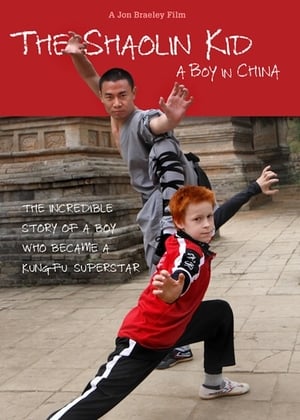
The fantastic story of how an ancient martial art, Chinese kung fu, conquered the world through the hundreds of films that were produced in Hong Kong over the decades, transformed Western action cinema and inspired the birth of cultural movements such as blaxploitation, hip hop music, parkour and Wakaliwood cinema.
Music is an integral part of most films, adding emotion and nuance while often remaining invisible to audiences. Matt Schrader shines a spotlight on the overlooked craft of film composing, gathering many of the art form’s most influential practitioners, from Hans Zimmer and Danny Elfman to Quincy Jones and Randy Newman, to uncover their creative process. Tracing key developments in the evolution of music in film, and exploring some of cinema’s most iconic soundtracks, 'Score' is an aural valentine for film lovers.
Doomed attempt to get to California in 1846. More than just a riveting tale of death, endurance and survival. The Donner Party's nightmarish journey penetrated to the very heart of the American Dream at a crucial phase of the nation's "manifest destiny." Touching some of the most powerful social, economic and political currents of the time, this extraordinary narrative remains one of the most compelling and enduring episodes to come out of the West.
The history of Frankenstein's journey from novel to stage to screen to icon.
New Model Army have been one of the biggest underground music artists for over quarter of a century. To their global community of fans they mean everything. Yet mainstream success has so far eluded them. This film is the story of the band and in particular their charismatic and unconventional lead singer songwriter and founder Justin Sullivan.
The true stories that spawned the serie tale of Damien, a small boy with an angelic face, whose very name still conjures up thoughts of Satan. This documentary shares spine-tingling information about the the all-too-memorable flick that has terrorized film audiences since 1976.
Vratislav Effenberger or Black Shark Hunting
Filmed inside Pharmacy No. 3 in Shanghai, Joris Ivens and Marceline Loridan-Ivens document the daily work of a state pharmacy that functions as both a dispensary and a neighborhood medical center. The film focuses on routine interactions between staff and patients, revealing an integrated model of urban healthcare in 1970s China.
The history of the Yakuza Eiga at the TOEI studio is roughly outlined. Real Yakuza and also their connections to the movie business are discussed, and many important actors and directors of the genres are interviewed. Former real yakuza boss turned actor Noboru Ando, Takashi Miike, Sonny Chiba and many more get a chance to speak.
On the eve of Memorial Day, a star-studded lineup will grace the stage for one of PBS' highest-rated programs. This multi-award-winning television event has become an American tradition, honoring the military service and sacrifice of all our men and women in uniform, their families at home and those who have made the ultimate sacrifice for our country.
A detailed history of documentary filmmaking in the US and the UK from 1929 to 1945. The first part, Working for Change, focuses on 1929-1941 and the social movements of the times, The Great Depression, The New Deal, and the awakening of the Leftwing in the UK. The second part, The Strategy of Truth, focuses on 1933-1946 and explores the role of film as propaganda during World War II, and the different forms it took in the US, the UK, and Germany.
The war units of the Hun Emperor Mete Han and the Chinese Emperor Gao-Zu, the father of the turan tactic used by the Turks for centuries, come face to face in the Battle of Baideng. The war genius Mete Han was going to surround the Chinese with an unexpected war tactic and inflict a heavy defeat on them.
A documentary on the dark and brutal side of the Samurai warrior clans featuring the life of peasant Masa who is pressganged into the ruthless world of the Samurai.
Emilio Pascual, a historical figure of Andalusian cinema from the early 1900s, appears in today's Malaga with the mission of bringing the first documentary filmed in Andalusia to its first screening.
A riveting expose about the personalities of murderers and their motives. This 72 minute film covers the McDonalds' restaurant massacre, President Reagan's assassination attempt, serial murderer Henry Lee Lucas and others.
On June 5, 1989, one day after Chinese troops expelled thousands of demonstrators from Tiananmen Square in Beijing, a solitary, unarmed protester stood his ground before a column of tanks advancing down the Avenue of Eternal Peace. Captured by Western photographers watching nearby, this extraordinary confrontation became an icon of the fight for freedom around the world. FRONTLINE investigates the mystery of the tank man — his identity, his fate, and his significance for the Chinese leadership.
China's top drama academy stages the American musical "Fame," China's first official collaboration with Broadway, as the graduation showcase for its senior class. During the eight-month rehearsal, five students compete for roles, struggle with pressure from family and authority, and prepare to graduate into China's corrupt entertainment industry.
Lost Heroes is the story of Canada's forgotten comic book superheroes and their legendary creators. A ninety-minute journey to recover a forgotten part of Canada's pop culture and a national treasure few have ever heard about. This is the tale of a small country striving to create its own heroes, but finding itself constantly out muscled by better-funded and better-marketed superheroes from the media empire next door.
The incredible story of the Avro Lancaster, one of the finest bombers of the Second World War, which played a crucial role in the long and savage campaign to defeat Hitler's Third Reich. This documentary features interviews with surviving veterans of Bomber Command, who share frank personal accounts of their part in an aerial battle of attrition which claimed the lives of 55'000 aircrew.
In 1910, the Pennsylvania Railroad successfully accomplished the enormous engineering feat of building tunnels under New York City's Hudson and East Rivers, connecting the railroad to New York and New England, knitting together the entire eastern half of the United States. The tunnels terminated in what was one of the greatest architectural achievements of its time, Pennsylvania Station. Penn Station covered nearly eight acres, extended two city blocks, and housed one of the largest public spaces in the world. But just 53 years after the station’s opening, the monumental building that was supposed to last forever, to herald and represent the American Empire, was slated to be destroyed.