American television programming dominates around the world at the expense of regional cultural voices.
Embargo sur l'Iran
On January 18, 2019, 17-year old Nick Sandmann, a student at the affluent Covington Catholic High School in Kentucky, was internationally villainized on social media and in the 24-hour news cycle as he and his classmates appeared to confront Native American elder Nathan Phillips on the steps of the Lincoln Memorial in Washington, D.C. during a March for Life rally. Video clips of the interaction went viral overnight and Sandmann and his classmates faced worldwide outrage as the entire Covington Catholic community became the center of uncomfortable conversations about racism, privilege and politics.
Méthane, rêve ou cauchemar ?
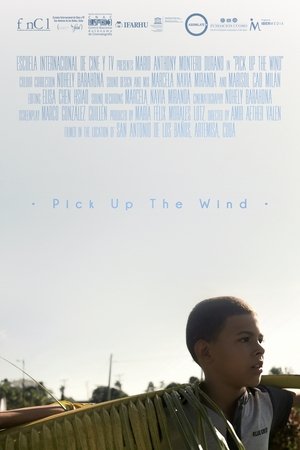
70-year-old Timo makes the most of his short ride to work. Speeding up on a bicycle ends up in a ditch, but the adrenaline rush leaves a feeling of pleasure.
Since the enactment of the Anti-Boryokudan Act and Yakuza exclusion ordinances, the number of Yakuza members reduced to less than 60,000. In the past 3 years, about 20,000 members have left from Yakuza organizations. However, just numbers can’t tell you the reality. What are they thinking, how are they living now? The camera zooms in on the Yakuza world. Are there basic human rights for them?
The Philippines remains the only nation without legalized divorce. Through the perspectives of a controversial priest, a women's rights advocate, and a child of a separated couple, this documentary explores whether the legalization of divorce in the country would be for better or worse.
Pouvoir Oublier is a political documentary first constructed from the words of the speakers whose lives changed on the tragic day of May 10, 1972 in Sept-Îles. Their word will be juxtaposed with archival material from the events, some of which are unpublished, which will reflect the collective euphoria in which Sept-Îles and all of Quebec were then bathed.
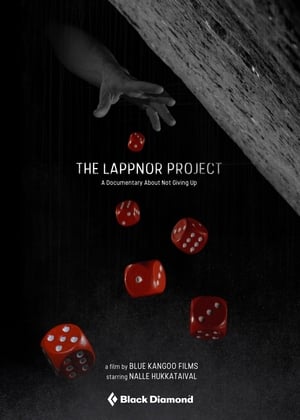
In the Finnish forests was an unclimbed route called the Lappnor project. It was considered to be the hardest climbing route in the world and perhaps impossible for a human. Nalle Hukkataival, a strong Finnish climber took up the challenge. It required almost four years of total commitment and his efforts were followed by hundreds of thousands of climbers around the world. When Nalle finally succeeded, it blew away the whole climbing world like nothing before. The first 9A boulder was climbed! The documentary follows Nalle's journey from the very beginning, all the way to the first ascent almost half a decade later. It captures the incredible dedication that was needed to deal with all the variables and to take that last step to open the next level of climbing.
Visit to a famous Sana'a tower house with an architect
Extravíos
This film examines how media empires, led by Rupert Murdoch's Fox News, have been running a "race to the bottom" in television news, and provides an in-depth look at Fox News and the dangerous impact on society when a broad swath of media is controlled by one person. Media experts, including Jeff Cohen (FAIR) Bob McChesney (Free Press), Chellie Pingree (Common Cause), Jeff Chester (Center for Digital Democracy) and David Brock (Media Matters) provide context and guidance for the story of Fox News and its effect on society. This documentary also reveals the secrets of Former Fox news producers, reporters, bookers and writers who expose what it's like to work for Fox News. These former Fox employees talk about how they were forced to push a "right-wing" point of view or risk their jobs. Some have even chosen to remain anonymous in order to protect their current livelihoods. As one employee said "There's no sense of integrity as far as having a line that can't be crossed."
French TV host Antoine de Maximy travels the U.S. from coast to coast, relying on the hospitality of strangers and documenting his experiences with a hand-held camera.
A documentary following a day in Urho Kekkonen's life as the president of Finland.
A chronicle which provides a rare window into the international perception of the Iraq War, courtesy of Al Jazeera, the Arab world's most popular news outlet. Roundly criticized by Cabinet members and Pentagon officials for reporting with a pro-Iraqi bias, and strongly condemned for frequently airing civilian causalities as well as footage of American POWs, the station has revealed (and continues to show the world) everything about the Iraq War that the Bush administration did not want it to see.
A father of four children gets brutally stabbed several times, with the children present in the family home. During the brutal action, his wife – Anneli Auer – is on the phone to the emergency center. Emergency Call – A Murder Mystery is a documentary film tracking down the story that unfolds after the fatal night. We hear from all emerging sides as the prosecution builds its case against the mother of four. A behind the scenes look into one of the most bizarre unsolved court cases in recent Finnish history.
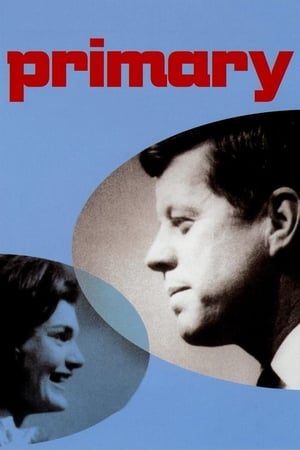
Primary is a documentary film about the primary elections between John F. Kennedy and Hubert Humphrey in 1960. Primary is the first documentary to use light equipment in order to follow their subjects in a more intimate filmmaking style. This unconventional way of filming created a new look for documentary films where the camera’s lens was right in the middle of what ever drama was occurring. Preserved by the Academy Film Archive in partnership with The Film Foundation in 1998.
Conductivity is a film about creative leadership told through the story of three young conductors at the prestigious Sibelius Academy in Helsinki, Finland; I-Han Fu (Taiwan), Emilia Hoving (Finland) and James Kahane (France). When stepping on the podium, they are put under a magnifying glass. Conductor training, in essence, is leadership training. The film gives a unique viewpoint to follow the students, as this is the first film about conductor training at the Sibelius Academy.
Mémé
The war in the Ukraine has changed the way many European countries view Russian politics. Suddenly it became clear how dependent countries had become on Russian gas imports for decades and what Vladimir Putin was up to. However, no country needs more gas than Germany. It was only after Russia's invasion of the Ukraine that the German government realized that Russia had long used gas as a weapon to impose its will on states. The instrument created for this purpose is the natural gas production company GAZPROM. So how did Germany become so dependent on Russian gas? The documentary shows how, over several decades and several changes of government, a broad alliance of politicians and business representatives did everything possible to secure Germany's energy supply with cheap Russian gas, while the Kremlin's foreign policy became increasingly aggressive and the warnings of experts went unheeded.