An exposé of comic proportions that only Chris Rock could pull off, GOOD HAIR visits beauty salons and hairstyling battles, scientific laboratories and Indian temples to explore the way hairstyles impact the activities, pocketbooks, sexual relationships, and self-esteem of the black community.
Robert Burns was well aware of the revolution taking place across the Atlantic as he grew up. The poet was inspired. And America was to be inspired by him. From Abraham Lincoln to Frederick Douglass, and Walt Whitman to Bob Dylan, some of the most significant figures in American politics and culture have cited Burns as an influence.
It has been over one hundred years since M. K. Čiurlionis left his lasting imprint on Lithuanian culture. He was a composer, painter, genius, and madman who created an entirely new space, new context, and new universe.
METAMORPHOSIS brought to you by Tanuj Samaddar FRSA in collaboration with the London School of Hygiene and Tropical Medicine, Art of Health Zim and Ardent Creative addressing issues on mental health faced by the youths today. The video series is a series focusing on mental health issues faced by the youths in general. The series will include individual episodes on a separate subtopic on mental health issue released on a monthly basis. The production has been done in collaboration with the Art of Health Zimbabwe by Tanuj Samaddar FRSA.
The documentary is titled after Arkadaş Z. Özger’s poem “Hello My Dear” which had caused much controversy in the period it was first published. Considered to be in defiance of heteronormativity, the said poem includes references to the poet’s personality, his family, his relationship to the society, and his “unexpected” death, which came three years after its publication. Today, 50 years after it was written, the documentary follows these same lines in the poem utilising cinematic elements. The documentary also rediscovers the poetics; reaches out to the family, the comrades, the friendships, departing from the official historical accounts, cognizant of his experience of otherness, in pursuit of the “lost” portrait of Arkadaş Z. Özger.
A film about the poet Oscar Lucero during the year 2012 in La Legua.
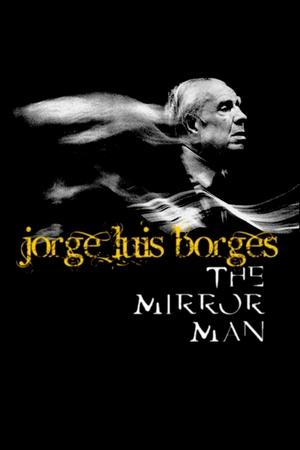
How the inventor of the detective story became his own greatest mystery.
This film is dedicated to Mas-Félipe Delavouët, the poet discovered by Lawrence Durrell, who wrote 14,000 verses in Provençal over a period of thirty years, and who died on November 18, 1990. "The sky, history and Mediterranean and Provençal myths are the inexhaustable wellspring of this man rooted down there, near Salon-de-Provence" (J.-D. Pollet). "Mas-Félipe Delavouët wrote five books in Provençal, 14,000 verses. A sort of "Odyssey". Of myths. What is stunning in him is that he always talks of disappearances. Cities, works, men, writings, television, etc., everything has to disappear. In order to be reborn. No pain. A sort of hand-to-hand of man and nature. During the filming, I would simply throw out some words... For example, one time I said "creation" and he said: "creation doesn't exist..., creation is before me..., I can only read creation"; this sentence describes Delavouët perfectly (J.-D. Pollet, 1989 and 1993).
A man spends an evening by the river
T. S. Eliot has been considered by many to be the leading American poet of this century. His contemporaries in the 1920s recognized in “The Waste Land” an expression of the exhaustion and fragmentation that afflicted so many in that post-war era. They also recognized the originality of Eliot’s poetic technique and admired his insistence on the need for spiritual values in an age of popular kitsch.
A documentary about Néstor Perlongher. His life, his poems, and his activism in Argentina's Frente de Liberación Homosexual (homosexual liberation front).
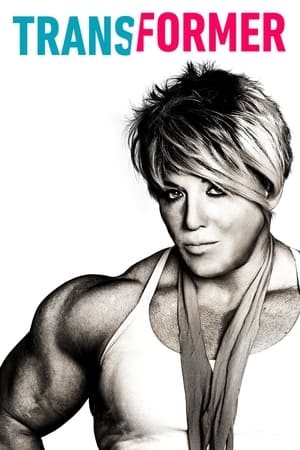
In the summer of 2015, former US Marine and world record weightlifter Janae Marie Kroczaleski was publicly outed as being transgender. The reaction was universal: her sponsors abandoned her, she was disowned by her parents and banned from competing. This film follows Janae as she attempts to find her place in society. Initially wanting to strip off the muscle and become a much smaller looking woman, she found herself unable to lose the muscle she so desperately gained. She now finds herself living one day as an alpha male and the next day as a delicate girl. Will Janae be able to handle her muscle relapses? Will her passage from being a male bring her the peace she's looking for? Will society accept a 250lbs muscular woman? Is her path personal redemption or physical and psychological disaster?
The creative chemistry of four brilliant artists —drummer John Densmore, guitarist Robby Kreiger, keyboardist Ray Manzarek and singer Jim Morrison— made The Doors one of America's most iconic and influential rock bands. Using footage shot between their formation in 1965 and Morrison's death in 1971, it follows the band from the corridors of UCLA's film school, where Manzarek and Morrison met, to the stages of sold-out arenas.
Reila
From the segregated American South to the fashion capitals of the world, operatic fashion editor André Leon Talley's life and career are on full display, in a poignant portrait that includes appearances by Anna Wintour, Marc Jacobs, Tom Ford, Bethann Hardison, Valentino, and Manolo Blahnik.
An account of the life and work of the Spanish poet Luis García Montero; a journey through his experiences, his mentors, his influences and his contact with other artists, both from the literary world and from other disciplines.
The story, hidden by historians and biographers, of Jeanne, a black woman, whose real name is unknown, who was the muse and companion of the mythical French poet Charles Baudelaire (1821-1867).
A chronicle of legendary Native American poet/activist John Trudell's travels, spoken word performances, and politics.
The first episode in a series of “adaptations” of poet Bernadette Mayer’s book Utopia that artist Beatrice Gibson envisions to undertake over the next decade, producing a series of small, quotidian films that together, and over time, will constitute an epic. This first film is drawn from Chapter 4, entitled “The Arrangement: of Houses & Buildings, Birth, Death, Money, Schools, Dentists, Birth Control, Work, Air, Remedies, and So on” and was shot at home during the pandemic.
Stéphane Mallarmé is one of the many educational documentaries that Éric Rohmer did for the television during the 1960’s. At the beginning of the film, Rohmer states that he has placed in Mallarmé’s mouth words taken from an interview with the writer by Jules Heuret published in 1891.