Police have been killing people in Columbus, Ohio, with near impunity for more than two decades, leaving behind a community bound together by grief – and a system that refuses to call these killings murder. In a searing indictment of the police and justice system at large, educator and curator Ingrid Raphael and journalist Melissa Gira Grant have collaborated in this short film, which spotlights the testimonies and resistance strategies of the loved ones of Henry Green, Tyre King, Donna Dalton and Julius Tate. These are the mothers, sisters, and grandmothers of those who were killed by Columbus police, women seeking justice for their family members, despite knowing that it is unlikely to be found within the system that caused their wrongful deaths.
The documentary chronicles the week the streets burned, police charged against crowds, and Barcelona experienced the five most chaotic days in its recent history. When the Supreme Court sentenced the 12 pro-independence leaders for sedition, misuse of public funds, and disobedience, the widespread rejection of the verdict sparked a wave of demonstrations, protests, and violent clashes that transformed the streets of Barcelona, and other cities in Catalonia, into a veritable battlefield.
In 1972, officer Frank Serpico exposes the corruption which poisons the roots of the NYPD and becomes famous in 1973 when director Sidney Lumet tells his story in the classic film “Serpico,” starring Al Pacino.
Since November 2022, the Brussels prisons of Saint-Gilles, Forest and Berkendael have been moving to the brand-new "prison village" of Haren, on the outskirts of Brussels. An ultra-modern, ultra-secure, semi-private prison. But why build new prisons in the first place?
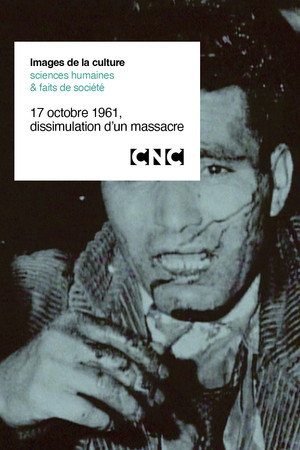
On October 17 and 18, 1961, during a non-violent demonstration against the imposed curfew, dozens of Algerians were murdered in Paris by police officers acting on orders from their superiors. For forty years, this crime has been concealed; yet these events, the deadliest on French soil since the Second World War, resemble, in some respects, the darkest hours of the collaboration. Why has this history been hidden? Under what conditions, and in the name of what reasons, did officials of a democratic state conceal the scale and gravity of such events?
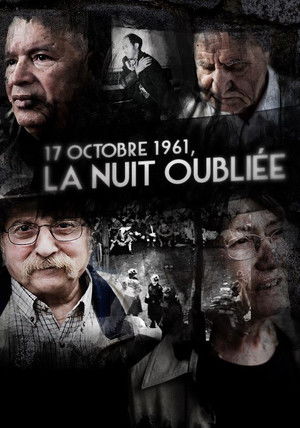
Three demonstrators from October 17, 1961, and a journalist recount the peaceful success of the demonstration and its brutal repression in the streets of Paris. Five months before the end of the Algerian War, the Gaullist government violently suppressed (40 to 300 deaths in a single evening, according to various sources) a peaceful demonstration by the entire Algerian civilian population of the Paris region, protesting the curfew imposed solely on this population (all participants held French citizenship). The government long denied this state crime; the official version: 3 deaths! In 1962, these events were granted amnesty by a simple decree (later enacted into law) issued by the same Gaullist government.
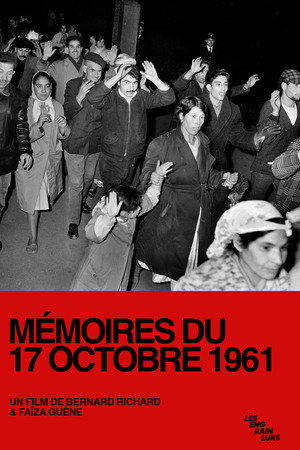
On October 17, 1961, in response to the curfew imposed on Muslim Algerians by Paris police prefect Maurice Papon, the FLN Federation of France organized a peaceful demonstration in the streets of the capital. The demonstration turned into a bloody crackdown: unprecedented violence, thousands of arrests, hundreds missing, and dozens dead. Today, much is known about the violence of that night: at least 200 Algerians were killed, beheaded, beaten, or thrown into the Seine; 11,500 others were arrested and often tortured. Hundreds were deported back to Algeria. Long silenced, the repression has been acknowledged thanks to the work of remembrance and eyewitness accounts.
A drama-documentary reflecting the pressures afflicting the modern police community both at work and home. About a London cop who transfers to the country, and his wife who joins the anti-nuclear lobby.
Uma História de Crimes
A Terra em que Pisar
Ve jménu míru
A documentary on police brutality during the anti-corruption protest in Valjevo, Serbia on August 14th, 2025.
1989, New York City's Alphabet City and East Village. A year after the Tompkins Square Park Riot, squatters and their community allies try to stop the demolition of their building after an arson. Police forces occupy the neighborhood while the demolition continues. A portrait of an East Village that is no more. An homage to the voices and sounds of a neighborhood before its gentrification.
Demonstration of shoplifting methods. With the Cooperation and Assistance of Berkeley, California Police Department and Berkeley Police Reserve; Addison H. Fording, Chief of Police; J.F. Hink & Son Department Store, L.W. Hink, President. Technical Assistance: Wm. P. Beall, Lieutenant; E.A. Skells, Sergeant, Berkeley Police DepartmentGeorge Jelten, Director of Visual Merchandising, J.F. Hink and Son. Director of Photography: John L. Siegle. Sound: Walter D. Porep. Narration: John E. Pedersen.
A documentary about a case of police brutality in the 80's NYC, the killing of graffiti artist Michael Stewart
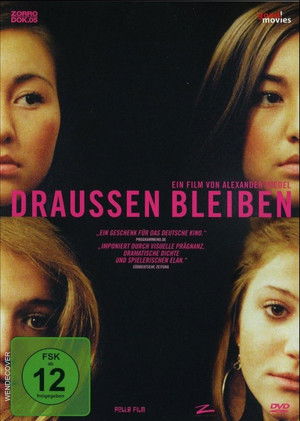
Draussen bleiben
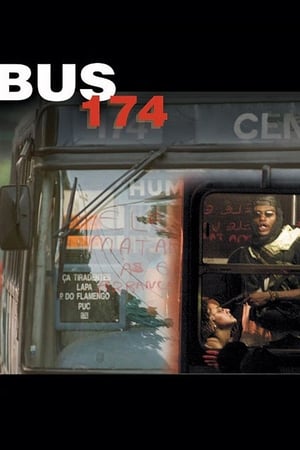
On 12 June 2000, in Rio de Janeiro, Ônibus 174 was taken by an armed young man, threatening to kill all the passengers. Transmitted live on all national networks, this shocking and tragic event became one of violence's most shocking portraits, and one of the most terrifying examples of police incompetence and abuse in recent years.
In 2006, millionaire Charlotte Böhringer (†59) was found beaten to death in her penthouse flat above the Isar car park in Munich. Her nephew Benedikt Toth was convicted of murder for greed and sentenced to life imprisonment for a particularly serious offence. The verdict was controversial from the outset as it was based solely on circumstantial evidence. The instrument of the offence could not be identified.
HISTORY brings you an all-encompassing documentary event cantered around the 25th anniversary of the LA Riots, the most destructive riot in American history that left 53 people dead and caused over a billion dollars in damage.
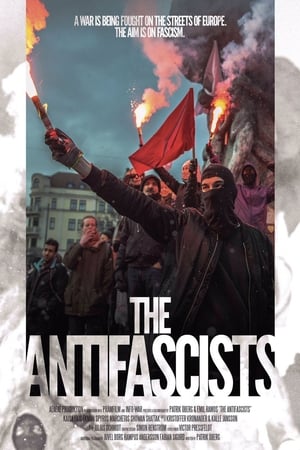
A low-intensity war is being fought on the streets of Europe and the aim is on fascism. This critically acclaimed documentary takes us behind the masks of the militants called antifascists. In 2013 a group of armed nazis attacks a peaceful demonstration in Stockholm where several people are injured. In Greece the neo-nazi party Golden Dawn becomes the third largest in the election and in Malmö the activist Showan Shattak and his friends are attacked by a group of nazis with knives and he ends up in a coma. In this portrait of the antifascists in Greece and Sweden we get to meet key figures that explain their view on their radical politics but also to question the level their own violence and militancy.