Discover the story of the greatest civil rights movement most people have never heard about. During eight tumultuous days in 1988 at the world's only Deaf university, four students must find a way to lead a revolution—and change the course of history.
Sven has a dream. Once in his life he wants to walk the Camino de Santiago - the Way of St. James. But that seems impossible, Sven has Usher syndrome, a disease which slowly, inexorably robs him of hearing and vision. Profoundly deaf and completely blind since 2010, he can only communicate using a special hearing aid in the spoken language.
Experimental Short Film Documentary made during the social outbreak, follows 2 Deaf people walking through the outbreak in Plaza Dignidad.
The life of Princess Alice of Battenberg, Queen Victoria's great-granddaughter, Prince Andrew of Greece's wife and Queen Elizabeth II's mother-in-law. Born deaf, she faced tremendous hardships but found solace in faith and charity work.
This film is a letter to my friend Vincent who died ten years ago. Vincent was Deaf. He introduced me to his language, his culture, his world. Through Vincent ‘s life, the film will examine the roots of the distress that plagues the Deaf, and also explore a rich and fascinating world, a people that struggles to preserve its Sign Language and Culture.
The film is separated into four chapters, each tracking a different group of protagonists who all have one thing in common – they were born deaf. Little Sandra likes to play football and admires Ronaldinho. Marián worships trains and wants to be an engine driver. Teenagers Alena and René are expecting a baby and long for it to be born healthy. The trio of Roman, Kristián and Karmen help their parents by collecting junk to be sold and dream of one day having a house with a flush toilet.
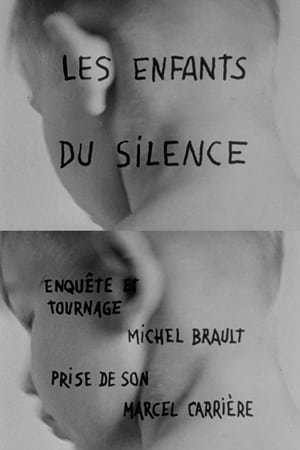
This film looks at the world of children with hearing loss and the importance of early diagnosis. With its straightforward, rigorous cinematic style and intimate approach to the subject, the film focuses on the human rather than the technical side of the problem of hearing impairment.
In American Sign Language (ASL) with subtitles available in English, Spanish and Canadian French. This powerful documentary uses real life experiences from Deaf people of varied social, racial, and educational boundaries showing how this form of oppression does lasting and harmful damage. Bonus materials include directors' comments from Ben Bahan and H-Dirksen Bauman and additional scences. Teachers: This film is a wonderful tool for beginning ASL students, as an introduction to a side of Deaf culture that cannot be found in any textbook.
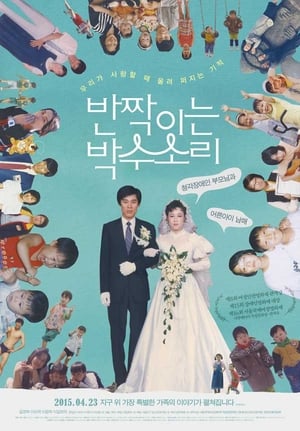
Despite being deaf Sang-kuk never forgets to smile while he makes furniture. Kyung-hee can't hear either but with her natural beauty and outgoing personality, she enjoys her job at a sign language interpretation center. Between them they have hearing daughter Bora who is a director and a son named Kwang-hee. When, after moving eight times since marriage, Sang-kuk wants to move one more time, Kyung-hee opposes him. In filming the silent world of her parents, the director discovers new stories coming from herself, who grew up moving back and forth between two worlds-one of silence and the other of sound.
Through intimate stories and day-to-day routines we get a naturalistic glimpse into the lives of individuals with disabilities in the bustling urban landscape of São Paulo. The film captures personal moments and how modern societies confront (or fail to confront) ableism and inclusion.
Told almost entirely without spoken words, this film unfolds in the language of its subjects: Guatemalan Sign Language. In a country where more than 850,000 Deaf people receive little institutional support, silence becomes both a barrier and a form of connection. Through classrooms, homes, and everyday life, the film observes a community building its own means of understanding and belonging. Among those leading the way are Melkin, Dairy, and Jonathan, the teachers, students, and leaders within Guatemalan Deaf Ministries, where the language of hands has become the language of hope.
Through examining Fini Straubinger, an old woman who has been deaf and blind since her teens, and her work on behalf of other deaf-blind people, this film shows how the deaf-blind struggle to understand and accept a world from which they are almost wholly isolated.
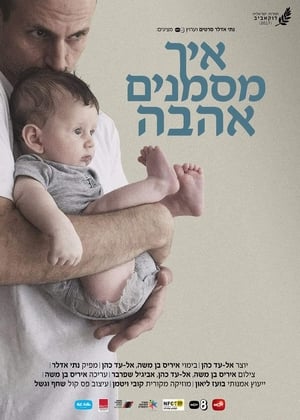
In his heartfelt documentary, co-director and subject Elad Cohen explores the meaning and experience of family. Growing up deaf and gay in a family of hearing people, Cohen never felt at home and always felt alone. That feeling of estrangement was exacerbated during his adolescence by the sudden death of his mother and the subsequent rift with his father as the family scattered in different directions. Cohen creates a sense of family with a small group of friends, including his best friend, Yaeli, a deaf woman. While he wants a child and a life partner, he fears that he won’t find the right man in the small deaf community in his “sweet little country.” Sharing a desire with Yaeli to be parents, the new “couple” decide to have a child in a shared parenting arrangement.
Deaf students from Jorge Otte Gabler High School attend a "SIAD" career guidance fair. They discriminate against us.
Nathan Quinell is a fully trained chef… he also happens to be legally deaf and blind. That’s never stopped him from chasing his dreams to become a full-time cook, but now Nathan must prove himself to his peers, his students and potential employers.
Young-Chan comes from planet of snail where deaf blind people live slow and quiet lives. When Young-Chan came to Earth, nobody understood his language and he was desperate. Then an angel walked into his life. Soon-Ho knows how it is to be lonely and soon becomes an inseparable part of his life. Young-Chan also discovers an amazing world under his fingers as he learned to read books with braille. Hopes began to grow and he dreams of writing a book. However, Soon-Ho cannot always be there for him because of her own problem of spine disability. The couple now should learn to survive alone. While Soon-Ho uneasily spends her first day waiting for his return, Young-Chan goes out for the biggest adventure of his life.
Filmmaker Irene Taylor Brodsky aims her camera at her own life to capture the remarkable transformation of her deaf parents, who decided to undergo a life-changing procedure to restore their hearing after spending 65 years in silence. Chronicling her parents' experiences over their first year of having sound in their lives, Brodsky tells a deeply personal tale that moved viewers to bestow it with the Documentary Audience Award at Sundance 2007.
A portrait of a Deaf activist and his formerly incarcerated daughter who build new bonds through their experiences in the criminal justice system.
A documentary that follows the story of Dario Pasquarella, deaf director and actor, and his company. Through his work, Dario seeks to bring together the deaf and hearing community, who are usually separated by a lack of communication. In his shows he uses both languages, LIS, sign language and spoken language, to tell stories in which the deaf and hearing can live in symbiosis.
Sign of the Times is the first feature length documentary about New Zealand's Deaf community, their language and culture. It is an inspiring, emotional, and very moving story told straight from the very heart of the Deaf community. I n April 2006 New Zealand Parliament declared New Zealand Sign Language (NZSL) to be an official language - the culmination of a 20-year battle by the deaf community, and a true hallmark in the recognition of their native language. Sign of the Times is about the Deaf New Zealanders who fought to have their language recognised as a real language and as a viable means of communication The film documents the community's celebration of the official recognition of their language and looks at the community's ongoing hopes and aspirations for their language and culture. This is your invitation to take a journey into the Deaf world.