Le peuple de l'aigle et moi
Archery expert Howard Hill and a cameraman go to Wyoming to film this wild-animal three-reel short. Besides the scenery, the scenes include a buffalo killed by an arrow shot by Hill (for food); a wildcat and a coyote in a battle, and a fight-to-the-death between a mother bear protecting her cubs against a killer male bear.
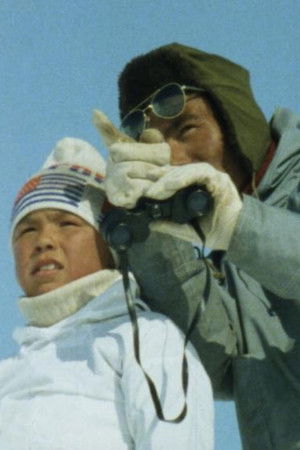
One day in the lives of an average Greenlandic family, which happens to be of great importance for 8-year old Kali - he's about to catch his first prey with the harpoon. The whole family is looking forward for the huge step in boy's maturation.
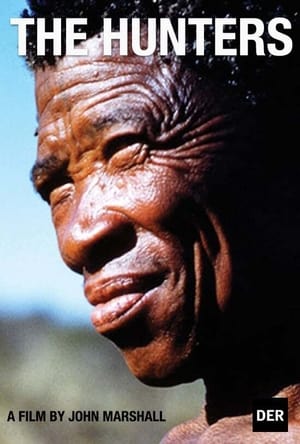
An ethnographic documentary following four Ju/’hoansi (!Kung) men during a multi-day giraffe hunt in the Kalahari Desert, filmed during the Smithsonian–Harvard Peabody expedition of 1952–53.
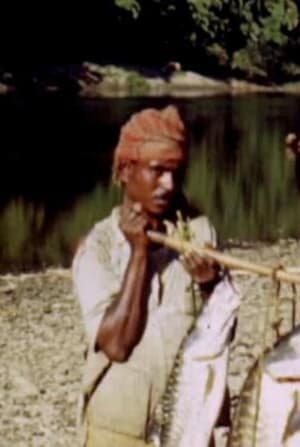
Indian elephants in action as working animals and in hunting.
This is the untold story of a Nazi vision, that went far beyond the military conquest of European countries. As part of their crazed dream to create a thousand-year Reich they developed detailed blueprints for Aryan settlements and vast hunting parks for ‘Aryan’ animals. Goering and Himmler employed Germany’s best scientists to launch a hugely ambitious programme of genetic manipulation to change the course of nature itself, both in the wild and for domestic use. In a fascinating blend of politics and biology, Hitler's Jurassic Monsters is the true and asthonishing story of how the Nazis tried to take control of nature and change the course of evolution.
Call him a city slicker. Call him a tenderfoot. But don't call him a member of the family--yet. Rising L.A. lawyer James White is going home for the holidays with his fiancée, Sadie Ryder, to finally meet her family in rural Pine Gap. After blundering through a bad first impression, James attempts to win over Sadie's lawyer-loathing father Karl by pretending to be a horse-riding, hay-baling, game-hunting, seasoned square dancer. But a pair of worn jeans and a ten-gallon hat don't make a cowboy, and it's going to take more than mere posturing to charm Mr. Ryder... in fact, it just might take a miracle.
My Deer Hunter is the meeting of Alain, man of the nature and passionate of hunting with the deer, at the moment where the nervousness of the first days of hunting settles down. It's a family reunion, a return to the source in the lands of Témiscouata.
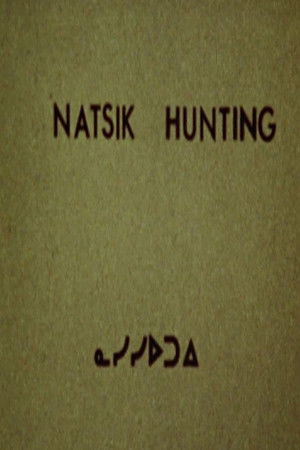
Mosha Michael made an assured directorial debut with this seven-minute short, a relaxed, narration-free depiction of an Inuk seal hunt. Having participated in a 1974 Super 8 workshop in Frobisher Bay, Michael shot and edited the film himself. His voice can be heard on the appealing guitar-based soundtrack…. Natsik Hunting is believed to be Canada’s first Inuk-directed film. – NFB
Semi-documentary exposé of scandalous hunting practices in the Sologne, a wooded area south of Orléans where he shared a house at the time. The film, part tribute to Jean Renoir's The Rules of the Game (1939) and its celebrated hunting scene, is notable for its cinematography by Polish director Walerian Borowczyk.
Amateur film of fishing and geese-shooting trips by a British party in India.
Polar Bear Safari follows Randy, a wealthy trophy hunter on a 15-day hunting expedition in search of a polar bear and discusses the reliance of the Inuit on guiding these hunting trips to keep the community living in Resolute Bay in the Canadian Arctic where unemployment is high. The local Inuits selling their bear hunting licenses to wealthy hunters to help combat their financial woes.
Argentinian short film which shows local fauna and hunting.
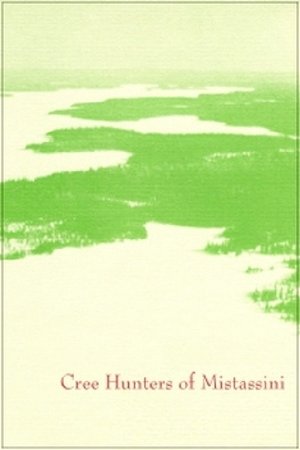
An NFB crew filmed a group of three families, Cree hunters from Mistassini. Since times predating agriculture, this First Nations people have gone to the bush of the James Bay and Ungava Bay area to hunt. We see the building of the winter camp, the hunting and the rhythms of Cree family life.
A 13-year-old girl and her older brother live on a farm where paleontologists search for fossils.
Duck archery is not the same as duck hunting. This is a Pordenone moment I will never forget – in actuality short Distraction et Sport à Batavia (1909), the residents of what is now call Jakarta make the most of their leisure time by pursuing a variety of mostly healthy exploits. But really, I can see no justification, nor explanation for why a round of archery needs to be enlivened by affixing live poultry to the target. As my good man Peter tweeted at the time: “One right in the neck, yeesh.” Sensitive viewers should be aware that animal cruelty abounds in silent cinema – the most notable, and egregious, example is Edison’s notorious Electrocuting an Elephant. The most poignant fictional example is perhaps the poor horse in Eisenstein’s October. (from http://silentlondon.co.uk/2015/01/23/10-disgusting-moments-in-silent-cinema/)
Mr. Burbridge's party slew three giant gorillas, one weighing something like 450 pounds. Two of these were sent to the Belgian Government and one to the Smithsonian Institution. The explorer also brought away with him three young gorillas, one of which weighed 125 pounds and put up a good battle before he surrendered. Mr. Burbridge shows some amusing scenes with these animals, one of them being that of a young gorilla who insists on getting tangled up in a drum of film. (cont. http://www.nytimes.com/movie/review?res=9B04E5D7143CEE3ABC4C52DFB467838D639EDE)
One last time, Hubertus Meckelmann sounds the horns for a big drive hunt in the wild. In the central area of the former military training ground, hunting will soon be prohibited. For the hunting grounds in the area, this is quite an imposition: the populations of red deer, fallow deer and wild boar, limited only with great effort, will get out of control. Nor will the return of the wolf change anything – according to the hunters in the area, the wolf has no place here, anyway. The film accompanies three hunters in their forests and in long, tranquil shots provides insights into the hidden world behind hunting terminology and loden coats.
This short follows two duck hunters in the Sacramento River Valley.
Crafted from archive footage, There Once was A Puffin explores one aspect of the relationship between the Atlantic puffin and the European coastal populations, who consume it. Between traditional hunting, declining colonies and climate change.