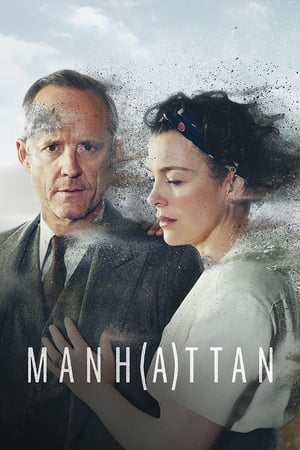
End of Innocence is a two-part television film that focuses on the work of the German Uranium Association during World War II. At Farm Hall in England, the ten German nuclear scientists interned there as part of Operation Epsilon learn of the dropping of the first atomic bomb on Hiroshima in August 1945. In flashbacks, the development of the German uranium project is recapitulated chronologically from the discovery of nuclear fission by Otto Hahn to the work of Kurt Diebner at the Heereswaffenamt to the experiments of the Kaiser Wilhelm Institute for Physics under Werner Heisenberg and Carl Friedrich von Weizsäcker at the Haigerloch research reactor in spring 1945.
In the near future a family must make difficult decisions as they balance staying together with trying to survive. They live in Los Angeles, which has been occupied by a force of outside intruders. While some people have chosen to collaborate with the authorities and benefit from the new order, others have rebelled — and suffer the consequences.
I ve smrti sami
Six one hour episodes each focusing on a key individual that traces the trajectory and design of Hitler’s thousand year Reich. From the beer halls of Munich to the horrors of the Final Solution, these individuals were truly Architects Of Darkness of the Nazi Third Reich.
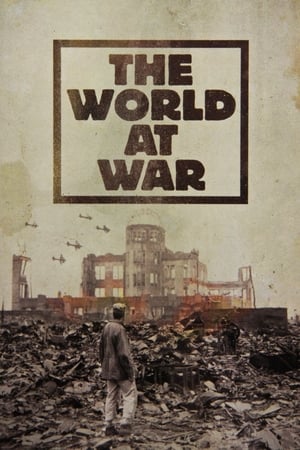
A candid look at what life was really like for those living in, and under Hitler's Swastika - at home - and abroad, a record not only of what they saw, but of what they knew.
The incredible, true story of the Norwegian Crown Princess Märtha’s efforts to support her country during World War II. After a headlong flight from the Nazis, she was forced to part from her husband and cross the Atlantic Ocean to seek refuge in the United States. There, she soon found herself involved in a close relationship with the President of the United States: Franklin D. Roosevelt.
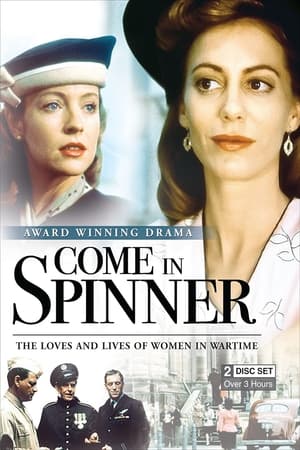
The lives, loves and highs and lows of four members of the Women's Land Army working at the Hoxley Estate during World War II.
Дневник памяти
From Here to Eternity was short-lived dramatic television series that aired in 1980. It was a spinoff of the successful 1979 miniseries of the same title. The series featured most of the cast members from the original miniseries, including William Devane and Kim Basinger. Barbara Hershey replaced Natalie Wood for the role of Karen Holmes.
Adapted from Len Deighton’s 1978 alternate history novel. A British detective investigates a murder in German-occupied Britain during World War II.
Gary Sparrow is an ordinary bloke in 1990s Britain, married to the ambitious Yvonne and working as a TV repairman. Then his whole world changes when he stumbles upon a portal to WWII-era London and begins a dual life as an accidental time traveler.
A Family at War is a British drama series created by John Finch and produced by Granada Television for ITV. It broadcast from 14 April 1970 to 16 February 1972. 52 episodes were made, all but eight in colour. Episodes numbers 25 to 32 were recorded in black and white because of the ITV Colour Strike (November 1970 — February 1971). The Ashton family struggles to deal with the harsh realities of the Second World War as their sons are sent away to fight. Those who remain at home in Liverpool live in constant fear of a knock on the door with a telegram from the War Office or the Luftwaffe bombs overhead as they sleep at night.
Seoul 1945 is a 2006 South Korean television series starring Ryu Soo-young, Han Eun-jeong, So Yoo-jin, Kim Ho-jin, and Park Sang-myun. It aired on KBS1 from January 7 to September 10, 2006 on Saturdays and Sundays at 21:30 for 71 episodes. Set around 1945 right after Korea's liberation from Japanese colonial rule when the nation was engulfed by ideological turmoil, the story revolves around the rivalry between Suk-kyoung, a renowned pianist and daughter of a rich pro-Japanese politician, and Hae-kyung, a headstrong servant; both women love Woon-hyuk, whose ambition to become a lawyer gets thwarted due to his political ideology.
During World War II the passenger liner "Goliath" is sunk by a German submarine. Portions of the ship's hull remain airtight, and some of the passengers and crew survive. Over the decades they build a rigidly regulated society completely isolated from the surface world until, in contemporary times, a diving team begins to explore the wreck.
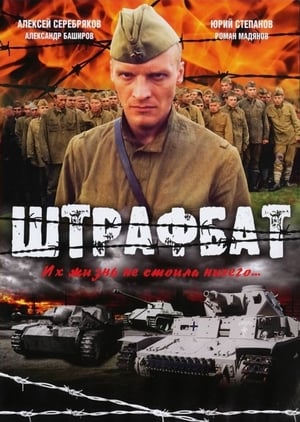
It is July 1941, and the Nazis are advancing towards Kyiv. A special squad is tasked with investigating major cases by acting both at the frontline and in the city itself, where rising criminals are joining German subversives in infiltrating the city, while a number of Soviet government representatives are happily profiting from other people’s misery.
The true story of the Allied ship Laconia, sunk in WWII by a German U-Boat, which then surfaced against orders to rescue the civilian crew
World War II drama about covert organisation Lifeline helping allied airmen escape after being shot down in occupied Europe, working with the Resistance and hiding from the Gestapo.
Hogan's Heroes is an American television sitcom that ran for 168 episodes from September 17, 1965, to July 4, 1971, on the CBS network. The show was set in a German prisoner of war camp during World War II. Bob Crane starred as Colonel Robert E. Hogan, coordinating an international crew of Allied prisoners running a Special Operations group from the camp. Werner Klemperer played Colonel Wilhelm Klink, the commandant of the camp, and John Banner was the inept sergeant-of-the-guard, Hans Schultz. The series was popular during its six-season run. In 2013, creators Bernard Fein through his estate and Albert S. Ruddy acquired the sequel and other separate rights to Hogan's Heroes from Mark Cuban through arbitration and a movie based on the show has been planned.
Father-and-son team Peter and Dan Snow embark on an epic journey to describe battles that transformed the 20th century. Known for its extensive use of "sand table" CGI effects to help viewers visualize the battles.
Homefront is an American television drama series created and produced by Lynn Marie Latham and Bernard Lechowick in association with Warner Bros. Television for ABC. The show was set in the fictional city of River Run, Ohio in 1945, 1946, and 1947. The show's theme song, "Accentuate the Positive", was written by Johnny Mercer and performed by Jack Sheldon. Forty-two episodes were broadcast in the United States over two seasons from 1991 to 1993. TV Guide, Abigail Van Buren, and fans showed determination in getting ABC to continue the show for a third season before it was cancelled.