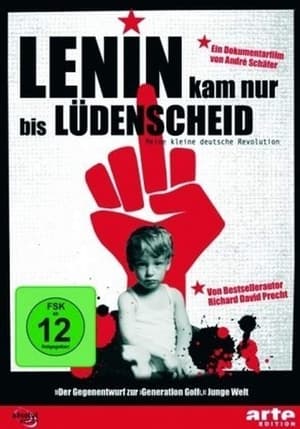
The free, almost naive view from the perspective of a child puts the "68ers" in a new, illuminating light in the anniversary year 2008. The film is a provocative reckoning with the ideological upbringing that seemed so progressive and yet was suffocated by the children's desire to finally grow up. With an ironic eye and a feuilletonistic style, author Richard David Precht and Cologne documentary film director André Schäfer trace a childhood in the West German provinces - and place the major events of those years in completely different, smaller and very private contexts.
The film is a reportage showing the help of workers from the GDR in the industrial reconstruction of Syria. We witness the friendly relationship between workers from both countries, who are jointly involved in the construction of the cotton spinning mill in Homs. In impressive pictures the exoticism of the environment and the mentality of the Syrian hosts is shown. At the same time it becomes clear that the workers from the GDR become 'ambassadors of the GDR' through their collegial behaviour and good work.
This first co-production between the GDR and Great Britain is intended to contribute to an understanding of the situation and attitudes of millions of working people in opposing social orders. Using the example of shipyard workers, fishermen, the brigade and family of a trade union active cook and unemployed person of various ages and professions in Newcastle on the one hand and a brigade of crane operators of the Warnowwerft and fishermen of the Warnemünde cooperative on the other hand, insights into the way of life and attitudes of people of our time are to be conveyed.
Documentary reports on the annual icing of the Oder in the 160-kilometer border area between the GDR and the People's Republic of Poland. Icebreakers from both countries with experienced skippers join forces to make the international waterway between Frankfurt and Szczecin navigable again. Everyone works hard as a team and even a broken-down ship cannot stop them from achieving their goal. A look back at the winter of 1947 with its flooding shows what the freezing of the river and the subsequent thaw can do if the ice floes are not drained into the Baltic Sea via Lake Dammsch in good time. The skippers from both countries have known each other for years and trust each other; the camaraderie that has developed on the Oder unites the people, they control the river in winter for the common benefit of all.
Weaving together original film and photographic archives, A CLOUD NEVER DIES tells the story of a humble young Vietnamese monk and poet whose wisdom and compassion were forged in the suffering of war. In the face of violence, fear, and discrimination, Thích Nhất Hạnh’s courageous path of engaged action reveals how insight, community, and a deep aspiration to serve the world can offer hope, peace, and a way forward for millions.
"The Jock: a Montford Point Marine" unveils the harrowing yet inspiring journey of an American Marine from the segregated boot camp of Montford Point, North Carolina. Raised on the tough streets of Philadelphia, Dave Culmer is drawn to the Marines, enchanted by the impeccable attire and imposing stature of a local Marine. After being dismissed from high school, he finds his path leading him not to the widely known Parris Island boot camp, but to the lesser-known Montford Point. His path to becoming a Marine is fraught with discrimination and grueling trials that push him to his physical and mental limits. Amid the struggle, he learns resilience, embodying the relentless spirit of Montford Point that drove these men to exceed expectations set by a society that predicted their failure.
How does a nation slip into war? Dateline-Saigon profiles the controversial reporting of five Pulitzer Prize-winning journalists -The New York Times' David Halberstam, the Associated Press' Malcolm Browne, Peter Arnett, and legendary photojournalist Horst Faas, and UPI's Neil Sheehan -- during the early years of the Vietnam War as President John F. Kennedy is secretly committing US troops to what is initially dismissed by some as 'a nice little war in a land of tigers and elephants.' 'When the government is telling the truth, reporters become a relatively unimportant conduit to what is happening,' Halberstam tells us. 'But when the government doesn't tell the truth, begins to twist the truth, hide the truth, then the journalist becomes involuntarily infinitely more important.'
A young filmmaker accompanies his grandfather– a veteran of the Vietnam War– to Fairbanks, to dedicate his unit flag to a new generation of helicopter pilots.
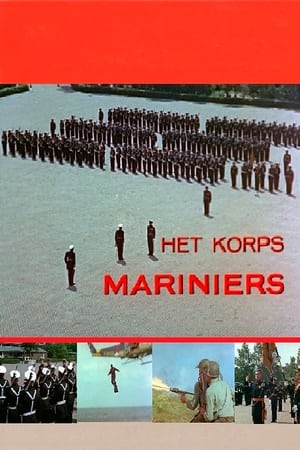
Het korps Mariniers is a documentary about the Royal Dutch Marine Corps, which Paul Verhoeven made while being assigned to the Marine Film Service as a documentary filmmaker.
In the gathering dusk of 18 August 1966, 108 young, inexperienced Australian and NZ soldiers are separated and surrounded, fighting for their lives, holding off an overwhelming force of 2,500 battle-hardened Viet Cong and North Vietnamese soldiers. And, in the pouring rain, amid the mud and shattered trees of a rubber plantation called Long Tan, with their ammunition running out and another Vietnamese battalion massing for the final assault, the digger's situation seemed hopeless. Long Tan is the true story of ordinary boys who became extraordinary men.
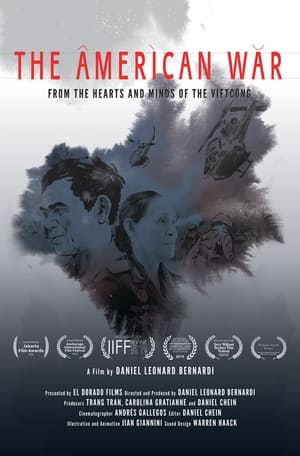
Using obscure archival footage, animated illustrations and interviews, this film tells the story of the Vietnam War from the perspective of five Vietcong veterans: a soldier, an officer, an informant, a guerilla, a My Lai survivor, and the leader of the Long Hair army.
Ernst Cantzler’s documentary about the soccer fan club “Union”, the scenes in the stadium, in their club bar “Green Hell” and in the streets of Berlin was a sensation. The scenes shown by the director and his cameraman had never been seen before: young soccer fans full of violence in the “first German peaceful state”. They are Hooligans who live from one weekend to the other just to get it all out. They want to scream, kick, hit and drink.
Skip Liberty enlisted in the Army in 1968. During his tour in Vietnam he shot 3,100 feet of Super 8 film, over 3 hours worth. Upon returning to the states the film was placed in storage, Skip had never seen the footage he shot. Until now.
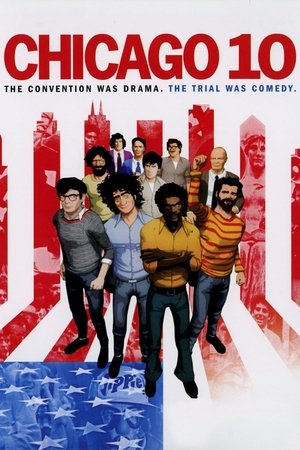
Archival footage, animation and music are used to look back at the eight anti-war protesters who were put on trial following the 1968 Democratic National Convention.
In April 1975 -- despite a ceasefire agreement -- the North Vietnamese communists took Saigon and the world by surprise, mounting an offensive that ousted the South Vietnamese government. This enlightening documentary recounts the last two years of America's military engagement in the country and the U.S. role in Saigon's fall. Interviews with former National Security Adviser Henry Kissinger and North Vietnamese officers provide context.
The Tet Offensive during the Vietnam War, the Civil Rights Movement, the May events in France, the assassinations of Martin Luther King and Robert F. Kennedy, the Prague Spring, the Chicago riots, the Mexico Summer Olympics, the presidential election of Richard Nixon, the Apollo 8 space mission, the hippies and the Yippies, Bullitt and the living dead. Once upon a time the year 1968.
Short documentary on the solidarity of the Cuban people with Vietnam during the war against the United States.
Standup comedian Fred Le hears the stories of a diverse range of young overseas-born Vietnamese who made their way back to the land that their parents left following the end of the Vietnam War. The Empathizer explores identity and the impact of trauma among Việt Kiều who grew up a generation removed from tragic events of the past.
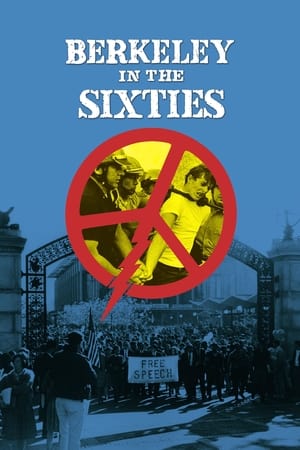
A documentary about militant student political activity at the University of California, Berkeley in the 1960s.
Blood Road follows the journey of ultra-endurance mountain bike athlete Rebecca Rusch and her Vietnamese riding partner, Huyen Nguyen, as they pedal 1,200 miles along the infamous Ho Chi Minh Trail through the dense jungles of Vietnam, Laos, and Cambodia. Their goal: to reach the site where Rebecca’s father, a U.S. Air Force pilot, was shot down in Laos more than 40 years earlier.