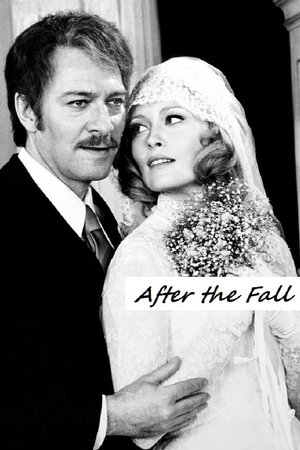
Adaptation of Arthur Miller's semi-autobiographical play about Quentin, a Jewish intellectual from New York who must reexamine his life and his troubled relationship with Holga.
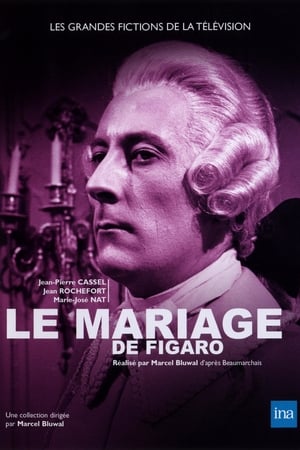
Comedy in five acts by Beaumarchais, filmed by Marcel Bluwal in studio and on location. The cast, in accordance with Marcel Bluwal's wishes, is in keeping with the age and character of the characters, to give it rhythm. At once "a comic baroque play, a bourgeois drama, a chansonnier's number, a social satire, a farce and a very pretty love story" according to Marcel Bluwal, it can also be summed up, according to Beaumarchais, as "the most bantering of intrigues".
Lanford Wilson's prize-winning drama about life in a played-out coal town in the Midwest. Against the background of a murder trial, the people recall their lives.
After Pompey's defeat at the Battle of Farsalia, Julius Caesar becomes the beacon of the Roman Republic and the master of its destiny; but many patricians want to avoid the birth of a tyranny and plot to assassinate him…
The teenage Bisbi, who plays the role of mother to her younger siblings, is the daughter of the indolent Aris, someone who just observes the passing of the years, hoping that circumstances will provide what his family may need, like the cicada in the fable; even when Bisbi tries to make him understand that their survival depends on their personal effort, which is what the industrious ant did every day…
This omnibus release consists of three playlets filmed and aired during television's Golden Age, and starring some of the legends of film and television. The collection originally ran as a two-hour segment on December 14, 1959, on the anthology series The Play of the Week, broadcast locally in New York City via the independent radio station WNTA. Each "tale" in the anthology was adapted from a single tale by the inimitable Sholom Aleichem, regarded by many as the "Yiddish Mark Twain". Included are: "A Tale of Chelm" starring Zero Mostel and Nancy Walker in the story of a bookseller attempting to buy a goat; "Bontche Schweig" about a poor man (Jack Gilford) whose recent arrival in Heaven makes the angels cry; and "The High School" about a Jewish merchant (Morris Carnovsky) persuaded by his wife (Gertrude Berg) to let their son attend a particular high school despite the enforcement of quotas for Jewish students.
Based on the play of the same name by Mykola Kulish. The film is set in the 1920s and tells of a brief period of "introduction" of the Ukrainian language (Ukrainization). This is the story of one crazy person living in the same crazy world.
Two strangers meet when they respond to an ad in The New York Times for a river view apartment. Paul Friedman is a married advertising copywriter; Ann Miller a discontented housewife. They view the apartment, but before they can leave discover that the door has accidentally been locked and they are now trapped inside together. A connection quickly forms between them as they begin sharing things about their lives, and they find themselves attracted to one another.
Mick and his brother Aston live alone together in a West London house until one night Aston brings home Davies, who just left his job as a kitchen helper at a restaurant. The old man proves to be a violent, selfish bigot, uncharitable himself but quick to exploit the kindness of others.
Time passes and tension mounts in a Florida police station as an estranged interracial couple awaits news of their missing teenage son.
A stranger's call informs Roberta that her estranged brother Frank has died in a small town under bizarre circumstances. Ben, his best friend from college, also gets the call. Arriving just in time for his funeral, it becomes quickly obvious to them that the little slice of small-town America in which they find themselves is like an episode of The Twilight Zone featuring Frank's eccentric friends, his amazing secrets and his stunning final request. Both Ben and Roberta are shocked to discover that Frank not only had a child, but that he has left them responsible for his son's care.
A rehearsal is disrupted when six figures mysteriously appear on the stage, claiming to be fictional characters from an unfinished play searching for an author to tell their tragic story. An adaptation of the classic Luigi Pirandello play, updated to take place in a 1970s television studio.
As incomparable in swordplay and wordplay as he is, the gallant soldier, philosopher, and poet Cyrano de Bergerac is as timid as a schoolboy before the fair Roxanne. Derek Jacobi delivers an electrifying award-winning portrayal of Rostand's legendary log-nosed swordsman in this highly acclaimed production from the world's premier theatre troupe, The Royal Shakespeare Company. The bold Cyrano boasts he can defeat a hundred men in a swordfight, but because of his grotesque nose lacks the confidence to court the woman he loves. Yet so entranced with Roxanne is Cyrano that he uses the eloquence of his poetry to woo her for a rival.
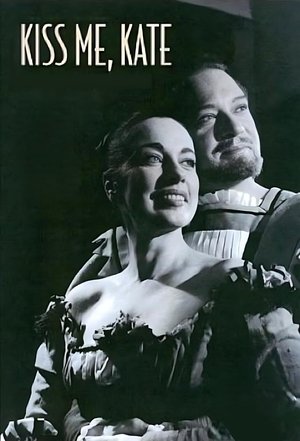
Joe Boyd, an aging Washington Senators fan, would sell his soul for the Senators to beat the New York Yankees and win the pennant. Enter Mr. Applegate, who offers to turn Boyd into Joe Hardy, a powerful young baseball player, in exchange for his soul. When Boyd agrees, he becomes Hardy and leads the Senators on a winning streak. When he starts to miss his wife, though, and questions the deal, Applegate sends temptress Lola into the mix.
Jake is a writer. He is married to Maggie, but his marriage is in trouble. He cannot stop thinking about other women in his life, characters he invents conversations with. He is constantly talking to: his deceased wife Julie, his daughter Molly, his sister Karen, and his psychiatrist Edith. All he does is have imaginary conversations with real people that are at the moment out of his life. Maggie cannot stand his mind wandering off all the time and decides to separate for six months and at the end of six months they will decide whether or not to remain together. Jake has a few girl friends, but spends the six months, while waiting for Maggie, only talking to these imaginary people, and a few times to real people.
An engaged Philadelphia policeman falls in love with a beautiful woman while dealing with a corrupt superior.
A British Company in the WWI trenches await an inevitable German attack in this 1988 adaptation of R.C. Sherriff's play.
Ruth Sherwood and her sister, Eileen, have moved to 1935 Greenwich Village. They're surrounded by colorful Village characters (including an out-of-work football player known as the Wreck, and Mr. Appopolous, a modern painter and their landlord) and embark on various New York adventures. Ruth, who's trying to make it as a writer, meets up with a sleazy newspaper writer named Chick and a kindly editor named Bob, both of whom take an interest in both her career and her.
A videotaped production of the Frederick Knott play in which three criminals play an elaborate scam on a blind woman who is in possession of a doll that, unbeknownst to her, is very incriminating. The play had already been famously adapted for the screen in 1967 starring Audrey Hepburn. This 1982 version was frequently shown on HBO in the 1980s.
In ancient China, an aimless young man falls in love with the Emperor's beautiful daughter, and goes on a journey with his supposedly long-lost uncle in search of riches.