Errol Morris examines the incidents of abuse and torture of suspected terrorists at the hands of U.S. forces at the Abu Ghraib prison.
Chennu committed his first crime when he was 15 years old: being a street kid. And he entered hell: Pademba Road. The adult prison in Freetown. In hell, Mr. Sillah is in charge, and there is no hope. Chennu got out after four years. Now he wants to go back.
For the third time, HBO cameras go inside Trenton State Maximum Security Prison--and inside the mind of one of the most prolific killers in U.S. history--in this gripping documentary. Mafia hit man Richard Kuklinski freely admits to killing more than 100 people, but in this special, he speaks with top psychiatrist Dr. Park Dietz in an effort to face the truth about his condition. Filled with more never-before-revealed confessions, it's the most chillingly candid Iceman special yet as it combines often-confrontational interview footage between Kuklinski and Dietz with photos, crime reenactments and home movies that add new layers to this evolving and fascinating story.
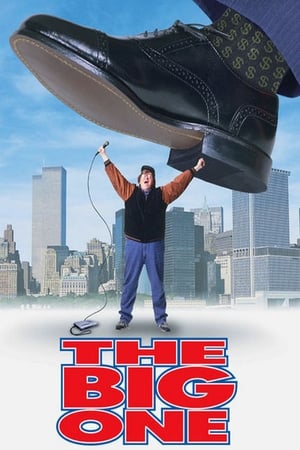
The Big One is an investigative documentary from director Michael Moore who goes around the country asking why big American corporations produce their product abroad where labor is cheaper while so many Americans are unemployed, losing their jobs, and would happily be hired by such companies as Nike.
An absurd game of “finding happiness” is being played by local Latvian coyotes* and illegal immigrants on the Russian and the European Union border. It is a game with no winner – all participants are driven to play by the sense of despair. While one side leaves home and undertakes a perilous journey to the other side of the globe, hoping to spend the rest of their lives in a free country, the other side risks their freedom to earn a chance to stay right where they are, in their homeland. *coyote – someone who smuggles illegal immigrants
A documentary about juveniles who are serving life in prison without parole and their victims' families.
Showcases 3 major events during World War 2 involving both the Europeans & Pacific conflicts. The Raids to destroy Nazi Germany's heavy water production based in Norway, plus the final desperate act to deny them what had already been stockpiled. The Japanese midget submarines role and participation in the attack on Pearl Harbor, December 7, 1941. What they achieved plus what was their ultimate fate. The attacks on United States warships in the Pacific late in World War 2 by the Japanese Kamikaze and Okha Squadrons. The Kamikaze attacks were in whatever planes the Japanese forces were able to gather. The Okha attacks were made in specially built flying bombs that were towed by larger and usually slower aircraft that were not suitable for fighter work.
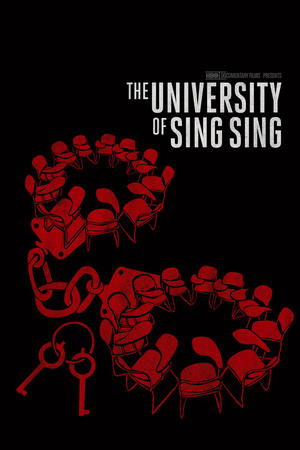
Survivors of violent crimes and prisoners incarcerated for murder connect to undergo astonishing transformations, liberating themselves from the debilitating constraints of trauma, and shattering preconceptions of "us and them."
The film explores the destruction of a unique train station in Zurich and the construction of the new prison and police centre in its place. From the perspective of the filmmaker’s window, and with testimony from prisoners awaiting deportation, the film probes how we deal with the extinction of history and its replacement with total security.
Elementary Genocide is a documentary executive produced by award winning journalist/filmmaker Rahiem Shabazz. The documentary appeals to a wide general viewership by addressing the social, cultural, political and personal ramifications of how the federal government allots money to each state, to build prions based on the failure rate of 4th and 5th graders. In America, where half of the 4th grade is reading below grade level and more African-American males are in jail than are in college, Elementary Genocide serves as a striking reminder of a flawed system in need of repair.
World renowned journalist, and award-winning filmmaker Rahiem Shabazz presents the third installment of his docu-series Elementary Genocide: Academic Holocaust. The first two documentaries in the series; The School To Prison Pipeline and Elementary Genocide 2: The Board Of Education vs. The Board of Incarceration received critical acclaim and launched Shabazz as a political pundit and academic ambassador for the African American community. Elementary Genocide: Academic Holocaust adds more statistical proof of the scholastic inequalities faced by Original people around the country. The documentary revisits the importance of education and its impact on self-image, family structure, financial freedom, and the collective future of African/indigenous people in America and abroad.
A look beyond the shock and inhumanity of prison rape to the intricate social hierarchy that keeps it alive. A filmmaker goes deep inside Alabama's infamous Limestone penitentiary to uncover the long-term causes and consequences of prison rape. With a startling lack of inhibition, five inmates reveal the workings of an elaborate inner society.
The documentary was shot in the prison for juvenile delinquents in Hungary. It does not aim at judging whether the perpetrators were convicted rightly or not but, given the burden they carry, how they can reintegrate into society after they are released.
Told through the charismatic voice of inmate Kenneth Reams, Free Men is a film about human resilience. In solitary confinement for the last 25 years, Kenneth has pushed back the walls of his cell to become a painter, a poet, the founder of a non-profit, and an art event organizer - while fighting at the same time for justice. At age 18, Kenneth Reams was convicted for capital murder without firing a bullet. He became the youngest inmate on Arkansas death row. Alongside art, the film shows how love can cross barbed wire and the length of an ocean in Kenneth's love for Isabelle, a French artist who wants to become his wife.
A look inside one of the most brutal campaigns of state repression in modern history - told by those who endured it and those who enforced it.
Shot mainly using spy cameras, this film gets closer than ever before to the world's greatest land predator. As the film captures its intimate portrait of polar bears' lives, it reveals how their intelligence and curiosity help them cope in a world of shrinking ice.
The true story of a young teenage girl whose mother is incarcerated for murder. Living in a Catholic Children's home run by an order of nuns, she provides poignant commentary about her mother, her own situation and her outlook for the future.
When gang leader Rob Brown is sentenced to prison for a fifth time, he must confront his role in bringing violent drug culture into his beloved American Indian community in northern Minnesota. As Rob reckons with his past, his seventeen-year-old protégé, Kevin, dreams of the future: becoming the most powerful and feared Native gangster on the reservation.
With Olin's 85-year-old father as guide, we experience Norway's most adventurous valley, Oldedalen in Nordfjord. He grew up here, and here generations before him have lived in balance with nature.
The Stanford prison experiment was a landmark psychological study of the human response to captivity, in particular, to the real world circumstances of prison life, and the effects of imposed social roles on behaviour. It was conducted in 1971 by a team of researchers led by Philip Zimbardo of Stanford University.