Working men and women leave through the main gate of the Lumière factory in Lyon, France. Filmed on 22 March 1895, it is often referred to as the first real motion picture ever made, although Louis Le Prince's 1888 Roundhay Garden Scene pre-dated it by seven years. Three separate versions of this film exist, which differ from one another in numerous ways. The first version features a carriage drawn by one horse, while in the second version the carriage is drawn by two horses, and there is no carriage at all in the third version. The clothing style is also different between the three versions, demonstrating the different seasons in which each was filmed. This film was made in the 35 mm format with an aspect ratio of 1.33:1, and at a speed of 16 frames per second. At that rate, the 17 meters of film length provided a duration of 46 seconds, holding a total of 800 frames.
A short film about the changing face of London Soho and the implications of gentrification on Mimi, an aging transvestite.
An exploration —manipulated and staged— of life in Las Hurdes, in the province of Cáceres, in Extremadura, Spain, as it was in 1932. Insalubrity, misery and lack of opportunities provoke the emigration of young people and the solitude of those who remain in the desolation of one of the poorest and least developed Spanish regions at that time.
A group of people are standing along the platform of a railway station in La Ciotat, waiting for a train. One is seen coming, at some distance, and eventually stops at the platform. Doors of the railway-cars open and attendants help passengers off and on. Popular legend has it that, when this film was shown, the first-night audience fled the café in terror, fearing being run over by the "approaching" train. This legend has since been identified as promotional embellishment, though there is evidence to suggest that people were astounded at the capabilities of the Lumières' cinématographe.
The story of Leon Vitali, who surrendered his promising acting career to become Stanley Kubrick's devoted right-hand man.
Documentary about the making of the sequel to Superman.
Take an intergalactic trip with the cast and crew of "The Marvels" as they tell their experiences making this weird and wonderful film. Step into all the departments of production and discover how they created complex fight scenes, countless alien life forms, and some of the most elaborate sets ever. From dance parties to kitten days, the cast and crew had an unforgettable time making the movie.
This documentary is featured on the DVD for Captain Blood (1935), released in 2005.
30 years after Fawlty Towers (1975) ended, Stephen Fry narrates a documentary about the making of this classic sitcom.
Two old men enter an abandoned synagogue, look at the decay around them, and pray.
An exploration of a decaying synagogue.
Two rabbis show the ruins of an abandoned synagogue to a group of primary school-age Jewish children, and stand by as the children dip bread in honey, drink wine, pray, and sing.
A 1942 short film.
A feature length cinema documentary on how THE FARMER (1977) became the most-requested cult film of the new millennium, and it's a crazy tale that involves an actor incarcerated for manslaughter, serious on-set injuries, banana-man costumes- as well as surprising links to Clint Eastwood and Martin Scorsese. The film also broadens its scope to explore the overlooked, eclectic and often ultra-violent sub-genre THE FARMER belongs to - The Returning Veteran film. A film type that hit its stride in the 1970's with hard hitting character studies such as WELCOME HOME, SOLDIERS BOYS (1971), THE NO MERCY MAN (1973) and ROLLING THUNDER (1977).
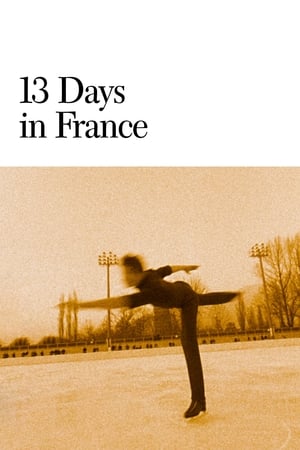
This colorful documentary chronicles the events of the 1968 Winter Olympics in France. The events made international celebrities of skater Peggy Fleming and skier Jean-Claude Killy for their gold-medal performances. The camera accurately catches the speed of bobsleds and downhill racers and ski jumpers as they race for the gold. President Charles DeGaulle is shown observing the action over 13 days, which saw France earn the best performance to date in the winter games.
What we show in Milk is literally the best of the best when it comes to dairy farming, yet, as soon we view what happens from the perspective of the mother cow, it becomes clear that this is an industry that runs on the exploitation and suffering of animals. By using animation, we are able to show a unique perspective and tell the story of the mother cow in a way that cannot be done from investigative footage alone. Milk centres the cow as the protagonist of her own story and allows us to view what is happening to her from an up close and personal perspective. Organic, free-range, high-welfare, humanely raised. It doesn’t matter what label we put on dairy products, all dairy cows are victims of an industry that forcibly impregnates them, takes their babies from them, exploits their bodies and then sends them to a slaughterhouse to cut their throats. It's time to end the dairy industry.
Gary Russell of Marvel Comics' Doctor Who Magazine investigates the world of BBV. In a relatively short space of time and with relatively small amounts of money, Bill Baggs has produced a series of videos which have a special appeal for Doctor Who fans. Stranger Than Fiction looks at the development of BBV's production techniques, through story, rehearsal and shooting. There's a chance to discover the origins of the scripts, as well as to see lost scenes from the Stranger videos and The AirZone Solution. This fascinating behind the scenes story is told with revealing, on the spot Hi-8 footage, together with exclusive star interviews.
In January 1996 filming began on a new episode of Doctor Who set in San Francisco, but shot in Vancouver, Canada. Sylvester McCoy flew out to join the production team to re-create his role as the Seventh Doctor and to hand over to Paul McGann. In this behind-the-scenes video diary, Sylvester gives us a personal account of his final days as the famous Timelord. Reminiscing about the "old days" and drawing comparisons with the experience of working on this latest adventure, he talks to Paul McGann, Daphne Ashbrook (Dr Grace Holloway) from the new production and Anneke Wills (Polly) from the show's past. All shot on Hi-8 camcorder.
This film describes the building of the drilling platform ADMA Enterprise in a shipyard on the Kiel Canal, from where it was rowed to the Arabian Gulf.
A documentary that introduces FIT Hives, a student-run organization whose mission is to educate the FIT community about the importance of bees to the environment, the use of bee-derived resources in the industries related to the majors at FIT and its goal to put a beehive on the roof. FIT Hives is a recipient of an FIT Innovation Grant which also supported the making of this documentary.