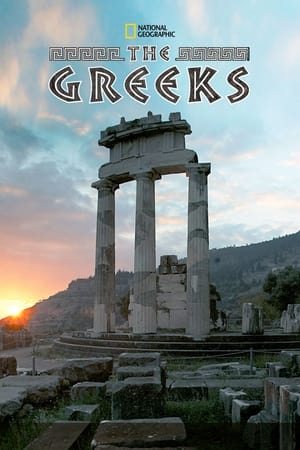
National Geographic's landmark event series, The Greeks, brings together historians, archaeologists, actors, athletes, scientists and artists to launch a groundbreaking exploration into the ancient Greeks' journey - not just to better understand their past, but to discover how their legacy illuminates our present, and will shape our future. The story of the Greeks is the story of us.
Μηχανή του Χρόνου
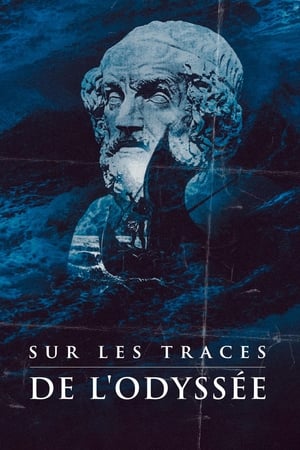
Who was Homer, and what is the meaning of The Odyssey? In this documentary we follow the footsteps of Ulysses, also known by his Greek name Odysseus—a hero as relevant today as he was nearly three thousand years ago, on a journey across some of the most fascinating landscapes and seascapes of the Mediterranean region. With the help of prominent international scholars, we seek to resolve the questions that still surround one of humanity’s greatest literary works and its enigmatic author.
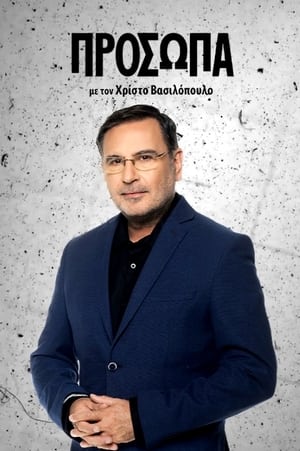
Πρόσωπα
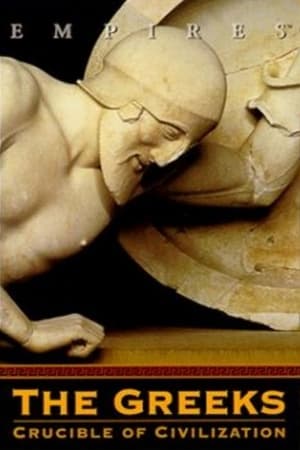
In the fourth and fifth centuries, B.C., the Greeks built an empire that stretched across the Mediterranean from Asia to Spain. They laid the foundation of modern science, politics, warfare and philosophy, and produced some of the most breathtaking art and architecture the world has ever seen. It was perhaps the most spectacular flourishing of imagination and achievement in recorded history.
Discover the lives of nine memorable couples, whose relationships were directly, indirectly or unexpectedly involved in Greek history. Along with their romances, the era that 'fueled' them revives, too.
200 years after the Greek Revolution, this documentary revisits the key moments that led a nation to be reborn and reclaim its Hellenic identity, from the ideological factors that ignited a revolution to the battles that forever scarred it
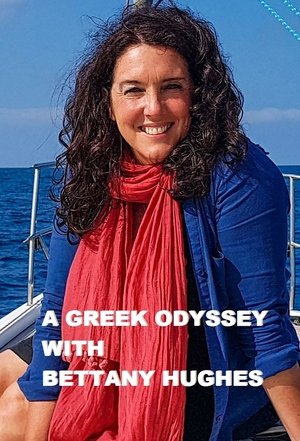
Historian Bettany Hughes has embarked on an epic, personal journey. Inspired by Homer's The Odyssey, she will sail the unpredictable Mediterranean seas, tracing Odysseus's long journey home. Her mission: to experience what the Greek hero experienced and to uncover truths behind the myths and legends, all while enjoying the delights of ancient Greece today. Follow her 1,700-mile adventure as it takes her to over a dozen islands and 22 historic sites and puts her through two hair-raising storms and even an earthquake.
In the Eye of the Storm is a six-part documentary series about one of the foremost intellectuals and political figures of our age, Yanis Varoufakis. In the Eye of the Storm begins with a first-hand account of Varoufakis’ dramatic battle with the European establishment, but goes much further to weave a gripping political narrative about the fate of our civilization: where we are, how we got here, and where he believes we must go. We see up close, through Varoufakis’ unique story, how power works at the highest levels, entering a world so often shrouded in secrecy.
It all starts on 1830, when young George Stephenson manufactures the first steam engine and the first railway networks are built soon after. Railway becomes a crucial factor in the development of trade and military strength for a country, with its ability to quickly transport soldiers and munitions. Railways expand rapidly in Europe and arrive soon in Greece.
Everybody is well into the apps, socials, videos, streams and games. All those online tools often seem to be free, but aren't. You not only pay with money, but also with data. How does that actually work? What happens with that data? Jard Struik investigates this.
樱之味
Hit the hardwood in East Los Angeles as a coach with strong convictions leads young men who hope to fulfill major college potential.
Slovenský panteón
Host Brendan Moar dives into the process of what it takes to bring down some of the biggest structures from around the world.
"Open up, the Police" is the first Russian documentary series about the police. This is a cycle of 26 films about the "harsh working days" of real policemen, employees of the Moscow Department of Internal Affairs "Airport". They perform operational and investigative actions, which are immediately removed by the film group. Among the heroes are a district inspector, an operational officer, an investigator, an inspector for minors and the head of the Department of Internal Affairs. Each episode is dedicated to one crime. The viewer sees with his own eyes how operas work - starting from a call to the police station, ending with the detention of a criminal and his interrogations. The Laurels Award nominees were three series - "Trunk", "Step from the roof", "Snow was falling Quietly".
Today, a series of hockey matches in 1972 between the national teams of Canada and the USSR is remembered only with the prefix super. They call it a milestone in the history of the development of world hockey, and not only hockey. The meeting of Soviet hockey players with Canadian professionals has become the main topic of world news. One Canadian journalist promised to eat the newspaper in which it is printed if the Russians win. The Russians won. And the journalist Dick Beddoes had to fulfill his promise and eat a report in the newspaper with borscht. What happened then, 30 years ago in the USSR, Canada, how the games were held in Canada and Moscow, the intensity of the political confrontation around hockey, life before and after the super series - about all this in five episodes.
"We propose to look at the history and the present day of the Kremlin through the eyes of people who have been serving the Kremlin for years... The film consists of five episodes. The first is the preparation of the Kremlin for the New Year, the second is dedicated to the Kremlin as a presidential residence, then - the Arsenal and military history, the fourth - symbols, the fifth - the Kremlin as a museum.
A documentary series filmed in the mode of a reality show and aired on the STS TV channel in 2004. The goal of the creators is to convey the real atmosphere within the group and show the life of the Tattoo group in all its manifestations.
A chronicle project about children born on the eve of 2000. 12 episodes of 44 minutes. "In 1999, the world was preparing for the new millennium. So, to the change of epochs, generations. Many considered the change of three nines to three zeros a radical scrapping of the times. It was then, on the scrap, that the foundation of our television project was laid," says Vitaly Mansky. - Then, in 1999, we chose almost at random several dozen women living in Russia at that time and at that time preparing to become mothers. Then everyone was eager to find out what their life would be like in the new millennium, how the history of their country, city, and, of course, their families, their future children would develop. Children who today, in 2006, became the heroes of our television chronicle of the new time... "