Sinema Purnama
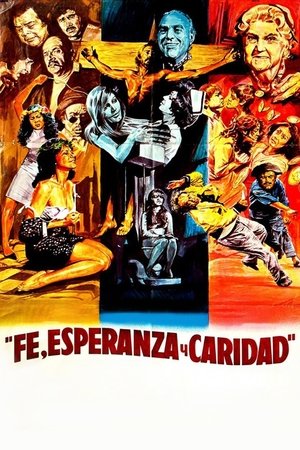
Three episodes. Faith: a woman is attacked. Hope: a fakir is crucified. Charity: a woman faces bureaucracy.
A stuffy middle-aged foreigner, a businessman named Fabricius, lonely and looking for a night's diversion, finds it in the form of a mysterious blonde. In an abandoned cemetery, she tells him three tales involving black magic and erotic obsession. In "The Last Golem," a young rabbi struggles to fashion a massive, silent giant out of living clay — until he's distracted by a mute servant girl. In the second episode, "Bread Slippers," an 18th-century countess indulges her passion for sweet cakes, adulterous affairs, and secret kisses with pretty maids until a mysterious visitor whisks her away to an abandoned mansion, where Fate has a different kind of dance in store for her. And in the final story, "Poisoned Poisoner," a ravishing murderess in the Middle Ages dispatches lecherous merchants to the tune of upbeat '60s Czech pop songs.
Anthology film made as an act of protest against Hungarian government of Viktor Orban.
Set in a vagabond and petty bourgeois environment, the three stories deal with the pitfalls of love, the petty and insidious betrayals of trust.
The fifth film in a Mosfilm "youth" anthology series comprising three short stories. The first story, 'Vizit' (The Visit), directed by filmmaker turned politician Yevgeni Gerasimov, tells the story of a rural boy visiting his former village girlfriend, now living in Moscow. Next comes a short film by Aleksandr Majorov called 'Zolotye rybki' (Goldfishes), which is based on a story of a magical goldfish brought from a provincial pet store by the late Russian historian and science-fiction and fantasy writer Kir Bulychyov. The final segment and the title of the film, 'Polosa vezeniya' (Streak of Luck), tells the story of a member of staff at a research institute who is offered the job of department head but has second thoughts when he discovers the previous boss was unfairly dismissed.
A psychological thriller about people running on abnormal orbits
L'Ultimo Metro: It can happen. Any night in any metro station. It can happen that a hurried girl comes out of the bathroom without realizing that she is badly arranged in her skirt. And it can happen that two guys are going to commit behind her to attend a fabulous show. But it is only the beginning of an incredible erotic game between rails and trains. Sogno: Alone on a deserted beach, a girl undresses and falls asleep. The sun rises. As a reflection of the erotic dream she is having, the girl touches herself moaning and enjoying. The beach fills up... Fine Settimana A Lecco: Mischievous and spicy chronicle of the meeting between two friends who, after playing the slave and the mistress, vent their excitement on a talented and enthusiastic gardener.
Project 30
An anthology in three jazz-infused tales: an idealistic student’s romance with a pragmatic trumpeter; a vibraphonist’s urgent journey ending in tragedy; and drummer Honza’s moral dilemma as he confronts how far he’ll go to obtain his dream kit.
The episodic film MARBLES consists of several short stories about how women manipulate with men. About subtle blackmailings, about crying, about tears, about the ability to sacrifice oneself for a dream, about sex as a service, about the way we can use empathy. It all starts on the playground among children and death does not equal the end. As time goes by, a feminine mechanism of manipulation develops, shapes up, ripens until it reaches the stage of perfection. Individual short stories take place at a techno party as well as in a Catholic parsonage and they conclude in a content domestic routine of two old people which cannot be disrupted by anything – not even by death. The short stories about women of different age and lifestyle put together a story of one complete human life which was, thanks to the manipulation with others, lived according to the plan and at the same time and from the same reason wasted away.
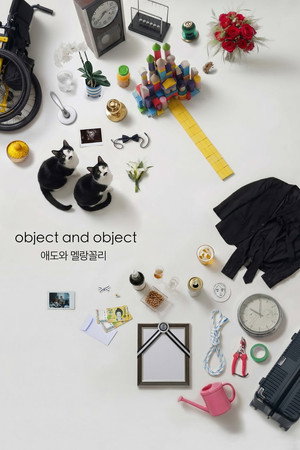
Chung-jae, a repairman, cannot stop turning "a round golden doorknob" in a client's bedroom. He visits a consulting room to find its cause. Da-gam, an actor, visits his friend Doo-joon to borrow "a funeral suit" when someone dies. "So who died this time?" Doo-joon asks over a beer. "An actress I worked with." Two men, each in an empty seat, begin to tell their story — about object and object.
A collective cinematic project to promote tolerance and the value of diversity.
The four stories that possibly or impossibly can be happened in the pension; The parents who lost their child go to the pension with poison where the killer stays with his family; The husband and wife on a trip who are growing tired of their married life and the wife’s hidden secret reveals when they reach the pension; A woman who demands to stay a night at a particular suite to save her kidnapped child; A man who is asked to manage the pension for a night, he organizes fantastic night with his girlfriend, but things go wrong…
Virtually without exception, a relation between parents and children is something that affects us throughout our lives. The first fiction film by award-winning documentarist Jaro Vojtek is an omnibus film about complicated relationships between parents and their children in which characters are challenged with long-term separation or declining health. Four stories titled Son, Marathon, Canary and Father tell four different tales that form a single view on the troubled relationship between parents and children. Each story takes place in a different season and together they create a multi-layered mosaic of relations reflecting hopes, disappointments and inevitable decisions. With a documentary filmmaker’s precision, Vojtek observes the characters and their behaviour, presenting an authentic picture of damaged family relations.
Bioscope is an anthology film having 4 short films inspired from 4 poems.
A foreign writer is in Sicily and believes that careful observation is enough to understand Sicilian culture and Sicilians. However, through his stories, he learns that you cannot know or understand Sicily or Sicilians through mere observation. You have to stand beside its people, shoulder to shoulder (Spalla a Spadda), share their struggles and their victories. Only then can you begin to understand
What will our lives be like 10 years from now? Five up and coming Taiwanese directors each offer their own take in answering this question. In 2028, Taiwan is suffering from nuclear waste (“The Can of Anido”), migrant workers (“942”), industrial collapse (“Way Home”), low birth rates and diversity in families (“A Making-Of”), and insomnia (“The Sleep”).
Mutual Gaze: Women Filmmakers Support Fund
Michaela tries her best to be a good person.