Lithuania, 1941, during World War II. Hundreds of thousands of texts on Jewish culture, stolen by the Germans, are gathered in Vilnius to be classified, either to be stored or to be destroyed. A group of Jewish scholars and writers, commissioned by the invaders to carry out the sorting operations, but reluctant to collaborate and determined to save their legacy, hide many books in the ghetto where they are confined. This is the epic story of the Paper Brigade.
Smoky little clubs, late nights, late nights of conversation over a glass of beer and a guitar. The lyricist Géza Bereményi and the composer-performer Tamás Cseh are the creators of the most topical and accurate songs of the 70s and 80s, expressing the mood of the "30s and 40s" of that time - a mood that was their own destiny. This stunning recording from 1980 includes songs like Tangó, Álomfejtés, Szabó Kálmán tegnap este..., A 100. éjszaka, A legjobb viccek, Születtem Magyarországon, A dédapa dala, Egy bogár, Krakkói vonat, Az ócska cipő, Filmdal.
The story of the only three minutes of footage —a home movie shot by David Kurtz in 1938— showing images of the Jewish inhabitants of Nasielsk (Poland) before the beginning of the Shoah.
Follows the young people of Selma, Alabama's RATCo (Random Acts of Theatre Company) as they journey to New York City to share their story of hope, resilience, and overcoming.
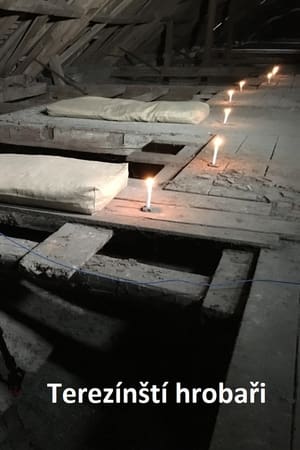
A documentary about the life of Jewish children forced to live in the Theresienstadt concentration camp.
The film traces two families, one of which is Jewish, who preserved the images for decades but hadn’t brought them to light. 80 years after their creation, the son of the photographer finds the forgotten negatives and launches an investigation. With a team of researchers, archivists, and animators who use near-forensic precision to reconstruct locations and contexts, they trace the circumstances of those tragic days and the lives captured in each frame.
The history of the Warsaw Ghetto (1940-43) as seen from both sides of the wall, its legacy and its memory: new light on a tragic era of division, destruction and mass murder thanks to the testimony of survivors and the discovery of a ten-minute film shot by Polish amateur filmmaker Alfons Ziółkowski in 1941.
Janko Kráľ
About Jösta Hagelbäck (1945-2009), Swedish film director, writer, poet, musician, actor etc. A human bipolar mixture of genius and madman. Invited to Hollywood, had an artistic hit with the film "Kejsaren/The Emperor" (1979) at the Berlin Film Festival.
Robert Burns was well aware of the revolution taking place across the Atlantic as he grew up. The poet was inspired. And America was to be inspired by him. From Abraham Lincoln to Frederick Douglass, and Walt Whitman to Bob Dylan, some of the most significant figures in American politics and culture have cited Burns as an influence.
Eva Mozes Kor, who survived Josef Mengele's cruel twin experiments in the Auschwitz concentration camp, shocks other Holocaust survivors when she decides to forgive the perpetrators as a way of self-healing.
The secret Nazi death camp at Sobibor was created solely for the mass extermination of Jews. But on the 14th October 1943, in one of the biggest and most successful prison revolts of WWII, the inmates fought back.
Song is a story of the last Finnish rune singer and his pupil, and the comforting power of singing.
A theatrical documentary about Hrytsko Chubai, a genius of Ukrainian poetry, a connoisseur of literature, art and music and the brightest representative of Lviv underground culture of late 60s early 70s.
A short documentary on the River Ouse, following it downstream from Lewes to Newhaven, meditating on the surrounding area.
By tracking scientists and Holocaust survivors in Lithuania, The Good Nazi tells the story of a Schindler-type Nazi officer who turned his back on his dark ideology and risked his life to save hundreds of Jews.
In this short documentary, Canadian poet Andrew Suknaski introduces us to Wood Mountain, the south central Saskatchewan village he calls home. In between musings on his poetry, which is tinged with nostalgia and the vast loneliness of the plains, the poet discusses the area’s multicultural background and Native heritage, as well as the customs and stories of these various ethnic groups.
Two friends, two Viennese, two poets, two unusual women. They have known each other for 30 years. Elfriede Jelinek is the better known of the two, the great author with her analytical mind and her social commitment against the whole "politician's docks." The now deceased lyricist Elfriede Gerstl remains rather tender with her poetry, although her poems do not miss a certain amount of sharpness, albeit ironically packed. When the two Elfrieden sit in their Viennese coffee house and drink the little brown, they usually talk about clothes, they talk about the fashion that Elfriede Gerstl has just collected again.
In 1994, film producer Patrick Sobelman recorded the testimony of his grandmother Golda Maria Tondovska, a Polish Jewish survivor of the Shoah.
In 1961, history was on trial... in a trial that made history. Just 15 years after the end of WWII, the Holocaust had been largely forgotten. That changed with the capture of Adolf Eichmann, a former Nazi officer hiding in Argentina. Through rarely-seen archival footage, The Eichmann Trial documents one of the most shocking trials ever recorded, and the birth of Holocaust awareness and education.